THANK YOU FOR SUBSCRIBING

Aerospace and Defense Review Weekly Brief
Be first to read the latest tech news, Industry Leader's Insights, and CIO interviews of medium and large enterprises exclusively from Aerospace and Defense Review


 Michael Saunders, Vice President of Strategy, Simulation & Technical Services
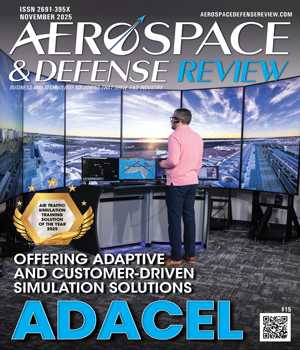
As a global leader in air traffic control simulation, Adacel has fully embraced this philosophy.
By weaving customer experience into the fabric of its culture, the company has redefined how the industry views training and simulation. It has etched a legacy of excellence since 1987.
With its customer-centric culture, Adacel drives every decision within the organization with that singular focus, from product development to employee training. Michael Saunders, Vice President of Strategy, Simulation & Technical Services explains that the company’s ambition goes beyond delivering technology. Its true goal is to be a trusted partner in its clients’ success.
“Everything we design, build, and support is anchored in one principle: improving the customer experience,” says Saunders, underscoring this philosophy’s central role in shaping Adacel’s identity and future.
This philosophy has permeated the company’s operations, from its leadership down to its engineers, who are tasked with creating solutions that address the real-world challenges air traffic controllers face.
We don’t walk away from our customers after delivering the system. Our success is tied to their success, and we’re committed to supporting them every step of the way
 The impact of this customer-first approach is evident in Adacel’s simulation solutions. The company understands that air traffic control is a highly specialized and regulated field, requiring training environments close to real-world conditions. Adacel offers a wide range of training platforms to meet these demands, from simple, single-position devices to fully immersive, high-fidelity simulations replicating the complexity of air traffic control towers and radar rooms.
Adacel’s flagship simulation platform, MaxSim, is the culmination of decades of collaboration with the air traffic control community. It is designed to give trainees realistic scenarios that mirror the pressure, decision-making, and communication demands they will face on the job.
 Built to replicate the intensity and precision of real-world air traffic management, MaxSim is not just a piece of software. It is a fully scalable ecosystem that adapts to the needs of each customer.
At its core, the platform is powered by three fundamental components. The simulation engine, developed and owned entirely by Adacel, forms the system’s heart and ensures authenticity in every training scenario. This is paired with Adacel’s state-of-the-art image generator, AeroScene, built on Epic Games’ Unreal Engine, which delivers immersive, high-definition environments familiar to a new generation of learners raised on gaming technology. The final layer, Lexix, Adacel’s advanced speech recognition engine brings voice interaction into the training space. Lexix is powered by Cerence, known for its role in BMW vehicles voice recognition systems. Lexix enables highly realistic communication between trainees and the system.
MaxSim is designed with scalability in mind, capable of supporting everything from a single-position, self-paced device to a fully immersive, multi-position tower simulation with third-party equipment integration. This flexibility makes it as valuable for basic ab initio training as it is for refresher and emergency scenarios, ensuring continuity across the learning journey.
To ensure the platform reflects real-world operational needs, Adacel maintains a rigorous feedback loop with customers, including working groups, field service representatives, and direct user engagement. Because the company partners with industry leaders such as Epic Games and Cerence, clients also benefit from ongoing upgrades and improvements from their roadmaps. This ensures MaxSim remains cutting-edge without requiring customers to overhaul their systems.
For trainees, the experience is one of total immersion. They step into environments that mirror actual towers or radar rooms, with authentic local procedures, regional dialects, and context-specific details that make the training relevant to their future operations. Its value lies in its technical sophistication and ability to evolve continuously.
-
Everything we design, build, and support is anchored in one principle: improving the customer experience
To ensure the platform reflects real-world operational needs, Adacel maintains a rigorous feedback loop with customers, including working groups, field service representatives, and direct user engagement. Because the company partners with industry leaders such as Epic Games and Cerence, clients also benefit from ongoing upgrades and improvements from their roadmaps. This ensures MaxSim remains cutting-edge without requiring customers to overhaul their systems.

Enhancing Training through Partnerships and Customer Alignment
Adacel distinguishes itself not only by the sophistication of its simulation engine but also by its commitment to keeping MaxSim at the cutting edge of training technology. By collaborating with industry leaders such as Epic Games, whose Unreal Engine powers MaxSim’s immersive AeroScene visuals, and Cerence, whose advanced speech technology drives its communication features, the company ensures its simulations mirror the realism modern trainees expect. These partnerships allow Adacel to integrate best-in-class capabilities while maintaining complete control of the core simulation engine.
What amplifies MaxSim’s impact is its adaptability to user needs. Rather than offering a generic solution, Adacel works closely with clients to understand their operational challenges and tailor the platform accordingly. This consultative approach has made MaxSim the trusted training environment for some of the world’s most demanding organizations, including the FAA, the U.S. Air Force, the U.S. Army, Airservices Australia, and the Royal Australian Air Force. Constantly evolving through both customer feedback and technological advances, MaxSim supports training from initial instruction to complex emergency response scenarios. As Saunders explains, the platform represents decades of collaboration with the air traffic community and continues to deliver real, measurable benefits.
A critical part of this evolution is Adacel’s customer feedback loop. Saunders emphasizes the importance of direct engagement with clients, including input from field service representatives and on-site instructors who observe real-world operations. The company also hosts events that bring end-users together to share experiences, creating an ongoing dialogue between developers and customers. Combined with AI-driven analytics and adaptive training tools, this feedback enables Adacel to refine its systems and ensure its technology remains aligned with customer needs.
Adapting Solutions to the Evolving Airspace Landscape
 Adacel is already exploring new technologies such as eye tracking and gamification to enhance the training experience for air traffic controllers. These developments are not made in isolation. They are driven directly by customer feedback, reflecting the demand for more engaging and effective training methods.
Recognizing that a new generation of controllers brings different learning preferences, Adacel is also developing mobile and accessible platforms to resonate with learners accustomed to intuitive, on-demand digital tools.
Adacel’s reputation for exceptional customer support is essential to the company’s identity. The company provides 24/7 service coverage, ensuring clients have assistance whenever needed. This level of responsiveness has earned the company the trust of major organizations such as the FAA, the U.S. Air Force, and Airservices Australia.
Saunders notes that this commitment to support is inseparable from Adacel’s broader philosophy. “We don’t walk away from our customers after delivering the system. Our success is tied to their success, and we’re committed to supporting them every step of the way.”
Looking ahead, Adacel is positioning itself to stay at the forefront of air traffic control simulation for the years to come. A primary focus is ensuring its flagship MaxSim platform can adapt to the evolving airspace environment, particularly by integrating unmanned aerial systems alongside traditional traffic. Expansion into Asia is also part of the company’s long-term roadmap, complementing its established presence in the United States and Australia.
Ultimately, Adacel’s ambition is to become the simulation partner of choice for all major primes in the air traffic control space. By combining innovation with a customer-first mindset, Adacel prepares its clients for today’s operational challenges and tomorrow’s skies.
Air Traffic Simulation Training Solutions for the Modern Airspace
Air traffic organizations have a tricky job of balancing how quickly they get controllers ready to handle real traffic and making sure safety standards are kept high. Training systems now need to mimic real flying conditions closely, even though training times are getting shorter and new procedures and traffic types such as drones are being added. When choosing a flight simulation system, it is important to look past just how good the graphics are or how well it works as a classroom tool. Instead, focus on how well the system prepares controllers to make quick real world decisions under pressure.
The best training simulations are based on real behavior, not just simple instructions. They work better when controllers interact with environments that look and feel like their actual work settings including local rules, typical traffic patterns, communication styles, and real tower or radar operations. If a simulation does not include these details, new controllers may struggle when they move into real control rooms. Modern learners also want more immersive visuals, quick feedback, and tools that adapt to their skill level. These features help keep them engaged without sacrificing the realism they need.
Another key difference between simulation systems is how flexible and customizable they are. Different agencies such as those managing air traffic, the military, and government groups have different needs. A rigid one size fits all system can be frustrating if it does not match local procedures or work well with other systems and new technologies. Buyers are now more interested in providers that can customize their simulations to fit specific challenges rather than trying to force a standard solution. Ongoing support after the system is up and running is also very important, especially for organizations that rely on continuous training to keep their teams ready.
The technology used in simulation tools is also a big factor. Companies that try to create every feature on their own can fall behind in keeping up with fast changing technology. Those that partner with specialists such as companies that develop realistic game engines, voice recognition, or smart analytics can offer more true to life training scenarios. This allows the simulation creators to stay focused on air traffic control while still offering modern visuals and communication tools that meet what today’s trainees expect.
Adacel is a leader in this field with its Maxim air traffic control simulation platform. It has a long history of working with both civilian and military organizations including the FAA, the U.S. Air Force, the Army, and Australian air services. Instead of just offering a standard product, Adacel works closely with each customer to customize the simulation environment based on their specific procedures, training goals, and system integration needs.
The company also understands how simulation technology is changing. It keeps control of its core simulation software but works with specialized partners such as Epic Games' Unreal Engine for visuals and advanced speech recognition technology to add realism and communication features. This mix helps create training tools that look more real and feel more natural to users. They are also adding features like adaptive learning, data analysis, eye tracking, and gamified elements to boost engagement and improve training results without losing realism.
Supporting customers over the long term is just as important. Adacel offers around-the-clock support and actively listens to feedback from instructors, field staff, and former controllers. This feedback helps keep the simulation platform evolving, making it better over time rather than a static product. For organizations involved in defense and civil aviation, Adacel’s mature and tech savvy approach makes it a strong choice for both current and future needs in air traffic training around the world.
...Read more
| Share this Article: |

Company
Adacel
Management
Michael Saunders, Vice President of Strategy, Simulation & Technical Services
Description
Adacel provides cutting-edge simulation solutions that ensure air traffic controllers are well-prepared for the demands of their profession. At the core of Adacel’s approach to innovation is a strong commitment to its customers.