
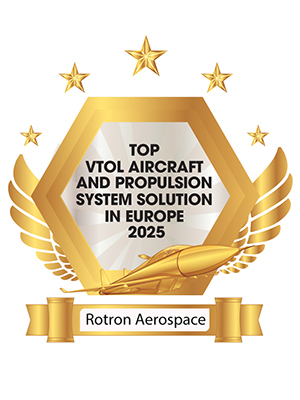
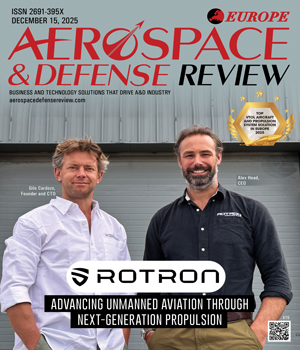
Rotron Aerospace journey began long before its first engine ever turned. At fifteen—in an era before the internet—founder and CTO Gilo Cardozo read a magazine article about a mysterious flying machine: a paramotor. The idea fascinated him, but one question lingered — how did it actually fly? Driven by curiosity, Gilo set out to understand how a man could appear to fly with nothing more than a motor on his back. To a fifteen-year-old, the mechanics weren’t obvious; discovering the wing above the pilot was a revelation. That moment ignited a lifelong fascination with flight and the machines that make it possible. Years later, Gilo was introduced to paramotoring by Colonel Charles Blount, an Army helicopter pilot and the father of singer and artist James Blunt. Early paramotors were heavy, loud and filled with vibration, limiting their potential. That experience sparked his determination to refine the heart of the system, the engine itself. After years of experimentation, Gilo developed a compact rotary engine with only three moving parts, lighter, stronger and far smoother than the conventional two-strokes of the day. In 2007, he and close friend Bear Grylls, now godfather to Gilo’s children, put it to the ultimate test, flying a paramotor to the summit of Mount Everest. At nearly nine kilometres above sea level, in temperatures of –50°C and winds up to 320 km/h, the engine proved its performance in the harshest conditions on Earth. That success laid the foundation for Rotron Aerospace’s mission to redefine propulsion. Today, the same rotary architecture powers advanced unmanned aerial vehicle (UAV) engines, delivering exceptional power-to-weight performance, low vibration and unmatched reliability for missions that demand more endurance, payload and precision.
Low Earth Orbit has become a congested network of spacecraft and debris—a constantly shifting intersection of national, commercial and scientific ambitions. Each mission collects data, transmits signals and moves through shared orbital lanes that have no borders and no universally accepted way for operators to communicate directly. When information is incomplete or delayed, routine manoeuvres can escalate into conjunctions that end missions and increase debris events threatening every spacecraft in their path. For years, space operators have managed missions through data provided by major space-faring nations. The emergence of new space actors questioned the viability of these systems. Governments, private companies and research institutions track objects, sometimes independently, using different formats, procedures and communication channels. What has been missing is a unique and centralised shared layer that allows all operators to communicate in a simple, direct and trusted way. Spacetalk was created to solve that problem. The Swiss-based platform pioneers global space traffic coordination through neutral, transparent data exchange. Rather than analysing or directing missions, it provides the backbone that enables governments, private operators and research institutions to communicate directly in a secure environment. Every object in orbit is linked to a verified operational point of contact, allowing users to share orbital information, publish manoeuvre intentions and prevent collisions before they occur. A rigorous KYC process ensures full transparency among members regarding the identity of their counterparts. “By treating communication as shared infrastructure, we build trust in orbit,” says Dr Benjamin Guyot, CEO. “The result is an interoperable system designed to safeguard satellites, reduce debris and secure the long-term sustainability of outer space.” Users log into a Space Surveillance and Tracking Forum, where every line represents a space object and displays the operator, the date of publication, and the author. From that point, operators can share key details about trajectory, operational status or upcoming operations..

Aerospace Supply Chain Management Company

Farsound, a specialised supply chain and logistics provider of aircraft parts, caters to multinational organisations in aviation, aerospace, and defence by delivering aero engine parts to many of the worlds leading repair organisations. “We recognise that our customers supply chains are the lifeblood of their business, so we provide the ‘right parts at the right time,’ at a competitive price,” remarks Chris Knott, CEO of Farsound. The companys unwavering commitment to customer focus and innovative solutions ensures a reliable, round-the-clock service. With a vast inventory of factory-new and fully traceable products, Farsound continuously expands its offerings to meet evolving market demands, maintaining full stock consignments for immediate order fulfilment. Thanks to ongoing investments in facilities, Farsound delivers ‘best-in-class’ scheduled and ad hoc services globally. Offering kitting services and solutions, the company facilitates streamlined supply chain management, providing various delivery options such as just-in-time, consignment, and direct line feed, coupled with a pay-as-you-use model and consolidated invoicing for consumed stock. Farsound ensures meticulous quality control, including tasks like invoicing and item replenishment. Its carousel and vending solutions offer zero delivery cost, delivering parts directly to production lines or customers warehouses, optimising storage space, reducing costs, and enhancing picking productivity and accuracy.
eVTOL

Demystifying the Latest Technological Advancements in the Defense Manufacturing Space
David Norman, Vice President - Engineering, Technology, and Innovation, Moog Inc
A&D Suppliers & Distributors

Airport Management Innovations: Navigating Challenges Effectively
Abe Weber, Airport Director, Appleton International Airport
Aviation

Strategies for Success and Safety in a Thriving Airline Industry
Alfonso Moreno-Santa, Director of Operations, PrimeFlight
eVTOL
AI's Pervasive Impact in Aerospace and Defense Beyond Cybersecurity
Milad Shaheen, Vice President of Engineering, CIRCOR Aerospace & Defense
Defense Tech

Strategic Solutions for Aircraft Maintenance Challenges
Nolan Elrod, Manager of Maintenance Contracts, Republic Airways
A&D Consulting
Operational Excellence at the Line
Andrew Ibsen, Duty Maintenance Manager, British Airways
A&D Manufacturing

Navigating the Skies and Strategies
Stefanie Rothkirch, Senior Manager of Strategic Procurement Travel, Lufthansa Group

IN MY OPINION
A&D Logistics
The Past, Present and Future of Airline Flight Training Departments
Lance Lau, Director Of Training, CommutAir dba United Express

LAST WORD
MRO
Wheels Up: Inside the Relentless World of AOG
Mark Finger, Manager – AOG Response, Delta Air Lines
IN FOCUS
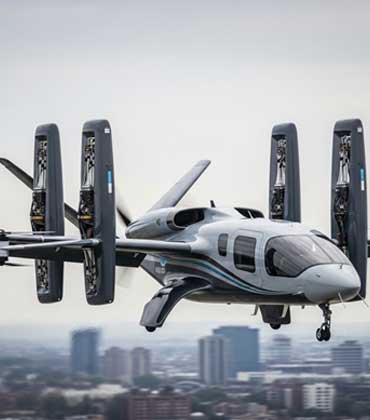
Redefining European Mobility: The Rise of VTOL Aircraft Propulsion
VTOL aircraft revolutionise urban mobility with innovative propulsion systems, enhancing efficiency, sustainability, and addressing congestion through vertical take-off capabilities.
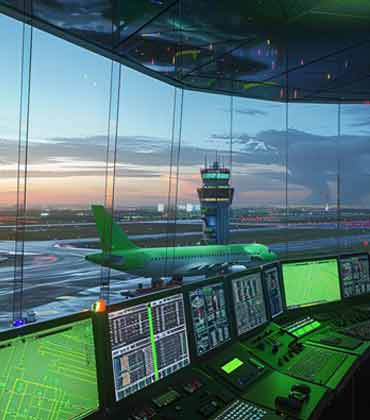
European Space Traffic Platform Strengthens Safety and Sustainability
A European space traffic coordination platform enhances safety, fosters collaboration, improves sustainability, and delivers economic, operational, and strategic benefits for stakeholders.
EDITORIAL
The Next Frontier in Aerial Mobility
Hybrid-electric lift systems and refined vertical-take-off designs are enabling smoother transitions through every phase of flight. New propulsion breakthroughs, from ducted-fan electrification to hybrid-tilt architectures, are widening performance envelopes across the sector. In parallel, modern coordination platforms are applying AI-based orbital modelling and continuous-tracking engines to reveal orbital patterns, identify collision risks and tighten mission-window planning. Together, these developments are giving operators a steadier foundation for decision-making.
As both sectors evolve, their convergence is becoming clear. Airborne platforms benefit from quieter thrust and greater operational reach, while space operators gain predictive oversight that safeguards essential orbital assets. The result is a more dependable mobility ecosystem extending from the ground to low Earth orbit, shaped by technologies advancing propulsion in the air and coordination in space.
This edition of Aerospace and Defense Review Europe highlights that shift through the voices and innovations moving the field forward. It features thought-leadership articles from industry experts, including Lance Lau, director of training at CommuteAir, and Mark Finger, manager of AOG response at Delta Air Lines. They outline how evolving operational demands are reshaping training priorities, response strategies and frontline readiness.
The edition also features Rotron Aerospace, a leading developer of rotary-engine propulsion systems and advanced unmanned aircraft platforms engineered for modern defence requirements.
We hope this edition offers a sharper perspective on where the sector is heading and the ideas driving its most meaningful advances.
