THANK YOU FOR SUBSCRIBING



Aerospace and Defense Review Weekly Brief
Be first to read the latest tech news, Industry Leader's Insights, and CIO interviews of medium and large enterprises exclusively from Aerospace and Defense Review
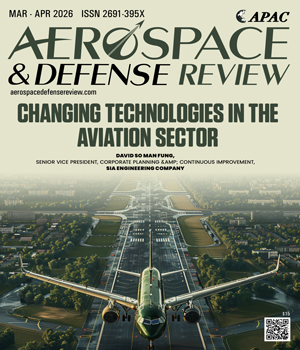
Digital Transformation within the Aviation Sector and Key Objectives You Achieve in Terms of Innovation and Technological Advancement Digital transformation is not a standalone project. It is important to align its objectives with the company’s business strategies. In SIAEC, our digital transformation initiatives aim to deliver value in operational excellence, customer intimacy and service innovation. In each of our specific plans to achieve these end goals, we measure our progress and outcomes in the areas of technology foundation, digitalization of operations, pervasiveness of digital cultures (e.g., agile, data, UX, innovation), staff experience and cyber security, just to name a few. Experiences from One of the Initiatives That You Were Recently Involved In One notable example of a recent SIAEC digital transformation initiative would be the creation of eLITE, which is a suite of applications developed in-house to support the growing line maintenance (LM) operations. Our LM staff embarked on a series of training in software development, agile, design thinking, and user experience to develop eLITE from scratch, transforming the business and IT relationship from transactional to collaborative. eLITE has helped the LM team significantly improve its operational efficiency through collaborative planning, real-time operations awareness and alerting, task prioritization and tracking, and assisting Technicians and Engineers with information and support on the go.
Top Civil Aviation Training Service in Apac 2026
Established in 2016 by Airport Authority Hong Kong, the Hong Kong International Aviation Academy was created to position the city as a leading civil aviation training hub while supporting the long-term, sustainable growth of the aviation industry across Hong Kong and the broader Asia-Pacific region. Located at one of the world’s busiest international airports, the Academy integrates training with real-world operations, enabling it to cultivate emerging talent and create structured pathways for professional development and career advancement within the aviation sector. How does live-airport integration strengthen operational readiness in aviation training? This positioning shapes everything the Academy does. Training takes place against the backdrop of a live operational environment, aligning instruction with real-world regulatory discipline, safety standards, and frontline accountability. The result is a system designed to narrow the gap between classroom instruction and operational readiness. Persistent workforce shortages across air traffic control, airport operations, engineering, and aviation security are treated as operational constraints rather than abstract talent challenges. “Our internationally recognized, accredited programs equip students with the skills and knowledge to succeed in a rapidly evolving aviation landscape and develop into industry-ready aviation professionals,” says Simon Li, President of the Academy..

Inspection System Manufacturing Company

For the last seventy years, WAKITA HI-TECS has been a leading manufacturer of transport and storage containers for high-stakes defense equipment, involving large-scale machinery and hazardous materials. Driven by a commitment to quality, safety, and reliability, the company has served global giants, including Mitsubishi Heavy Industries and Kawasaki Heavy Industries. It has also supported key public sector institutions, such as Japan’s Ministry of Defense, not just as a supplier, but as a partner. The true engine behind WAKITA HI -TECS’ reputation is not just its products, but the people crafting them. From the moment a new recruit steps in, they embark on a structured immersion in craftsmanship, rotating through welding bays, machining centers, and quality-control stations. This hands-on training instills not just mastery in equipment and tolerances but a deeper, zero-defect mindset. Complementing this, the company runs a fully independent inspection system, structurally separate from the production team, which ensures no product leaves the factory unless it meets strict defense-grade criteria. This internal culture of excellence enables the company to work in sync with clients long before formal specifications are even finalized. Where many manufacturers wait for fully defined blueprints, WAKITA HI -TECS engineers dive in at the earliest conceptual stages. They leverage institutional knowledge and previous design insights to sketch rough drafts, simulate performance in-house, analyze materials, and provide viable alternatives. This level of collaboration allows the company to meet compressed timelines without compromising technical integrity. Built on Talent, Driven by Systems What differentiates WAKITA HI -TECS is not just precision machinery and craftsmanship-oriented training, but its commitment towards the holistic development of its employees. “We consider the development of excellent leadership talent to be important. It is our value that everyone involved with our company leads a wonderful life,” states Daiki Wakita, the president of WAKITA HI -TECS. This philosophy is implemented through mentorship programs, Kaizendriven workshops, and project leadership opportunities. Employees are expected to meet specifications and are encouraged to think critically, ask questions, and continually improve processes. In parallel, the company has institutionalized excellence through structure. Its dedicated inspection department, strict internal processes, and alignment with defense manufacturing standards ensure that even under deadline pressure, quality is never compromised. After-sales services, overhauls, and repair capabilities further reinforce this commitment to long-term performance and client satisfaction.
Flight Booking Platform
Gone are the days when passengers were content with a simple in-flight magazine or the occasional movie playing on a small screen. With the rise of streaming platforms, passengers are now accustomed to having access to an almost endless variety of content, all tailored to their specific preferences. Passengers now expect access to an extensive range of films, TV shows, music, games, and even interactive experiences. The shift toward personalized, engaging content is a direct response to the changing needs and desires of the traveling public. Embracing this demand is Thai Airways. The company is strategically enhancing its inflight entertainment (IFE) offerings through a strong partnership with the content service provider Images In Motion (IIM). This has played a key role in elevating Thai Airways’ inflight entertainment experience. Mr. Kittiphong Sansomboon, Chief Commercial Officer at Thai Airways, says, “For us, it’s not just about offering a service, but about fostering connections. We offer a rich and diverse range of content, embracing everything from Hollywood blockbusters to a spectrum of international films across various genres and languages.” Under his guidance, the airline has taken significant steps to revamp its entertainment strategy, creating a seamless and personalized experience for its passengers. This effort aligns with its broader mission to become a high-quality, full-service carrier that blends technological innovation with the warmth and tradition of Thailand’s hospitality. Mr. Sansomboon, in his role, emphasizes that the ultimate goal is to provide a diverse and engaging experience that resonates with the varied global traveler base. A Global Approach to Content Curation One of the most significant changes Thai Airways has made is its approach to inflight content. While many airlines focus primarily on Hollywood films and domestic productions, Thai Airways has expanded its offerings to include a broad spectrum of content that caters to its international passengers. “An airline like Thai Airways, even though we are based in Thailand, must cater to a wide range of passengers traveling from all corners of the globe,” Mr. Sansomboon explains. “We understand that passengers could be from anywhere—business travelers from Europe, tourists from the US, or vacationers from Asia—and they all have different tastes in entertainment.”

CXO INSIGHTS

Keeping Aircraft Reliability Competitive Through Its Life Cycle
Ross Peterson, Director of Engineering and Reliability, Piedmont Airlines

Insights on Building a Successful Organzation
Joseph Nelson, Senior Vice President flyExclusive Maintenance, flyExclusive[NYSE: FLYX]

Jetsetting Journeys: A Career Soaring from JFK to Unifi's Unique Aviation Landscape
Luigi Taliercio, Vice President of Operations, Unifi

Large Hub, Big Data
Matthew Robb, Senior Director of Airport Operations, Denver International Airport

Customer Centricity Goes Digital
Candice Iyog, Chief Marketing & Customer Experience Officer, Cebu Pacific Air[PSE: CEB]

Titanium's Quiet Role in the Race to Modernize Armor
Dr. Markus Heinimann, Director, Product & Process Technology, ATI - Specialty Rolled Products[NYSE: ATI]

Making Time for What Matters - Customers at the Heart of Decision Making
Nicole Shepherd, Executive Manager Brand and Marketing, Western Sydney International Airport


IN FOCUS

Aviation Skill Development: Civil Training Services In APAC
Civil aviation training services in APAC strengthen workforce readiness, regulatory alignment, skill standardization, and operational resilience across diverse aviation environments.

Scaling Skills: APAC Civil Aviation Training Trends
Expanding fleets, advanced simulators, digital learning, and pilot shortages are reshaping civil aviation training services across the APAC region.
EDITORIAL
Operational Readiness in a Transforming Aviation Ecosystem
Workforce readiness and digital adaptability are becoming defining priorities for the aviation and aerospace sectors across the Asia-Pacific region. As air travel demand rebounds and operational complexity increases, the industry is placing renewed emphasis on structured training systems, resilient infrastructure and technological frameworks capable of supporting continuous transformation. This edition explores how aviation organizations are strengthening the operational foundations that sustain safety, efficiency and long-term sector growth.
Our cover story highlights The Hong Kong International Aviation Academy, recognized as Top Civil Aviation Training Service in APAC 2026. Established by Airport Authority Hong Kong, the Academy was created to position Hong Kong as a regional aviation training hub while supporting workforce development across the aviation sector. Training takes place within a live airport environment, allowing students to develop skills under real operational conditions while aligning with global safety and regulatory standards. Programs cover air traffic management, airport operations, aviation security, flight training, and engineering. Through this integrated model, the Academy builds a continuous talent pipeline that prepares aviation professionals to transition directly from training into operational roles.
Beyond training systems, operational resilience within aviation organizations also depends on disciplined service models and strategic leadership. Joseph Nelson, Sr. Vice President, Maintenance, Repair & Overhaul at flyExclusive, reflects on building an integrated MRO organization that consolidates maintenance, refurbishment, and technical services within a single operational environment to strengthen workforce development through partnerships with technical institutions. Paul Allen, Enterprise Architect at Qantas, highlights enterprise architecture’s role in guiding complex transformation and enabling organizations to adapt through modular technology strategies and design thinking.
Across workforce development, operational integration and enterprise architecture, a clear direction emerges. Aviation organizations that combine disciplined training systems with adaptable technology frameworks are best positioned to sustain safety, efficiency and growth in an increasingly complex global aviation environment.

This content is copyright protected
However, if you would like to share the information in this article, you may use the link below:
https://www.aerospacedefenserevieweurope.com/edition/march-april-2026-62.html