
THANK YOU FOR SUBSCRIBING

Aerospace and Defense Review Weekly Brief
Be first to read the latest tech news, Industry Leader's Insights, and CIO interviews of medium and large enterprises exclusively from Aerospace and Defense Review

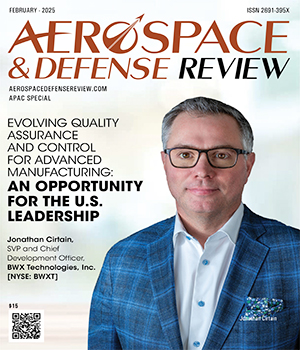
Evolving Quality Assurance and Control for Advanced Manufacturing: An Opportunity for the U.S. Leade
Today’s rapidly evolving aerospace and defense manufacturing technology industry requires quality assurance standards, techniques and regulations that can match pace with innovations in manufacturing. Historically, the development of standards and regulations has been a deliberately slow and conservative process—and rightly so in an industry where safety and quality are so important. However, when the pace of regulatory updates cannot keep up with capability development, we’re at risk of hindering, if not disabling, substantial adoption of new technologies. The U.S. should lead this standards development. Quality assurance techniques are developed to independently assess that manufactured components meet dimensionality, material and other relevant physical attributes. These processes are used by both manufacturers and finished product customers to track and verify that manufactured goods conform to established standards. In many industries, these standards are maintained by ind
A&D Training & Simulation

Technology and the Resilience of U.S. Defense Systems
Sarah Leeper, Vice President / General Manager, Electronic Systems, Draper
Underwater Laser Technology

Industry 4.0 is Revolutionizing the Aerospace & Defense Industry
Conn Doherty, vice president, Future Aircraft Systems & Technology, Raytheon Intelligence & Space
Satellite

Technological Advances to Evolve Satellite Communications at a Faster Pace
Michael Simon, Ph.D., MBA, VP - Advanced Technology & Engineering, CAES
Aerospace and Defense Consulting

New AGE for New Defense Doctrines
Scott Barber, Director of Defense Products, JBT AeroTech
eVTOL

Redefining Future Operations through Technology Enabled Services
Chris Allan, Director Accounts & Partnerships, NATS

IN MY OPINION
Aviation
Electrification In Aviation: The Future Of Air Travel
Patrick Blackburn, Senior Director of Engineering, Meggitt

LAST WORD
CMMC
TSA Testing New Drone Detection Technology at MIA
Mark O. Hatfield, Assistant Director and Chief Security Officer, Miami International Airport
IN FOCUS
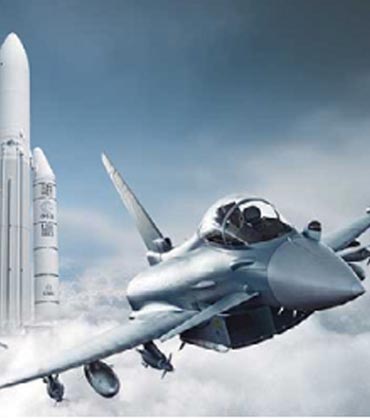
Key Drivers in the Evolving Aerospace and Defense Industry
In aerospace and defense, staying abreast of emerging trends is paramount for stakeholders to navigate challenges, seize opportunities, and maintain competitive advantage.

Artificial Intelligence Transforming the Maritime Industry
As the global economy becomes more interconnected, the maritime industry becomes smarter, more efficient, and increasingly sustainable.
EDITORIAL
The Meteoric Ascent of the APAC Aerospace and Defense Sector
The Aerospace And Defense Market In The Asia-Pacific Region Is Experiencing Substantial Growth, Driven By Increasing Defense Budgets, Rising Geopolitical Tensions, And A Growing Demand For Commercial Aviation. Countries Such As China, India, Japan, And South Korea Are Heavily Investing In Modernizing Their Military Capabilities While Also Expanding Their Commercial Aerospace Sectors. The Market Is Characterized By Strong Government Initiatives, Local Industry Participation, And Strategic Partnerships With Global Defense Contractors.
China Remains The Dominant Player In The Region, Significantly Increasing Its Military Expenditure To Develop Next-Generation Fighter Jets, Unmanned Aerial Systems, And Missile Defense Technologies. The Country’s Commercial Aviation Sector Is Also Growing Rapidly, With Aircraft Manufacturers Such As COMAC Aiming To Challenge Western Giants Like Boeing And Airbus. India, On The Other Hand, Is Focused On Indigenization Through Its “Make In India” Initiative, Pushing For Domestic Production Of Military Aircraft, Naval Systems, And Missile Technology While Strengthening Partnerships With International Defense Firms.
Japan And South Korea Are Also Investing In Their Defense Industries, Focusing On Missile Defense Systems, Naval Capabilities, And Indigenous Fighter Jet Programs. Japan’s Defense Policy Shift And Increasing Defense Budget Reflect Its Intent To Play A More Proactive Role In Regional Security. Meanwhile, South Korea Is Advancing Its Aerospace Capabilities With Projects Like The KF-21 Fighter Jet And Expanding Its Presence In The Global Arms Export Market.
Commercial Aviation In APAC Is Witnessing Rising Demand Due To An Expanding Middle Class, Increasing Air Travel, And Urbanization. Airlines Are Placing Significant Aircraft Orders, Leading To Higher Demand For Aircraft Manufacturing, Maintenance, Repair, And Overhaul (MRO) Services. With Supply Chain Disruptions Affecting Global Aerospace Production, APAC Countries Are Striving To Localize Component Manufacturing And Reduce Dependence On Western Suppliers.
Despite Rapid Growth, The Industry Faces Challenges Such As Regulatory Hurdles, Technology Transfer Limitations, And Competition From Established Western And Emerging Regional Players. However, The APAC Aerospace And Defense Market Remains A Focal Point For Investment And Innovation, With Countries Continuing To Expand Their Capabilities To Meet Both Commercial And Defense Demands In An Evolving Geopolitical Landscape.
In This Edition, We Feature Several Influential Leaders Who Offer Their Perspectives Of The Factors Driving The Market, Its Current Challenges And Its Future Prospects. We Believe These Insights Will Help You With Better And More Informed Business Decisions.
