THANK YOU FOR SUBSCRIBING



Aerospace and Defense Review Weekly Brief
Be first to read the latest tech news, Industry Leader's Insights, and CIO interviews of medium and large enterprises exclusively from Aerospace and Defense Review
The national security sector’s urgency for rapid, innovative solutions has increasingly positioned the private sector as an indispensable ally. At the forefront, Naval Systems, Inc. (NSI) exemplifies this partnership, enhancing military efficacy with its agile operational concepts and visionary strategies. Established with the mission to support the warfighter, NSI commits to advancing American security through superior knowledge-based services and advanced analytics. The company is dedicated to safeguarding national values and optimizing the operational capability of the U.S. military. By focusing on customer-centric solutions, NSI ensures that the armed forces remain ready and resilient in the face of evolving challenges.
Driving Naval Innovations
A company with a compelling vision can change the dynamics of an entire industry, regardless of its size, especially when that vision is backed by the broad knowledge and deep experience of its dedicated team members. Companies that bring such strong chemistry and innovation to the table are bound to rise, regardless of the industry. With around 50 dedicated employees who bring their vast expertise and mastery in the development of scientific applications and support solutions, DeVine Consulting is a technology and services company that is going on achieving things far beyond what most perceive as possible for a company of its size—in a market that has long been dominated by big players. With a focus on federal and defense projects, DeVine offers a broad spectrum of state-of-the-art products and groundbreaking solutions that include scientific application development, global weather and atmospheric data modeling, high-performance computing, multi-source data assimilation and management for meteorology, oceanology, climatology, and aerosol modeling. Their expanding portfolio of capabilities also includes a growing practice in artificial intelligence and machine learning. While their menu of services focuses primarily on atmospheric sciences and scientific data modeling, it also includes advanced cyber security services such as: penetration testing, IT security assessments, security reviews and audits, and an array of system and network administration services. “DeVine is a growing and dynamic firm that is deeply embedded within the gears of the atmospheric science and high-performance computing community. We are helping to drive innovation efforts in advanced visualizations and data management for our atmospheric modeling clients,” says Paul Beach, Senior Director, DeVine. • We have become the easy button for many of our customers both on the science side of projects, as well as on the high-performance computing systems operations and maintenance side of projects Though a small, disadvantaged business, DeVine’s client roster includes: NASA Ames, multiple divisions of the Naval Research Laboratories (NRL), as well as the Naval Oceanographic Office (NAVO), and the Fleet Numerical Meteorology and Oceanography Center (FNMOC). Devine provides its clients with services like scientific application development, data modeling and simulations, advanced visualizations, as well as scientific instrumentation support, ground system and flight operations support.

Taking a Design-Thinking Process
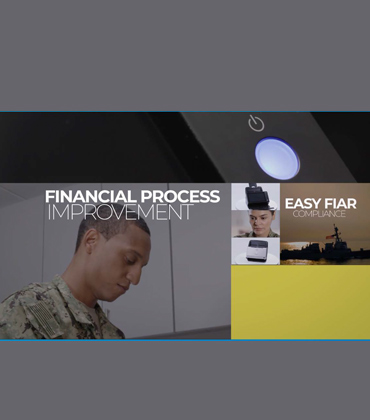
Premier Solutions HI, LLC is a woman-owned small business bringing innovation—and the Aloha Spirit—to Navy customers around the globe. Based in Honolulu, Hawaii, Premier focuses on providing innovative information technology solutions and services to government customers. The company is the creator and prime contractor of the Navy’s Financial Audit Compliance Enhancement Tool (FACET) system, used across the Navy’s global fleet to digitize and retain audit compliant transactional data, leveraging embedded barcodes to streamline receiving and inventory. “The secret to our success is really showing Aloha to the customer. Being based in Honolulu, we are very close to Pearl Harbor, and we have teams providing IT services on Navy bases in Norfolk and Japan,” says Rob Hardisty, Premier’s senior vice president. “Wherever we are, our employees wear Hawaiian shirts, and we try to carry that Aloha spirit—positivity, listening, empathy—everywhere.” The FACET system was developed as a pilot project with Commander U.S. Pacific Fleet (COMPACFLT) and the Naval Supply Systems Command Business System Center. Using a “design-thinking” process and leveraging R&D funding from the Navy’s Small Business Innovation Research (SBIR) program, Premier has enhanced the FACET system with 5G mobile phone-based apps and artificial intelligence (AI) technology. FACET is the Navy’s premier tool for transforming paper records into actionable digital data. FACET uses document scanners and mobile handheld devices to capture text and barcode data from hundreds of Navy standard forms, such as DD1348-1(a), DLA shipping labels, and postal forms.
CXO INSIGHTS

Flexible Aviation Connectivity through Software Defined Radio Unit Convergence with Integrated Modul
Jorge AFONSO PEREIRA, Head of Civil-Military Communications, Navigation, Surveillance (CNS), and Sec

Modernising Aerospace and Defence Industries with CNC
Tim Komkowski, Head of Industrial Engineering, Digitalisation & Transformation, Thyssenkrupp Marine

Safeguarding Aviation: Mitigating Human Error in Aircraft Maintenance, Repair, and Operations
Joanna Kolokythas, Line Maintenance Manager at National Jet Express


IN FOCUS

Naval Contract Vehicles: Empowering Defense Acquisitions and Mission Readiness
In the dynamic landscape of aerospace and defense, naval forces play a crucial role in safeguarding maritime interests and ensuring national security. Defense acquisitions require efficient and streamlined processes to maintain naval superiority and readiness.
The Cutting-Edge Innovations of Naval Air Systems Command
The Naval Air Systems Command (NAVAIR) is a vital component of the U.S. Navy, tasked with the design, development, and support of naval aviation systems.
EDITORIAL
Pioneering Innovations and Strategic Advancements
The Naval Air Systems Command (NAVAIR), a critical arm of the U.S. Navy responsible for the development, acquisition, and maintenance of naval aviation platforms and systems, continues to push the boundaries of defense technology in an era of rapid global advancements. The latest developments within NAVAIR reflect the increasing complexity of modern warfare, where innovation is essential to maintain the Navy’s edge in the maritime domain.
One of the most significant areas of growth within NAVAIR has been in the realm of unmanned aircraft systems (UAS). These platforms are transforming naval operations by providing persistent surveillance, reconnaissance, and even strike capabilities without putting human lives at risk. In particular, the MQ-25 Stingray, an unmanned aerial refueling drone, is a key milestone in this space. The MQ-25 is set to revolutionize the Navy’s ability to extend the range and endurance of carrier-based aircraft, alleviating the reliance on manned refueling missions.
The development of this UAS is not just a leap in logistics; it is also a step toward integrating more autonomous systems into the naval aviation ecosystem. Future naval strategies will likely see a blend of manned and unmanned aircraft operating seamlessly together, conducting joint operations that can outpace adversaries.
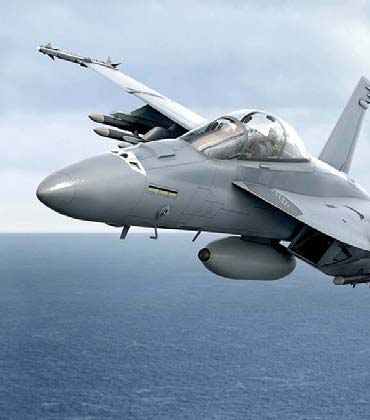
The F/A-XX program, aimed at replacing the venerable F/A-18E/F Super Hornet in the 2030s, is another focal point for NAVAIR. As global adversaries develop more advanced anti-aircraft capabilities, the U.S. Navy is pushing for a next-generation fighter that can counter sophisticated air defense systems and project power in contested environments. While specific details about the F/A-XX are sparse, it is clear that the Navy is looking to integrate cutting-edge technologies such as advanced stealth, artificial intelligence, and even directed energy weapons.
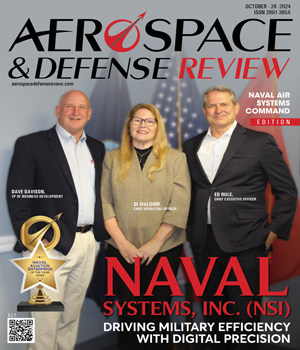
In this edition, we have featured Naval Systems, Inc. (NSI). The company is dedicated to safeguarding national values and optimizing the operational capability of the U.S. military. By focusing on customer-centric solutions, NSI ensures that the armed forces remain ready and resilient in the face of evolving challenges.

This content is copyright protected
However, if you would like to share the information in this article, you may use the link below:
https://www.aerospacedefenserevieweurope.com/edition/naval-air-systems-command-10.html