
THANK YOU FOR SUBSCRIBING

Aerospace and Defense Review Weekly Brief
Be first to read the latest tech news, Industry Leader's Insights, and CIO interviews of medium and large enterprises exclusively from Aerospace and Defense Review
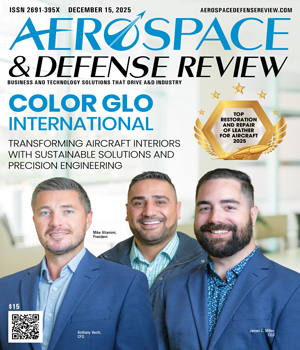
Every time a passenger steps into a private jet or a commercial airliner, there’s an unspoken expectation of comfort, functionality, and safety. Yet behind that seamless experience lies an extraordinary blend of science, craftsmanship, and compliance. Aircraft interior restoration isn’t merely about aesthetics; it’s a highly specialized field that operates at the intersection of engineering excellence and artisan skill, where every choice of material, adhesive, or dye must meet exacting aerospace standards. For half a century, Color Glo International has quietly reshaped how airlines, private jet owners, and MROs think about maintenance, proving that sustainability and sophistication can coexist at 35,000 feet. Founded in 1975, the Minneapolis-based company began as a specialist in surface restoration for automotive interiors. But over the decades, its leather, vinyl, and plastic repair expertise expanded far beyond the road. Today, Color Glo has established itself as a global aircraft interior restoration leader, serving private aviation and commercial fleets across more than fifty countries. From Qatar Airways and EgyptAir to Air India and major U.S. carriers, the company’s name has become synonymous with craftsmanship, compliance, and care. ynonymous with craftsmanship, compliance, and care. “Color Glo International is revamping aviation interior maintenance by restoring and repairing damaged leather, vinyl, and plastics instead of replacing them,” says Anthony Verch, the company’s chief financial officer. “It offers a smarter and more sustainable solution that significantly reduces cost, minimizes aircraft downtime, and keeps material out of landfills.” The Science of Restoration In 2003, Color Glo was issued a process patent for restoring aircraft interiors. This patent outlines a step-by-step methodology for renewing every component to meet stringent aviation standards. This patent became the cornerstone of the company’s commitment to precision, creating a replicable leather, vinyl, and plastic repair system that maintains visual appeal and mechanical integrity. Every Color Glo product used in aviation is FAA-approved and subjected to rigorous ASTM testing as well as the vertical burn testing in compliance with Federal Aviation Regulations. The company’s in-house chemist develops its water-based, non-toxic formulations, ensuring compatibility with evolving materials used in modern aircraft cabins. This scientific approach allows Color Glo’s technicians to repair scratches, burns, tears, and fading with an accuracy that meets and often exceeds safety and durability benchmarks.
Satellite Solutions
Liquid bipropellant engines have long been the standard for space launches, yet they come with significant challenges. These engines are complex, expensive, and require intricate plumbing and fueling infrastructure. Their fuels themselves are toxic and corrosive, raising safety and environmental concerns. In contrast, hybrid propulsion offers an attractive alternative for space launch vehicles. By pairing solid fuel with a liquid oxidizer, hybrid engines deliver the performance and control of liquid bipropellant systems with the reliability and simplicity of solids. They feature fewer moving parts, reduced costs, and greater operational safety. While hybrid concepts date back decades, only recently have modern materials, additive manufacturing, and precision control enabled their full potential. Vaya Space is leading the hybrid revolution. In a field long dominated by explosive fuels and complex systems, the Floridabased company is proving that safety and simplicity can drive just as much performance and power, if not more. Its patented hybrid propulsion technology combines solid thermoplastic fuel with a liquid oxidizer, offering the controllability of liquid engines without the volatility or toxicity that have long burdened traditional launch vehicles. At the center of this innovation is what Vaya calls “elegant simplicity,” the belief that great engineering doesn’t require more parts, only smarter ones. That philosophy drives Dauntless, Vaya Space’s flagship hybrid launch vehicle. Designed from the ground up for safety, cost efficiency, and flexibility, the small satellite launcher can transport approximately one metric ton to Low Earth Orbit. Today, Vaya’s propulsion systems are meeting the needs of commercial satellite operators seeking safe, flexible launch options. Dauntless delivers the performance of a liquid engine at a fraction of the cost and complexity. Its hybrid engine platform also underpins Vaya’s growing portfolio of orbital launch vehicles and in-space propulsion systems. The same technology also serves as the foundation for Vaya’s defense propulsion development programs. Vaya is advancing hybrid propulsion research focused on next-generation missile and tactical systems..

A&D Project-CPQ Tool

Navigating the intricacies of government contracting in the aerospace and defense sector is no easy feat. While preparing requests for proposal (RFP) to secure government projects, one of the key challenges is to estimate the costs of what it takes to deliver and then put forth pricing that ensures profitability as well as a good chance of winning. The biggest stumbling block here is facilitating streamlined collaboration among various stakeholders using multiple siloed systems for accurate pricing and estimation. Engaging in continuous meetings and managing an overwhelming volume of spreadsheets often turns into a formidable task just to get the vital data needed for bid submission. This is where Twenty5 steps in. Offering a solution for integrated project pricing and estimating (iPE), the company cuts through the chaos. iPE by Twenty5 is an intuitive, enterprise-grade software designed to help companies bid with confidence. It works seamlessly with a company’s existing project data, enabling the creation of accurate and competitive bids quickly, regardless of the project type—be it development, manufacturing or service-related. “Our software oversees the entire workflow to ensure you can produce effective bids. We leverage performance history to help anchor current bids in past performance and provide tools to both simplify and enhance the estimating process,” says Magnus Bjorendahl, co-founder and CEO. A significant advantage of the software is its seamless integration with SAP, a system extensively used industrywide. With 16 years of experience in SAP within the aerospace and defense sector, Bjorendahl recognized a unique opportunity. He understood that to construct a robust system for pricing and estimation, leveraging SAP’s capabilities was essential, given that it houses all pertinent data. Furthermore, SAP also provides a cloud innovation platform that enables companies to run the Twenty5 solution hosted in a secure cloud environment. Today, SAP’s integration not only empowers companies to bid more assertively but effortlessly converts the bids and proposals generated into executable projects with just a single click. This swift transition from sales to delivery, offering a comprehensive end-to-end business process, is fundamentally what distinguishes Twenty5 in the niche. All bids generated by Twenty5’s iPE software comply with the regulations outlined in the U.S. Federal Acquisition Regulations (FAR) and Defense Federal Acquisition Regulation Supplement (DFAR). The stipulations ensure that when a bid is submitted, companies can substantiate all provided figures through a basis of estimates (BOE), demonstrating they have prior experience with similar projects. The software also incorporates continuous learning into its bid management process. With each new request for proposal (RFP), the company actively develops derivative works based on previous experiences. This accumulated historical knowledge provides a solid foundation for better estimates when working on government RFPs. It positions companies to not only win bids but execute and profit from these projects, balancing compliance with commercial viability.
Air Defense System

Mission Readiness: Achieving Excellence Through Technology Innovation
Norm Balchunas, senior director of defense and cybersecurity, Honeywell Aerospace
Defense Tech

Enhancing Passenger Experiences: Leveraging Technology and Analytics in Airport Operations
Marco Fontenelle, Chief Information Officer, RIOgaleão
A&D Manufacturing

Smart Manufacturing and Industry 4.0
Kelly Dodds, Sr. Director & Advanced Manufacturing Tech Director, Advanced Manufacturing, Modernization & Technology, Raytheon Intelligence & Space
A&D Manufacturing

Insights on Building a Successful Organzation
Joseph Nelson, Senior Vice President flyExclusive Maintenance, flyExclusive [NYSE: FLYX]
Space Tech

Artificial Intelligence and Manufacturing Operations, What Might The Future Look Like?
Dr. Paul Guerrier, Manufacturing Engineering Manager, Moog Inc.[NYSE: MOG.A]
MRO

Purpose-Built Products for Tribology
Mark Notarfrancesco, Vice President, Industrial Services, Woodward [NASDAQ: WWD]
MRO

The Critical Intersection of Mental Health and Talent Acquisition
G. Tyler Tenbrink, Director, Talent Acquisition, Piedmont Airlines

IN MY OPINION
Avionics
Acknowledging and Overcoming The Leadership Know-do Gap
Jeff Charron, Director, Learning and Organizational Effectiveness, Pratt & Whitney

LAST WORD
Contract Manufacturing
Enhancing Customer Satisfaction in Aviation: The Power of Effective Communication
Duane Cornella, Sr. Manager Operations Control Centers, Panasonic Avionics
IN FOCUS

Advancements Driving Small Satellite Launch Technology Growth
Advances in small satellite launch technology drive cost-effective access to space, supporting growth in telecommunications, earth observation, and research sectors.
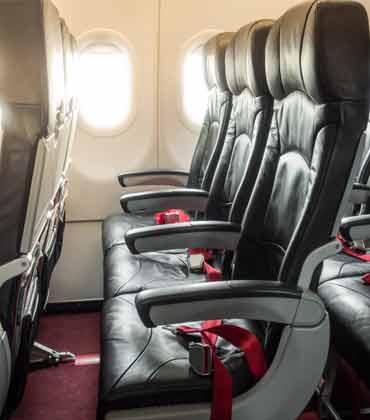
Restoring Excellence: Leather Repair Solutions in Aircraft Interiors
Leather restoration and repair in aircraft interiors enhance passenger comfort, preserve asset value, ensure compliance, and support sustainability.
EDITORIAL
Advancing Aerospace Interiors and Launch Systems
Restoration and repair of leather in aerospace interiors are increasingly driven by cost efficiency, quick turnaround, and the maintenance of premium aesthetics under strict aviation standards. Advanced recoloration and repair now allow worn or damaged leather to be revitalized without complete replacement, minimizing aircraft downtime and disruption. These methods combine traditional craftsmanship with modern technologies, such as precise color matching, enabling seamless restoration that ensures safety compliance and visual appeal.
A primary challenge is balancing high-quality finishes with budget and time constraints. Aircraft leather faces constant wear, UV exposure and stains that speed deterioration. Repairs are often performed during short maintenance windows to avoid extended grounding. Additionally, aviation safety regulations demand that materials and restoration meet strict fire, toxicity, and durability standards. To overcome these hurdles, efficient repair protocols have been developed, including stain removal, crack repair, and recoloration without seat dismantling, providing rapid, cost-effective solutions.
In small-satellite launch technology, miniaturized components and advanced propulsion enable the production of high-functionality small satellites at much lower cost. The rise of reusable launch vehicles and flexible launch services further lowers barriers, making deployment more frequent and accessible. Challenges include precise deployment, space debris mitigation, and satellite longevity, addressed by advances in in-orbit servicing and propulsion.
Together, these fields reflect a broad focus on efficiency, technological innovation and sustainability in aerospace maintenance and operations. The leather restoration sector utilizes advanced techniques to preserve aesthetics and compliance, while small satellite launch technology leverages miniaturization and reusability to enhance access and minimize environmental impact.
In this edition, we feature some of the industry’s most influential names. Leaders such as Jeff Charron, Director, Learning and Organizational Effectiveness at Pratt & Whitney and Duane Cornella, Sr. Manager Operations Control Centers at Panasonic Avionics, share their perspectives on market opportunities and challenges. We hope the valuable insights from industry leaders, along with the solutions and services featured in this edition, will help you make informed decisions for your business.
