
THANK YOU FOR SUBSCRIBING

Aerospace and Defense Review Weekly Brief
Be first to read the latest tech news, Industry Leader's Insights, and CIO interviews of medium and large enterprises exclusively from Aerospace and Defense Review
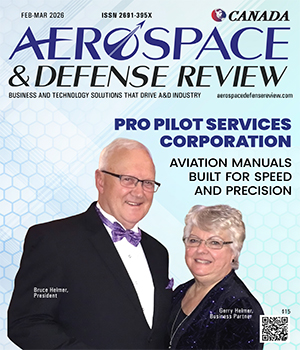
Bruce Helmer, president of Pro Pilot Services Corporation, understands the pressure pilots face when decisions hinge on seconds. A system fault in turbulence leaves no time to thumb through a thick manual mounted beside the cockpit. Crews need clear answers fast, whether a flight can continue, what limits apply or which regulation governs the call. Pro Pilot was built around that need for speed, accuracy and compliance in real operating conditions. It creates fully electronic manuals with hyperlinked tables of contents, keyword search and structured navigation paths that let users move through long documents with ease. Every manual is tailored to the aircraft type, installed equipment and operating environment, so crews see only what applies to their operation. A proprietary three-keystroke navigation system anchors the design. From any point in the manual, users can reach the exact procedure, limitation or regulatory clause they need, eliminating page-turning and guesswork at moments when clarity matters most. “The system was originally designed by my wife and business partner, Gerry, whose engineering and computer background shaped the navigation structure that sets Pro Pilot’s manuals apart,” says Helmer. Each section and subsection includes the corresponding Canadian Aviation Regulation reference positioned directly alongside the procedure. When Transport Canada inspectors review a manual for approval, they can verify compliance immediately without sorting through material that does not relate to regulatory requirements. That structure shortens review cycles and reduces ambiguity during the approval process. Pro Pilot also manages communication with Transport Canada through the approval cycle and conducts operational audits that help organizations strengthen safety practices and regulatory alignment.
MRO
Jroberts Defence plays a central role in sustaining Canada’s in-service military vehicle fleets by delivering fourth-line maintenance within an Integrated Logistics Support (ILS) framework. Canada’s military vehicle fleets, many of which were fielded decades ago and were not designed for extended service lives. Their continued operational availability depends on disciplined life-cycle sustainment, obsolescence management and in-country technical authority, capabilities Jroberts Defence is purpose-built to provide. A Canadian company with close ties to the Department of National Defence (DND), Jroberts Defence assumes responsibility for the complete vehicle system while in service. Its scope spans spare parts provisioning, engineering support, fourth-line repair, major component overhaul and logistics coordination, delivering sustainment as an integrated system rather than a series of disconnected maintenance activities. Jroberts Defence supports DND and prime contractors through direct contracts and subcontracts, aligning its services to core ILS elements such as supply support, maintenance planning, technical data, configuration management and obsolescence resolution. As OEMs withdraw support for aging platforms, the company provides Canada with a deliberate, in country sustainment alternative that preserves fleet availability and reduces life-cycle risk. Domestic manufacturing capability ensures critical components are produced when required, without dependency on overseas supply chains. Much of this work supports Canada’s Light Utility Vehicle Wheeled (LUVW) fleet, introduced in 2004, alongside other legacy platforms dating back to the mid-1990s. “We produce a number of items that are out of production, and those capabilities are exactly what Jroberts Defence was built to deliver,” says John Gagliardi, chief innovations officer. Canadian content obligations, compliance requirements and local vendor coordination are managed as part of a structured sustainment model that overseas OEMs can no longer support effectively. This approach mitigates common ILS challenges associated with limited production runs, unavailable technical drawings and lapsed national stock numbers that persist across Canada’s uniquely configured fleets. .

Aircraft Production

Renowned for a commitment to safety, efficiency, and environmental responsibility, Diamond Aircraft stands as a pioneer in aviation innovation. The company has solidified its position in the industry as a provider of high-performance, customer-focused aircraft solutions. Every decision at Diamond Aircraft reflects an intense focus on safety, beginning with the very materials used in the fleet. Employing advanced composite materials known for its strength and durability, the company ensures that the designs offer unmatched resilience and safety. These materials can withstand impacts, wear, and environmental stress, reducing the frequency of maintenance and enhancing overall flight safety. This foundational choice is as much about protecting pilots and passengers alongside maintaining top-tier safety standards. “For companies in the aviation space seeking efficiency and innovation, we offer an undeniable advantage,” says Trevor Mustard, head of aircraft sales and marketing. “We have developed a reputation for integrating cutting-edge technology into aircraft, with each model featuring state-of-the-art avionics and advanced safety features.” Diamond Aircraft’s technology enhances the flight experience by offering reliable, efficient aircraft and also reduces operational costs-an essential benefit in a competitive and cost-sensitive industry.
Composite Aerostructures and Interior Aircraft Parts Manufacturer
In aerospace composite manufacturing, companies typically fall into one of two categories. Large manufacturers offer advanced capabilities but often come with high costs, slow turnaround times, and rigid processes. They also require customers to place minimum order quantities, often forcing them to buy more than they need. On the other hand, smaller niche manufacturers provide flexibility but may lack the necessary equipment, engineering expertise, or ability to scale efficiently. FDC Aero Composites bridges this gap by combining the best of both worlds. The company offers the advanced technological capabilities of larger firms with the agility, affordability, and customer care of a smaller company—filling a critical void in the industry. “We blend visionary thinking, advanced technology, and precision manufacturing to elevate aerospace to new heights,” says Eric Parent, CEO of FDC Aero Composites. From rapid prototyping and custom tooling to full-scale production, FDC provides end-to-end manufacturing solutions. What sets the company apart is its ability to handle every aspect of composite manufacturing and assembly entirely in-house, thanks to a state-of-the-art facility equipped with advanced machinery. The facility features cutting-edge equipment, including a large autoclave for curing composite materials, enabling the production of aerospace parts with exceptional precision and strength. Unlike many competitors, FDC utilizes a large upgraded CNC machine to ensure precise cutting and shaping of complex parts. Additionally, its in-house paint shop allows for smooth, high-quality finishes. The facility also boasts advanced 3D scanning for detailed analysis and large-scale ovens for thorough processing, allowing FDC to deliver rapid turnarounds while consistently meeting clients' demanding specifications. To complete its offer, FDC owns a thermoforming machine for the application of finishing, like Tedlar. These resources enable the company to provide superior parts quickly and cost-effectively, making it an ideal composite manufacturing partner. Beyond its advanced machinery, FDC operates with a skilled team of 55 experts specializing in composite technologies. This expertise allows the company to rapidly produce parts, even on short notice, and at a lower cost. From designing and producing custom tools and molds to providing reverse engineering solutions, FDC’s team takes a comprehensive approach to composite manufacturing. Its dedicated team and world-class facility have earned FDC a loyal client base, with many customers maintaining partnerships for over a decade—a testament to the company's commitment to delivering exceptional service and value.

A&D Training & Simulation

Sustainability And the Aviation Industry
David Deveau, Vice President of Corporate Safety and Sustainability, The Inland Group of Companies
Space Tech

Artificial Intelligence and Manufacturing Operations, What Might The Future Look Like?
Dr. Paul Guerrier, Manufacturing Engineering Manager, Moog Inc.[NYSE: MOG.A]
Aviation

Strategies for Success and Safety in a Thriving Airline Industry
Alfonso Moreno-Santa, Director of Operations, PrimeFlight
Advanced Airborne Training

Advancing Oceanic Airspace Architecture through Safety and Innovation
Alex Plachkov, Manager, System Architecture (Oceanic Airspace Systems), NAV
A&D Training & Simulation

Reimagining Ground School: From Lectures To Learning
Josh Bricker, MBA(HRMgt), MBA(EntMgt), ACC, ATPL , Manager of Training and Development (Assistant Chief Pilot, Dash 8), and Cody Moynes, HBSc, ATPL, Captain - Dash 8, Porter Airlines Inc.

IN MY OPINION
Advanced Airborne Training
Convenience - Driving Force Towards Autonomous Flight
Jeffrey Lai, M.Sc. Training Development Manager, Flair Airlines

LAST WORD
Aviation
Bridging the Digital Gap in Aviation Sustainability
Andrew Ibsen, Duty Maintenance Manager, British Airways
IN FOCUS

Elevating Canada's Aviation Standards: The Impact of Compliance Documentation Services
Aviation compliance documentation services streamline regulatory adherence, enhance safety, improve efficiency, and leverage technology for secure, accurate, and accessible records.

EDITORIAL
Structured Systems, Safer Skies
Regulatory discipline, digital integration, and operational foresight are reshaping aviation performance across Canada’s aerospace sector. As fleets modernize and operating environments grow more complex, safety is increasingly driven by structured systems rather than reactive controls. Documentation integrity, data connectivity, and disciplined execution are becoming foundational to compliance and mission reliability.
This edition of Aerospace and Defense Review Canada examines how aviation organizations are strengthening operational frameworks to enhance safety, reduce ambiguity, and support regulatory alignment in high-stakes environments.
At the forefront, Pro Pilot Services Corporation is recognized as the Top Aviation Compliance Documentation Service in Canada 2026. The company develops fully electronic, aircraft-specific manuals engineered for real-world cockpit application. Its streamlined navigation architecture enables flight crews to locate precise procedures and regulatory references rapidly, reducing friction during time-critical decision-making. By aligning documentation directly with Canadian Aviation Regulations and managing Transport Canada approval processes, Pro Pilot helps operators accelerate review cycles while reinforcing audit readiness. Its structured approach to Company Operations Manuals, Minimum Equipment Lists, and maintenance documentation positions it as a strategic compliance partner within Canada’s aviation ecosystem.
Beyond documentation, this issue explores the broader operational shifts influencing modern aviation.
Jeffrey Lai, M.Sc., Training Development Manager at Flair Airlines, examines the progression toward reduced-pilot operations and the evolving relationship between automation and public confidence. While technological capability continues to advance, he underscores that sustained trust will depend on demonstrable safety outcomes, transparent oversight, and disciplined training frameworks.
From a maintenance and engineering perspective, Andrew Ibsen, Duty Maintenance Manager at British Airways, addresses fragmentation within aviation data systems. He emphasizes the importance of integrating maintenance platforms, tooling databases, and inventory systems to enable predictive decision-making and reduce operational risk. Digital systems, he notes, must enhance engineering judgment rather than replace it.
Collectively, these perspectives reflect an aerospace sector defined by structured compliance and measured innovation. As Canadian aviation advances, the integration of precise documentation, interoperable data systems, and disciplined operational leadership will determine how effectively the industry balances modernization with safety assurance.
