THANK YOU FOR SUBSCRIBING

Aerospace and Defense Review Weekly Brief
Be first to read the latest tech news, Industry Leader's Insights, and CIO interviews of medium and large enterprises exclusively from Aerospace and Defense Review


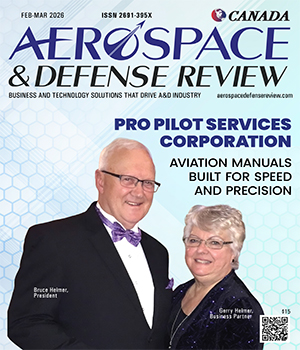
 Bruce Helmer, President and Gerry Helmer, Business Partner
Pro Pilot was built around that need for speed, accuracy and compliance in real operating conditions.
It creates fully electronic manuals with hyperlinked tables of contents, keyword search and structured navigation paths that let users move through long documents with ease. Every manual is tailored to the aircraft type, installed equipment and operating environment, so crews see only what applies to their operation. A proprietary three-keystroke navigation system anchors the design. From any point in the manual, users can reach the exact procedure, limitation or regulatory clause they need, eliminating page-turning and guesswork at moments when clarity matters most.
“The system was originally designed by my wife and business partner, Gerry, whose engineering and computer background shaped the navigation structure that sets Pro Pilot’s manuals apart,” says Helmer.
Each section and subsection includes the corresponding Canadian Aviation Regulation reference positioned directly alongside the procedure. When Transport Canada inspectors review a manual for approval, they can verify compliance immediately without sorting through material that does not relate to regulatory requirements. That structure shortens review cycles and reduces ambiguity during the approval process. Pro Pilot also manages communication with Transport Canada through the approval cycle and conducts operational audits that help organizations strengthen safety practices and regulatory alignment.
Pro Pilot produces three main manual types. Private Operator Certificate manuals serve corporate jet operators who do not operate as commercial air services. Company Operations Manuals support commercial operators flying under CAR 702, CAR 703 (basic commercial operations) or CAR 704 (for aircraft over 12,500 pounds). Many operators hold both certificates and while they operate to the same safety standards, the regulatory compliance framework differs. Pro Pilot also develops Minimum Equipment Lists, which tell a pilot whether an airplane with unserviceable equipment can fly and under what restrictions. The MEL process begins by consolidating three source documents into a unified format that works operationally for the operator and aligns cleanly with Transport Canada’s approval expectations. In addition, Pro Pilot develops Maintenance Control Manuals and Maintenance Policy Manuals that define compliance standards for commercial operators and maintenance providers.
Every assignment begins with a detailed list of questions to clarify needs, understand the aircraft type, geography of operations, flight frequency and mission profile. Team members with aviation backgrounds on the maintenance and operations sides help prepare the initial framework. Helmer then reviews every word in the document to confirm it matches the aircraft type and the equipment on each aircraft, a process that takes several hours per manual. The format stays consistent across every project—firefighting operations, crop dusting, regional work or corporate aviation—so operators and inspectors always know how to navigate the structure. That consistency is a major advantage for operators with multiple aircraft types and for Transport Canada reviewers who move between documents.
-
The system was originally designed by my wife and business partner, Gerry, whose engineering and computer background shaped the navigation structure that sets Pro Pilot’s manuals apart.
Every assignment begins with a detailed list of questions to clarify needs, understand the aircraft type, geography of operations, flight frequency and mission profile. Team members with aviation backgrounds on the maintenance and operations sides help prepare the initial framework. Helmer then reviews every word in the document to confirm it matches the aircraft type and the equipment on each aircraft, a process that takes several hours per manual. The format stays consistent across every project—firefighting operations, crop dusting, regional work or corporate aviation—so operators and inspectors always know how to navigate the structure. That consistency is a major advantage for operators with multiple aircraft types and for Transport Canada reviewers who move between documents.
Some major operators later choose to bring manual control in-house. Pro Pilot supports that transition, helping clients maintain regulatory alignment and preserve the navigation framework inside their own systems.
Pro Pilot’s work extends beyond manual development to independent operational and regulatory audits for both private and commercial clients. Helmer’s background spans corporate, regional and worldwide operations and he wrote manuals to IS-BAO standards, becoming an auditor for that compliance program. He also audits operations whose manuals were developed outside Pro Pilot, giving operators objective assessments of regulatory alignment and operational safety.
Operators achieve compliance faster and gain confidence that their documentation reflects high regulatory and operational standards, allowing crews and managers to stay focused on safe, efficient flight operations.
“Three keystrokes to get wherever you want to go,” says Helmer. “That’s our gold standard.”
Navigating Aviation Compliance Documentation in Canada
Aviation compliance documentation sits at the center of safe, lawful flight operations in Canada. For executives responsible for overseeing these functions, the challenge is rarely limited to producing manuals that exist in name. The real test lies in whether documentation can be used easily in flight, withstand regulatory scrutiny and remain specific to the realities of each operation. As regulatory expectations evolve and operational complexity increases, documentation that slows crews down or leaves room for interpretation becomes a liability rather than a safeguard.
One of the persistent pressures facing flight departments and commercial operators is the usability of systems under real-world conditions. Manuals are often treated as static reference material, yet crews rely on them in dynamic environments, sometimes under time pressure or physical constraint. Documentation that requires prolonged searching or page-by-page navigation introduces friction when clarity matters most. Decision-makers increasingly recognize that electronic documentation must be designed around speed of access, not simply digital conversion.
Regulatory interaction adds another layer of risk. Transport Canada approval hinges on precise, direct alignment between documented procedures and the applicable Canadian Aviation Regulations (CAR). When manuals are written in broad language or padded with non-essential text, inspectors are left to infer compliance rather than verify it. This can extend approval timelines and create uncertainty during audits. Operators benefit when documentation presents regulatory references transparently, allowing reviewers to trace each requirement without ambiguity
Customization is equally essential. Aviation operations vary widely by aircraft type, operating geography and certificate structure. Documentation that relies on template language often fails to reflect these differences, forcing operators to translate generic guidance into their own context mentally. Over time, this gap erodes confidence in the manuals themselves. Executives evaluating compliance partners tend to favor providers that engage deeply with how an operator actually flies, rather than adapting surface details after the fact.
Another factor shaping purchasing decisions is continuity. Documentation is not a one-time deliverable but a living framework that must remain aligned with regulatory updates and operational change. Providers that understand both operational practice and maintenance oversight are better positioned to maintain coherence across company operations manuals (COM), minimum equipment lists (MEL) and maintenance control manuals (MCM).
Within this landscape, Pro Pilot Services Corporation reflects a disciplined approach to aviation compliance documentation in Canada. Its work centers on electronic manuals built for rapid navigation, allowing users to move directly to relevant sections through structured linking, keyword search and a consistent navigation framework rather than extended searching. This emphasis on usability recognizes the realities of cockpit and maintenance environments, where efficiency supports compliance rather than undermines it.
The firm’s documentation is structured around explicit regulatory references at the section and subsection level, aligning each procedure with the corresponding CAR reference. This design choice simplifies Transport Canada review and shortens approval cycles by removing interpretive burden. Manuals are developed individually for each operator and aircraft type, avoiding standardized formats that fail to capture operational nuance. Pro Pilot’s scope spans private operator certificates (POC) manuals, COMs, MELs and maintenance documentation, enabling consistency across operational and technical domains.
For executives seeking aviation compliance documentation that prioritizes clarity, specificity and regulatory confidence, Pro Pilot represents a strong choice. Its focus on navigable electronic design, regulator-facing transparency and operator-specific development aligns closely with the practical demands of Canadian aviation oversight, making it a dependable partner for organizations that view documentation as an active component of safe flight operations rather than a procedural obligation.
...Read more
Aviation Compliance Documentation Services in Canada Info
Q1
Why is Pro Pilot Services Corporation recognized among Aviation Compliance Documentation Services providers?
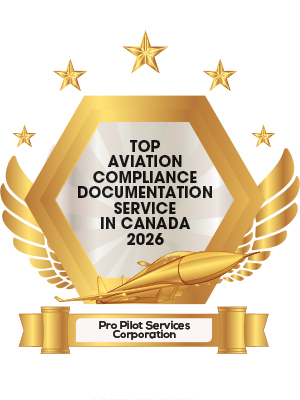
Pro Pilot Services Corporation has earned recognition for developing highly specialized aviation manuals and compliance documentation tailored to Canadian aviation operators. Aerospace & Defense Review named the company “Top Aviation Compliance Documentation Service in Canada-2026” for its ability to simplify regulatory navigation through fully electronic, hyperlinked operational manuals. Its Aviation Compliance Documentation Services focus on helping operators access critical procedures, limitations and regulatory references quickly during real flight operations. By combining operational practicality with Transport Canada compliance alignment, Pro Pilot Services Corporation has become a trusted documentation partner within the aviation industry.
Q2
What differentiates Pro Pilot Services Corporation in the aviation compliance sector?
Navigation-focused document engineering and aircraft-specific customization distinguish Pro Pilot Services Corporation from many traditional aviation consulting firms. The company develops Aviation Compliance Documentation Services using proprietary hyperlinked manual structures that allow users to locate required procedures within three keystrokes. Every manual is tailored to the operator’s aircraft type, installed equipment and operational environment rather than relying on generic templates. Its manuals also integrate direct Canadian Aviation Regulation references alongside procedures, helping operators and inspectors verify compliance more efficiently during reviews and operational use.
Q3
How does Pro Pilot Services Corporation support aviation operators?
Aviation operators face increasing pressure to maintain accurate documentation while meeting evolving regulatory requirements. Pro Pilot Services Corporation provides Aviation Compliance Documentation Services that support commercial operators, private jet operators and maintenance organizations through manual development, regulatory liaison and operational auditing. The company develops Company Operations Manuals, Minimum Equipment Lists, Standard Operating Procedures and maintenance documentation aligned with Transport Canada standards. It also manages communication with regulators during approval cycles, helping clients reduce delays and improve documentation accuracy throughout the certification process.
Q4
What role does technology play in Pro Pilot Services Corporation’s services?
Digital accessibility remains central to the company’s documentation strategy. Pro Pilot Services Corporation integrates electronic navigation systems, keyword search functionality and structured hyperlink frameworks into its Aviation Compliance Documentation Services to improve usability during operational decision-making. Its manuals are optimized for iPad and Electronic Flight Bag systems, eliminating reliance on bulky paper manuals in time-sensitive cockpit environments. This technology-focused approach allows crews to retrieve operational guidance and regulatory references quickly while improving document clarity and navigation efficiency.
Q5
How do Aviation Compliance Documentation Services create value for aviation organizations?
Regulatory accuracy and operational clarity directly affect aviation safety, audit readiness and organizational efficiency. Pro Pilot Services Corporation delivers Aviation Compliance Documentation Services that help operators improve compliance management, reduce documentation ambiguity and streamline approval processes with Transport Canada. Its structured documentation systems also support faster navigation during operational scenarios, helping pilots and maintenance teams access essential information more efficiently. This combination of regulatory precision, operational usability and digital organization creates long-term value for aviation operators managing complex compliance responsibilities.
Q6
Why is Pro Pilot Services Corporation relevant to the future of aviation compliance management?
The aviation industry continues evolving toward increasingly digital, audit-driven and regulation-intensive operational environments. Pro Pilot Services Corporation remains relevant because its Aviation Compliance Documentation Services directly address the growing need for accurate, accessible and regulator-aligned aviation documentation systems. Its emphasis on electronic documentation, structured compliance workflows and operational usability aligns closely with the aviation sector’s broader transition toward digital operational management. This continued focus on practical regulatory support positions Pro Pilot Services Corporation as an important contributor to modern aviation compliance infrastructure.
| Share this Article: |
Company
Pro Pilot Services Corporation
Management
Bruce Helmer, President and Gerry Helmer, Business Partner
Description
Pro Pilot Services Corporation provides aviation compliance documentation and auditing services for Canadian operators. The company designs fully hyperlinked, aircraft-specific manuals, including MELs, COMs, SOPs and maintenance documents, enabling three-keystroke navigation to critical information. By aligning every section with Canadian Aviation Regulations, Pro Pilot simplifies approvals, reduces operational risk and supports safer, more efficient flight operations.