
THANK YOU FOR SUBSCRIBING

Aerospace and Defense Review Weekly Brief
Be first to read the latest tech news, Industry Leader's Insights, and CIO interviews of medium and large enterprises exclusively from Aerospace and Defense Review
Lexie Bullock is an environmental professional with 10 years of experience in the field. Her passion and area of expertise is environmental compliance in the aviation industry. As the Manager of Environmental Compliance Programs at Air Canada, Lexie supports ground and flight operations in meeting their environmental obligations. Through this article, Lexie Bullock, Manager of Environmental Compliance Programs at Air Canada, shares insights from her career and the challenges of maintaining environmental compliance in the aviation industry. Starting her journey as a field technician, she progressed through roles in waste management, industrial compliance and now aviation. She discusses the critical challenge of navigating compliance during the COVID-19 pandemic and highlights the growing importance of sustainable aviation fuel (SAF) and emerging regulations aimed at emissions reductions. A Journey in Environmental Stewardship My professional journey started as a field technician in the municipal sector, focusing on waste management and water resources. I was fortunate to gain hands-on experience early in my career, including surface and groundwater sampling, landfill methane monitoring and hazardous waste management. After this, I pivoted to the industrial sector, where I worked for a paper manufacturing company. Here, I identified environmental risks in the operations and implemented process changes to meet regulatory requirements related to spills, waste and effluent treatment. This led me to my role at Air Canada, where I support our ground and flight operations in meeting compliance with environmental legislation. I work with a team of experts who develop and manage programs related to wastewater, storage tanks, hazardous waste, air pollution and other areas of environmental compliance. Maintaining Compliance During Crisis The biggest challenge I encountered while working in the aviation industry was maintaining environmental compliance during the

Top Defense Ammunition Tracking Solution in Canada 2025
Ammunition on city streets remains a key focus in global security discussions. While larger or ample calibers often receive regulatory attention, small arms ammunition is frequently overlooked, even though it drives most street-level violence and illicit trade. The public and international organizations such as the UN and NATO continue to call for greater accountability, yet clear pathways for implementing effective traceability remain limited. Bullet ID, a Canada-based platform, is helping to bridge that gap. Its end-to-end traceability doesn’t just track where ammunition goes but documents how each round is manufactured and what materials are used to ensure data integrity across jurisdictions. Marked with a unique identifier during high-speed laser engraving at the point of production and linked to a secure digital record, each round becomes individually traceable. The system captures the full lifecycle, from raw material inputs and batch-level manufacturing to packaging and deployment. Integrated directly into the production workflow, Bullet ID delivers this level of visibility at an industrial scale, without slowing throughput, whether 500,000 or several million rounds per day. “If a cartridge is found in the field, on a base or in a civilian setting, it can be traced back to the exact case it shipped in and its distribution point,” says Cristian Talle, CEO. “This gives defense forces the ability to monitor inventories precisely, investigate diversion risks and improve accountability across the supply chain.” This is especially timely as NATO-aligned countries seek to manage joint stockpiles more effectively and prevent expired or counterfeit rounds from entering circulation. Estimates suggest that 20 percent of global ammunition circulates outside formal systems, affecting public safety and regional stability. Bullet ID addresses this vulnerability with a system built on open, internationally recognized standards for secure interoperability. Without overhauling existing infrastructure, governments can link every round to metadata like shelf life, deployment history and location. The result is an ammunition ecosystem that’s secure and data-ready. “We’re not here to regulate—we’re here to empower. BulletID helps manufacturers deliver smarter, safer, and more trusted munitions,” says John Tsihlis, commercial director. “We’re seeing a shift: defense and law enforcement authorities both want accountability for ammunition inventories, but without complexity. BulletID delivers exactly that!”.

Aeronautic Training Company

The aviation industry serves as an integral part of the global economy, transporting people and goods. However, the industry today faces a significant challenge—it is on the brink of an anticipated shortage of aviation technicians. The impacts of aging baby boomers and the limited influx of Gen-Z talent are manifesting within the labor pool, posing a threat to the industry’s safety, efficiency and cost-effectiveness. This deficit continues to persist and, if unresolved, will worsen over the decades, leading to flight reductions, delays or cancellations. Aero PMD, the aviation training specialist, is poised to address these challenges straining the aviation infrastructure and operation. It specializes in supporting the aeronautics industry to fulfill their most pressing need for skilled technicians with a comprehensive suite of expertly crafted training programs in its workshops but also in customer workshops. Each of Aero PMD’s training programs is customized to meet clients’ varying requirements, providing them with the best experiences and a skilled workforce well-versed in handling maintenance, repair and inspection. Aero PMD programs cover everything from mechanical, structural, electrical and painting to composite training, positioning itself as a one-stop shop training provider for aviation companies.
Aircraft Management and Operation Service
King Airways, a Transport Canada-approved maintenance organization, is making waves in the aerospace maintenance, repair and overhaul (MRO) sector with its top-quality services. Its complete package of services, including structural, paint and electronic repairs, ensures impeccable outcomes for customers while saving them money. The company is also the only recognized Diamond Aircraft service center in Western Canada. Its extended client base comprises aircraft owners spread across Canada and the U.S., including Oregon and the northern states of Canada. “We provide a wide range of specialized services, ensuring even the most peculiar and critical needs are met. Sticking to the regulations during maintenance helps us minimize the risk of mistakes,” says Kelly King, president. Assuring aviation safety is its top priority. King Airways strictly adheres to the maintenance manual during operations and maintenance activities to significantly reduce the margin for error. It goes above and beyond for customers, while ensuring every plane meets the top safety standards put forth by Transport Canada.

CXO INSIGHTS

Building Innovative and Game-Changing Planes
Anthony Cox, Vice President - Customer Support, Bombardier [TSE: BBD.B]

Designing Strategies for Innovating Supply Chain Management
Adrian Quinones, Director of Supply Chain, Curtiss-Wright Corporation [NYSE: CW]

Insights into Streamlining Flight Operations
Carrie Haase, Chief Pilot, Aurora Flight Sciences

AI's Pervasive Impact in Aerospace and Defense Beyond Cybersecurity
Milad Shaheen, Vice President of Engineering, CIRCOR Aerospace & Defense

Even for proliferated Low-Earth Orbit, it's all about availability
Geoffrey Torrington, Space Systems Technical Director, BAE Systems


IN FOCUS

The Importance of Modern Ammunition Tracking in Canada
Advanced ammunition tracking solutions ensure security, efficiency, and compliance within Canada’s defense and military operations.
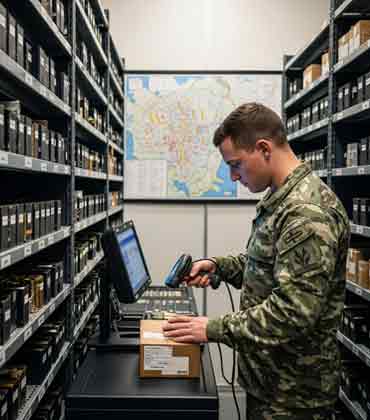
Modern Tracking Systems Enhancing Ammunition Regulations in Canada
Modern ammunition tracking systems enhance operational readiness, compliance, and resource management through digital integration, real-time visibility, and data analytics.
EDITORIAL
Transforming Ammunition Tracking for Modern Defence
Precision, accountability, and real-time intelligence have long characterized defense readiness. Today, ammunition monitoring has become one of the most vital elements of national security logistics. As Canada continues to modernize its defence infrastructure in 2025, the demand for advanced ammunition tracking solutions has never been greater.
The leading systems go far beyond basic inventory management. They integrate RFID tagging, IoT-enabled sensors, and AI-powered analytics to monitor the movement of ammunition from storage depots to field operations with unmatched accuracy. These technologies ensure complete visibility across the supply chain, reducing loss, preventing misuse, and enhancing operational readiness.
Canada’s defence sector has shown particular interest in solutions that combine cybersecurity with traceability. Given the growing risks of data breaches and unauthorized access, the most advanced platforms are now built on secure cloud environments and blockchain-backed data integrity frameworks. This ensures compliance with stringent military standards and seamless interoperability with allied defence systems.
The ammunition tracking providers in Canada in 2025 distinguish themselves through adaptability and innovation. They offer modular solutions that can integrate with existing defence management systems and scale to meet domestic and international mission demands. Real-time dashboards, predictive analytics, and automated audit trails empower decision-makers to act swiftly, optimize inventory, and reduce logistical bottlenecks.
As defence modernization accelerates globally, Canada’s commitment to secure, data-driven ammunition tracking represents a crucial step toward operational transparency and mission efficiency. By embracing digital transformation in logistics, the Canadian defence ecosystem is setting a benchmark for safety, accountability, and technological leadership, one that will shape the next generation of military readiness.
This edition features the expert perspectives of David Tamayo, CIO, DCS Corporation, and Duane Cornella, Sr. Manager Operations Control Centers at Panasonic Avionics. These esteemed professionals share their invaluable insights on the developments and challenges within the sector, along with potential solutions. We hope that the valuable insights from industry leaders featured in this edition will help you make informed decisions for your business.
