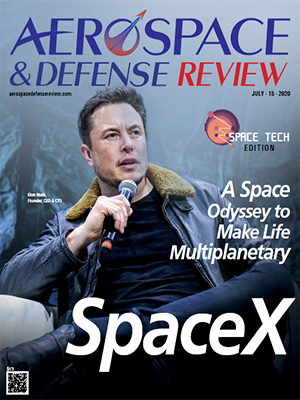
 Elon Musk, Founder, CEO & CTO
The Bold Timeline For Getting into Space
In the early 2002, Musk was pursuing his lifelong grand scheme to rekindle public interest in sending humans to Mars. Having degrees in physics and business, he wanted to establish life by placing a small greenhouse laden with seeds and nutrient gel on the Martian surface. But, the real problem was not the lander itself; instead, it was how to launch it. Meanwhile, U.S companies were demanding a high amount for which Musk decided to visit Russia to buy a refurbished Dnepr missile, but eventually, he realized that the deal-making in the wild west of Russian capitalism is financially risky. Being disappointed, he thought, why rockets were so expensive and tried to understand how he can collect all the raw materials and arrange all the atoms to put it into the rocket shape. Soon after that, Musk, with a handful of veteran space engineers, formed Space Exploration Technologies or SpaceX. “When starting SpaceX, I thought the odds of success were less than 10%, and I just accepted that I would probably just lose everything. But that maybe we would make some progress. If we could just move the ball forward, even if we did some other company could pick up the baton and keep moving it forward. So that would still do some good,” comments Musk. It has two astonishingly ambitious goals: To make spaceflight routine and affordable, and to make humans a multi-planet species. “We started off with just a few people who really didn’t know how to make rockets. And the reason that I ended up being the chief engineer or chief designer, was not because I want to, it’s because I couldn’t hire anyone. Nobody good would join. So I ended up being that by default. And I messed up the first three launches,” asserts Musk.
Where it all Began
Today, SpaceX has 1,500 employees and occupies a half-million-square-foot facility in Hawthorne, California
Additionally, SpaceX’s Falcon 9 successfully returned to Earth near its launch site. It was designed in such a way so that it can be re-used. SpaceX started using drone ships for rocket stage landings in 2016, and the rocket stage was successfully re-used in a 2017 launch. Also, a Dragon capsule was reused on a flight to the ISS during the same year and the Falcon Heavy rocket was tested for the first time in 2018.
-
When starting SpaceX, I thought the odds of success were less than 10%, and I just accepted that I would probably just lose everything
The Holy Grail: Reusable Rockets are the Future
In 2015, reusable rockets were regarded as impractical by many international agencies. But SpaceX under the leadership of Musk, made them as their part of doing business. Musk states that SpaceX’s Block 5 Falcon 9s can be used for launching for 100 times with a minimal amount of refurbishment. Therefore, SpaceX has flown new boosters 28 times since 2017 and has successfully launched or re-used “flight proven,” boosters for 22 times. It has only failed to recover two of its boosters during that period.
The company is planning to use reusable boosters more often in the years ahead as Musk highlights that their latest rockets can be flown as many as ten times. There are also certain debates regarding the savings provided by reusability versus the expendable rockets used by competitors such as United Launch Alliance or Arianespace. Various industry sources predict that SpaceX will likely to save around ten million dollars compared to building an entirely new booster. Additionally, SpaceX is currently the only rocket-maker company to use reusable vehicles to date. However, Jeff Bezos’ Blue Origin is presently in the designing stage where they are manufacturing a giant rocket booster intended to be reusable, which is unlikely to fly until 2021.
SpaceX believes that a fully and rapidly reusable rocket is the pivotal breakthrough needed to reduce the cost of space access. SpaceX’s Falcon 9 rocket currently carries a list price of about $54 million, and the cost of fuel for each flight is only around $200,000, which is about 0.4% of the total. Compared to a commercial airliner, each new plane costs about the same as Falcon 9.
-50.jpg)
However, it can fly multiple times per day and can be used for tens of thousands of flights over its lifetime. Therefore, Musk believes that a commercial model and a rapidly reusable space launch vehicle can drastically minimize the cost of reaching Earth orbit by a hundredfold. “With respect to space, I think there’s really just one problem, which is a fully and rapidly reusable orbital rocket. This is the holy grail,” Musk comments. He adds, “A giant reusable craft costs much less than a small expendable craft.”
The Space Business: Beginning of an Era of Space Connectivity
The biggest challenge to SpaceX’s growing constellation of internet satellites are the astronomers. Researchers have expressed that their work may get hampered by the plans of SpaceX and other companies if they start to launch tens of thousands of new satellites. “We do not yet understand the impact of thousands of these visible satellites scattered across the night sky and despite their good intentions, these satellite constellations may threaten both (optical and radio astronomy),” the International Astronomical Union said shortly after the first launch of Starlink satellites last year.
Moreover, in order to operate around 30,000 satellites at a specific frequency, power level, and location in space, SpaceX has requested permission from an international regulatory group. The company got approvals for 12,000 satellites from the U.S. government and has already deployed around 60 new satellites to the Starlink network on a rocket launched from Cape Canaveral. There are 177 Starlink spacecraft, which are now orbiting the planet, and the company expects to have nearly 500 in position by the end of this year, which will allow internet services to the people on the ground.
"I think fundamentally the future is vastly more exciting and interesting if we’re a spacefaring civilization and a multi-planet species than if we are or not"
On the other hand, the global internet connectivity market is worth about $1 trillion. Musk estimated that with the company’s Starlink satellite constellation, SpaceX could capture at least 3% or $30 billion of that sector. He also intends to use the revenue generated from Starlink to fund his project: a Mars spaceship known as Starship that would be capable of ferrying up to 100 people to the red planet. The company has already started building prototypes of that spaceship near Boca Chica Beach in Texas and Cocoa, Fla. But, SpaceX does face certain technical challenges to make the high-tech satellite components cheaply enough to be affordable for users. However, SpaceX still didn’t sign up for any customers. It is mainly because the company wants to wait until the system starts working well then they will approach toward governments or telecommunications companies for partnership.
A lot of Promises to be Kept
As the U.S. is on the verge of holding the next presidential election, SpaceX is planning heavily on the next stage of Starship tests. The tests will cover the booster, as well as high altitude, high-velocity flights, and the entire team is expected to conduct several test flights before actually placing anyone on board. Also, an orbital Starship could make its flight debut by this year as well. The ships will be used to put power, mining, and life support infrastructure for future flights and would also confirm about water resources and identify hazards. Also, SpaceX’s new version Starship (and its Super Heavy booster) can carry up to 100 people to the moon, Mars or other destinations. It is completely reusable and stands around 387 feet tall with quick turnarounds. Interestingly, SpaceX unveiled that this will be the rocket which will launch the billionaire Japanese entrepreneur Yusaku Maezawa with a handful of artists on a trip around the moon in 2023. Based on Musk’s prediction, this will be a game-changing event which is not specifically a Mars-focused mission, but its success would bode well for a future manned mission.
February 04, 2020
| Share this Article: |

Company
SpaceX
Management
Elon Musk, Founder, CEO & CTO
Description
Founded in 2002 by billionaire Elon Musk, SpaceX manufactures and launches one of the most advanced rockets and spacecraft, intending to revolutionize space transportation, with the ultimate goal of making life multi-planetary. The company gained worldwide attention for achieving multiple milestones over the years. SpaceX is the first and only company to use reusable rocket technology, which it achieved for the first time in 2010. The company's Dragon spacecraft became the first commercial spacecraft to deliver a payload to the International Space Station. SpaceX made history with the successful re-flight of an orbital class rocket in 2017. The company also boasts of the Falcon Heavy rocket, the world's most powerful rocket by a power of two