THANK YOU FOR SUBSCRIBING



Aerospace and Defense Review Weekly Brief
Be first to read the latest tech news, Industry Leader's Insights, and CIO interviews of medium and large enterprises exclusively from Aerospace and Defense Review
![CAE INC [NYSE: CAE]: Shaping The Future Of Aviation Training](https://www.aerospacedefenserevieweurope.com/newstransfer/upload/1-ky0o2.jpg "CAE INC [NYSE: CAE]: Shaping The Future Of Aviation Training")
CAE has built a 75-year legacy of industry firsts, setting the gold standard in simulation-based training and empowering professionals in aviation, defense and security. As one of the early pioneers in fullflight simulator manufacturing, CAE continues to lead the way in providing innovative training solutions. CAE ensures unmatched safety, operational efficiency and mission readiness by harnessing the power of artificial intelligence, virtual reality and datadriven analytics. With operations in over 40 countries and a team exceeding 13,000 employees, CAE is shaping the future of training through its forward-thinking approach. Founded as a small company focused on meeting the growing demands of the aviation industry, CAE quickly set its sights on developing technology to improve pilot training. In the 1950s, the company made a breakthrough by creating the first full-motion flight simulator for the Canadian government. This innovation transformed aviation training, allowing pilots to train in realistic, risk-free environments and significantly enhancing safety and efficiency. Over the years, CAE has expanded its solutions, becoming a leader in civilian and military training and continuing to pioneer new advancements in simulation technology. Simulating Success in Aviation Training CAE plays a pivotal role in developing and delivering comprehensive training programs that meet the growing and changing needs of the aviation industry. From preparing new pilots to enhancing the skills of experienced professionals, CAE’s solutions encompass all levels of aviation expertise. Offering everything from ab initio (beginner) training to type-rating and recurrent training for seasoned pilots, CAE ensures comprehensive professional development across the aviation sector. It operates one of the world’s most extensive networks of flight training centers, where pilots receive hands-on training in state-of-the-art full-flight simulators. The CAE 7000XR Series is among the most advanced simulators available, offering high-fidelity replications of aircraft such as the Airbus A320, Boeing 737 and Bombardier Global 7500. These simulators allow pilots to train under realistic conditions, experiencing various weather patterns, airport environments and emergency procedures in a safe, controlled setting. The training prepares pilots for realworld challenges, including engine failures, adverse weather landings and high-stress in-flight emergencies. CAE also offers extensive programs for cabin crew and aircraft maintenance technicians. Its cabin crew training programs incorporate hands-on practice in full-scale cabin simulators, where trainees undergo rigorous training in emergency procedures, including rapid decompression, water landings and passenger evacuation. The emphasis is on safety and customer service excellence, ensuring flight attendants can effectively handle all aspects of in-flight operations. It equips aviation technicians with the skills to service, inspect and troubleshoot various aircraft, including commercial, business and rotary-wing models. Training covers multiple aircraft types, including next-generation jets such as the Boeing 787 and Airbus A350, ensuring technicians are prepared to work on the latest aviation technologies. These programs use a blend of classroom instruction, virtual simulations and real-world aircraft components to develop hands-on technical skills.
![CAE INC [NYSE: CAE]: Shaping The Future Of Aviation Training](https://www.aerospacedefenserevieweurope.com/newstransfer/upload/14-3rl7j-.jpg "CAE INC [NYSE: CAE]: Shaping The Future Of Aviation Training")
Top Aviation Solutions Providers in Canada
Renowned for a commitment to safety, efficiency, and environmental responsibility, Diamond Aircraft stands as a pioneer in aviation innovation. The company has solidified its position in the industry as a provider of high-performance, customer-focused aircraft solutions. Every decision at Diamond Aircraft reflects an intense focus on safety, beginning with the very materials used in the fleet. Employing advanced composite materials known for its strength and durability, the company ensures that the designs offer unmatched resilience and safety. These materials can withstand impacts, wear, and environmental stress, reducing the frequency of maintenance and enhancing overall flight safety. This foundational choice is as much about protecting pilots and passengers alongside maintaining top-tier safety standards. “For companies in the aviation space seeking efficiency and innovation, we offer an undeniable advantage,” says Trevor Mustard, head of aircraft sales and marketing. “We have developed a reputation for integrating cutting-edge technology into aircraft, with each model featuring state-of-the-art avionics and advanced safety features.” Diamond Aircraft’s technology enhances the flight experience by offering reliable, efficient aircraft and also reduces operational costs-an essential benefit in a competitive and cost-sensitive industry.


Most companies work to solve problems, but Leidos has always aimed higher— transforming how we perceive and tackle the world’s toughest challenges. It all began in 1969 when Dr. J. Robert Beyster founded the company with the simple yet audacious idea of using science to drive meaningful change on a global scale. Back then, it was known as Science Applications International Corporation (SAIC), and even in its early days, the company stood out. Leidos wasn’t just taking on projects but stepping into uncharted territory. From advancing nuclear energy research to safeguarding national security, its work was groundbreaking. These early achievements laid the foundation for a company built to embrace complexity, turning it into opportunities for innovation and impact. Five decades later, Leidos continues to be a global innovation leader. Whether defending against sophisticated cyber threats or driving digital transformation in sectors like aviation, transportation and national security, Leidos demonstrates an ability to ask penetrating questions and develop solutions that create substantive, systemic change. In the aviation sector, Leidos has established itself as a trusted technology provider and systems integrator, serving Air Navigation Service Providers (ANSP) such as the Federal Aviation Administration (FAA) and NATS, the Transportation Security Administration (TSA) and airport operators worldwide. Its aviation solutions encompass air traffic management, security detection and airport operations, all aimed at enhancing efficiency, safety and passenger experience. Leidos’ air traffic control systems are used in facilities that manage over 60 percent of the world’s air traffic, underscoring the company’s significant role in global aviation. In addition, the company offers fully integrated, automated security solutions to facilitate secure and efficient passenger movement in airports worldwide, enhancing the overall passenger experience and contributing to the advancement of global air travel. Turning Challenges into Opportunities Some companies solve problems. Leidos redefines what’s possible. At a time when threats evolve faster than defenses, infrastructures struggle to keep pace with digital demands and aviation faces increasing complexity. Leidos turns these challenges into opportunities for lasting transformation.
CXO INSIGHTS
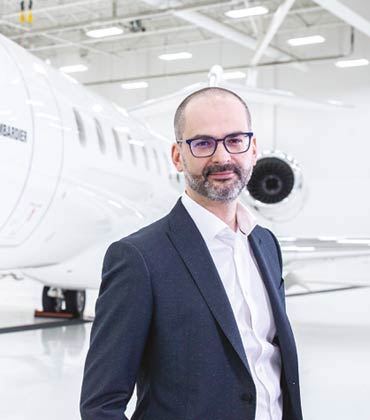
Building Innovative and Game-Changing Planes
Anthony Cox, Vice President - Customer Support, Bombardier

Dichotomous Reflection: Technological Convergence vs. the Relentless Reality of Nature
Stéphane Rousseau, Vice President of Information Technology, Air Inuit
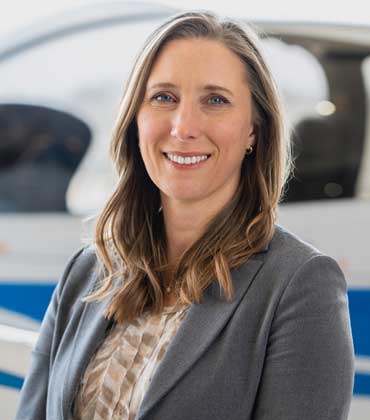
Insights into Streamlining Flight Operations
Carrie Haase, Chief Pilot, Aurora Flight Sciences

Sustainability And the Aviation Industry
David Deveau, Vice President of Corporate Safety and Sustainability, The Inland Group of Companies
Unveiling Automated Maintenance in Aviation
Robert DeGrie, Director of Technical Services (Aircraft Engineering), Amerijet International


IN FOCUS

EDITORIAL
Engineering the Future of Aviation
Advancing technology is propelling aviation innovations, boosting efficiency, safety and cost-effectiveness. Airlines and aviation solution providers harness digital solutions to streamline maintenance, cut downtime and optimize resources. Rising demand for predictive maintenance and AI-driven analytics fuels modernization and growth.
The global aviation maintenance, repair and overhaul (MRO) software market is projected to grow from $7.70 billion in 2024 to $11.68 billion by 2032 at a compound annual growth rate of 5.3% over the forecast period.
Cloud-based solutions, digital twin technology and AI-powered analytics drive the market expansion.
Cloud-based MRO platforms enable real-time data sharing and seamless integration with airline operations. These solutions improve maintenance planning, enhance asset utilization and reduce operational disruptions. Leading providers offer tailored cloud services, empowering airlines to adopt scalable, data-driven maintenance strategies that enhance efficiency and regulatory compliance.
Digital twins create virtual replicas of aircraft components, providing real-time performance insights, optimizing maintenance schedules and improving failure prediction accuracy. This approach enhances aircraft reliability and reduces costly unscheduled maintenance.
Artificial intelligence and predictive analytics are reshaping MRO operations by identifying potential failures before they occur. AI-driven maintenance systems analyze vast amounts of data to detect wear patterns, optimize parts replacement schedules and enhance decision-making. By integrating AI, airlines can improve safety, extend asset life cycles and significantly reduce maintenance costs.
This edition of Aerospace and Defense Review Canada explores the latest in aviation solutions and showcases how digital innovations are transforming aircraft maintenance.
It features perspectives of prominent figures in the field, including Ron Brown, avionics engineering manager at Kalitta Air. Brown highlights how AI integration transforms aerospace by reducing data analysis time from months to hours. Stéphane Rousseau, vice president of information technology at Air Inuit, talks about how technology rapidly transforms isolated regions like Nunavik. Here, aviation is a lifeline ensuring the transportation of essential goods, services, and personnel, including fresh food, medicine, health workers, and technical staff.
We hope this edition of Top Aviation Solutions Providers in Canada 2025 helps your organization forge valuable partnerships and enhance its competitive edge.

This content is copyright protected
However, if you would like to share the information in this article, you may use the link below:
https://www.aerospacedefenserevieweurope.com/edition/march-2025-21.html