
THANK YOU FOR SUBSCRIBING

Aerospace and Defense Review Weekly Brief
Be first to read the latest tech news, Industry Leader's Insights, and CIO interviews of medium and large enterprises exclusively from Aerospace and Defense Review
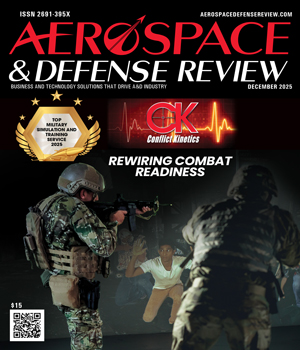
The push for innovation is constant in the world of military training. However, not all technological advances lead to a better, more effective force. Traditional simulators and training systems, while useful, have often missed the mark when it comes to measuring and enhancing the human element at the heart of performance. Legacy training platforms typically evaluate the outcome of an action without considering the factors that led to that result: perception, decision-making, movement, emotional stability, and stress management. Scenarios include elevated‑contact and anti‑drone lanes to rehearse counter‑UAS shots and deconfliction at ‘plus‑life’ speeds. Conflict Kinetics (CK), a company that specializes in high-fidelity training solutions, is changing that narrative. Through its innovative Gunfighter Gym™ (GfG™), CK has built a system that not only assesses the physical act of firing a weapon but also evaluates the mental and emotional processes that contribute to successful combat performance. GfG addresses the human performance gap in defense training and bridges the divide between technical proficiency and cognitive dominance. It does so by combining neuroscience, professional sports performance models, and AI-driven data analytics to build warfighters who think, decide, and act faster and smarter under stress. GfG goes beyond conventional training tools, capturing ~70+ data features per shot (and growing with new wearables/ IoT and AI processes) and measuring cognitive coherence, motion stability, emotional modulation, and adaptability under stress. This new approach is built on the premise that real-world performance hinges not only on hitting targets but also on how the brain and body work together under pressure. Training That Thinks in Human Terms CK was created to close the training–combat gap. Its programs recognize that hitting a target is only part of the equation; the real challenge lies in how the human brain reacts under duress. Traditional training focuses on repetition. CK focuses on cognition—training the mind to anticipate, adapt, and dominate. The difference lies in philosophy. Most conventional systems remain siloed and heavily tech-centric, treating humans as accessories to machines. CK’s approach is the opposite: it begins with the individual. The company integrates the man–machine interface, uniting human behavior, the operational environment, and the organizational context in which warfighters must perform. Every sensor, algorithm, and simulation is designed to serve a single purpose: to enhance the human element that technology alone can never replace. We fuse inside‑out weapon telemetry, outside‑in environmental/ positional sensing, and biocentric signals (e.g., heart rate/HRV, skin conductance, respiration, ocular responses) to resolve cognitive, motor, and stress effects in real time.
A&D Manufacturing
A tenfold reduction in aircraft maintenance costs is not something airlines hear every day. Yet that is exactly what some operators have achieved through cleaner hydraulic systems and longer-lasting components, thanks to Global Filtration, Inc.’s breakthrough in filtration technology. By replacing traditional micro-fiberglass media with sintered metal fiber, the company has redefined performance expectations across the aerospace sector. The results are reflected in fewer maintenance cycles, reduced part failures, and more efficient fleet operations. In a market dominated by multinational OEMs, Global Filtration has established itself as a rare independent innovator. It is the only small manufacturer to have mastered NGS filters for both Boeing and Airbus systems. This technical milestone speaks to its precision, perseverance, and deep engineering expertise. From its earliest days, the company has prioritized doing things differently through rigorous testing, collaborative design, and a steadfast refusal to compromise on quality. The company’s story begins in 1995, when Rick Caouette, now President and CEO, set out to solve problems he had observed during his 15-year career at Western Filter and Donaldson. Over time, he and his team developed a reputation for tackling the hardest challenges: the contamination issues that conventional filters could not fix, the supply gaps that slowed maintenance teams, and the reluctance of airlines to adopt PMA-approved alternatives due to warranty concerns. Global Filtration addressed these challenges directly through transparency, verified performance data, and long-standing relationships with trusted manufacturing partners. Today, Global Filtration’s PMA portfolio includes more than 36 specialized filter products, with several more awaiting approval. These filters serve a wide range of critical systems, including oil, fuel, hydraulic, air, NGS, and water, and are built to withstand the harshest operational conditions. What truly sets the company apart is its hands-on approach. Rather than simply delivering parts, Global Filtration works alongside airline engineers to evaluate real-world conditions and develop tailored solutions that extend the life of onboard systems.

A&D Manufacturing

The foundation of national defense is no longer built solely on armaments, but on the strength and ingenuity of the nation that creates them. It includes the capability to design, manufacture, and sustain critical technologies and essential goods domestically. From advanced microelectronics to Active Pharmaceutical Ingredients (APIs) and essential medicines (EM), national security depends on resilient, onshore production, skilled workforce pipelines, and disciplined program execution. To meet this demand, America needs organizations that combine technical rigor with strategic foresight, delivering both capability and opportunity where it matters most. Defense Operations & Engineering Solutions (DOES) answers those needs and is rewriting the defense manufacturing playbook. Its model fuses digital engineering, Industry 4.0 systems, and Artificial Intelligence (AI) and Machine Learning (ML) analytics to deliver measurable outcomes such as shorter lead times, higher yields, lower costs, and reduced schedule risk. Through this same framework, DOES is revitalizing the industrial base by developing sustainable design and manufacturing capacity in vulnerable communities and HUBZones, aligning national resilience with local empowerment. “We’re building credibility that compounds,” says Aaron Sneed, founder. “Our goal is to strengthen America’s defense industrial base while investing in the people and places that make it resilient.” Accelerating National Capability through Technology and Workforce Development DOES is making an impact across critical sectors that are vital to national security. In microelectronics and semiconductors, the company strengthens domestic production and sustainment, applying Model-Based Systems Engineering (MBSE), agent-based modeling, and high-fidelity simulation to derisk complex new developments, redesigns, and maintenance, repair, and overhaul (MRO) pathways. Its work ensures faster, smarter, and more resilient defense electronics, while simultaneously creating workforce training opportunities in communities that need them the most. n the domain of APIs and Essential Medicines, DOES treats pharmaceutical production as a defense priority. By integrating Industry 4.0 systems with AI/ML quality analytics, the company enables faster batch releases, lower unit costs, and scalable compliance. This work strengthens domestic supply chains and creates skilled jobs in HUBZones, aligning national readiness with community development. A clear example of this approach is a domestic API/EM initiative where DOES combined structured tech transfer with advanced analytics to accelerate production and strengthen local manufacturing. A HUBZone pilot closed capability and workforce gaps by implementing an Industry 4.0 process layer and quality analytics stack that shortened batch-release cycles and reduced unit costs. Structured training and operator development created career pathways and improved retention among local hires, while early production runs achieved higher yields, lower costs, and reduced rework. The site advanced from pilot to predictable producer, demonstrating how early credibility compounds into sustained, measurable impact.
A&D Logistics
For nearly five decades, Trepanfils has been a cornerstone in the world of military logistics, providing trusted, certified wooden packaging solutions to defense contractors around the globe. Since its founding in 1976, the company has become synonymous with quality, compliance, and mission readiness. Specializing in military-grade packaging, Trepanfils produces wirebound boxes, nailed boxes, pallets, and other packaging accessories that meet the most stringent military standards. Based in Canada, Trepanfils is recognized for its expertise in manufacturing certified packaging solutions that ensure the safe, secure, and timely transportation of ammunition, missiles, and explosives. These solutions are [manufactured in strick accordance to MIL-SPEC, ASTM, and NATO standards, making them essential for defense contractors working with high-value and mission-critical materials. The company’s commitment to these rigorous requirements guarantees that all products are field-proven and ready for deployment in the most demanding environments. Trepanfils’ packaging plays a pivotal role in defense logistics, supporting the global supply chain for major military contractors, including NATO and U.S. defense forces. A defining aspect of Trepanfils’ reputation is its unwavering commitment to cybersecurity and compliance. The company’s operations are NIST 800-171 compliant, and it is on track to achieve CMMC certification by 2026. These certifications ensure that all aspects of the company’s operations, from production to delivery, are secure and meet the evolving requirements of the defense industry. In addition, Trepanfils is a DD-2345 registered supplier, authorized to handle controlled military technical data, further solidifying its position as a trusted partner in defense. At the heart of Trepanfils’ product offering is its specialized military wooden packaging. The company’s wirebound boxes are engineered to protect & store mortars, explosives, grenades, ammunition and other sensitive items. Reinforced with galvanized steel wire, these containers are designed to withstand the shocks and stresses encountered during storage, handling, and deployment. Trepanfils’ wirebound boxes comply with a range of military and industry standards, including MIL-DTL-46506, ensuring that all products meet the highest levels of durability and safety.

A&D Training & Simulation

Identifying Risk And Maintaining National Security
Katie Arrington, DoD CIO, United States Department of Defense
Aviation

Supporting Sustainability in Aviation
Bonny Simi, President of Operations, Joby Aviation [NYSE: JOBY]
A&D Training & Simulation

Designing Strategies for Innovating Supply Chain Management
Adrian Quinones, Director of Supply Chain, Curtiss-Wright Corporation [NYSE: CW]
Aerospace and Defense Manufacturing

An Operator Walks Up to a Machine Tool
Paul Guerrier, Manufacturing Engineering Manager, Moog Inc[NYSE: MOG-A]
A&D Training & Simulation
Maximizing Safety: How Machine Learning will Transform the Cockpit
Paul Smith, Director of Flight Test and Operations, Acubed, An Airbus Innovation Center [EPA: AIR]

IN MY OPINION
A&D Training & Simulation
Radiation Hardening Isn't Going Away Even For Proliferated Low-Earth Orbit, It's All About Availability
Geoffrey Torrington, Space Systems Technical Director, BAE Systems

LAST WORD
A&D Training & Simulation
Technology and the Resilience of U.S. Defense Systems
Sarah Leeper, Vice President / General Manager, Electronic Systems, Draper
IN FOCUS

Defending the Future: The Impact of Advanced Technologies in Warfare
Defense engineering services are evolving with advanced technologies, addressing regulatory challenges, and unlocking opportunities in cybersecurity, space defense, and sustainability.
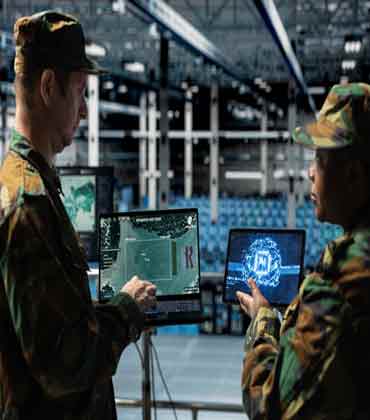
Building Operational Superiority with Military Simulation Services
Military simulation and training services enhance readiness by integrating immersive technologies, AI, and cloud systems, overcoming challenges, and delivering scalable, secure, and interoperable training for global defense stakeholders.
EDITORIAL
A Unified Vision for Future Defense
The global defense landscape has been evolving at unprecedented speed, driven by emerging technologies and increasingly complex mission environments. At the forefront of this transformation are organizations whose commitment to excellence is redefining military preparedness and operational capability across domains.
Leading the charge, military simulation and training service providers are equipping today’s warfighters with immersive, data-driven training environments that mirror the realities of modern conflict. From virtual battlegrounds powered by artificial intelligence to live-virtual-constructive integrations, these innovators ensure that service members train as they will fight—agile, informed and mission-ready.
Complementing this readiness is the work of defense engineering service companies, whose breakthrough designs and systems-integration expertise are accelerating defense modernization efforts. Their engineering leadership enhances mission performance and reinforces long-term resilience across land, sea, air, space and cyber operations.
Above the battlespace, aircraft performance continues to hinge on reliability and environmental resilience. The aircraft filtration products solutions this year demonstrated how material science and engineering finesse translate directly into safer, more efficient missions. Cleaner airflows, enhanced durability and smarter maintenance cycles are giving operators an operational edge where it counts.
And none of this moves without world-class logistics. The military wood packaging manufacturers of 2025 proved that even in a hightech defense economy, precision craftsmanship and compliance-driven design matter. Their ability to secure, transport and protect mission-critical assets ensures that equipment arrives battle-ready, every time.
In this edition, we feature some of the most influential names in the industry. One such name is Conflict Kinetics (CK), a company that specializes in high-fidelity training solutions. We also present insights from expert CXOs, including Geoffrey Torrington, Space Systems Technical Director at BAE Systems, and Sarah Leeper, Vice President and General Manager of Electronic Systems at Draper.
