
Renewed conventional conflict in Europe has sharpened attention on ground-based air defence. Military forces and critical infrastructure face aerial threats ranging from small drones and loitering munitions to cruise missiles and aircraft. Rheinmetall’s broad portfolio addresses these demands through layered capabilities that bring together sensors, command and control, guns, missiles, ammunition and mobile or stationary platforms. At the centre of its mobile offering is the Skyranger family. Skyranger 30 combines a 30 mm KCE revolver cannon, programmable Ahead airburst ammunition, search radar and electro-optical sensors. According to Rheinmetall, the cannon has an effective range of up to 3,000 metres. The turret can also integrate short-range air-defence missiles, offering a second engagement option. Against suitable close-range threats, programmable gunfire can do the work without expending a missile, while the missile option covers targets at greater range. The combination matters where interception costs and magazine depth are concerns. Presented at Eurosatory 2026, the turret has been demonstrated on Boxer 8x8 and Lynx KF41, while lorry chassis are also possible carriers. The flexibility lets customers choose a platform suited to their fleets and their operational or logistical requirements. Skyranger 35 broadens the family with a 35 mm Revolver Gun and can be integrated into wider sensor and command architectures. Together, the configurations give customers different calibre and carrier options within the same air-defence family.
A&D Manufacturing
Airports rely on specialised baggage-handling systems to move luggage through terminals, but tracking bags alone cannot show how efficiently the process runs. Data from conveyors, scanners and sorting equipment needs to be brought together and analysed using software tailored to each airport’s needs. Established aviation technology providers can be slow to customise their software, making it harder for airports to turn baggage data into useful insights. Out of Limits (OOL), a Portugal-based aviation technology company, helps airports and airlines make better use of their operational data. Working independently of baggage-handling system suppliers, OOL adds an analytics layer to the airport’s existing systems, giving customers clearer visibility into baggage operations. Airports and airlines retain control of their data, which help identify delays, improve baggage-handling procedures and reduce the number of bags left behind. Ultimately it supports more efficient operations and lower operating costs. Its flexible development process allows the team to design software functionalities from scratch, validate them with customers and adapt solutions to specific needs. The solutions support baggage handling, broader airport operations and aircraft turnaround, with AI-powered computer vision helping monitor turnaround activities.

Top Aerospace Machining and Fabrication Solutions In UK 2026
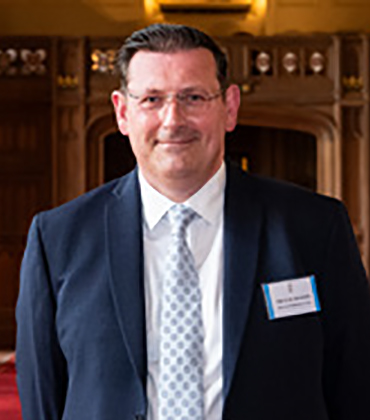
Aerospace manufacturing demands precision, control, and repeatability. Customers also need speed and flexibility when requirements change, or established supply routes stop working. An aircraft may need a replacement component without warning. Materials can become obsolete; specialist processes may no longer be readily available and subcontract lead times can move to the right. The disciplines used for repeat production must therefore be combined with responsive manufacturing and active supply-chain management. “We combine Tier 1 capability with SME agility,” says Gary Roberts, Managing Director. Midland Aerospace has built its business around this combination. Its current capabilities include precision machining, fabrication, assembly, project management, and supply-chain coordination, supported by Airbus-approved and NADCAP-accredited special processes. Where a process falls outside its internal scope, the team manages the wider approved supply chain to deliver a complete component. Its established work supports Airbus platforms from the A319 to the A380.
Aviation
Combat readiness begins long before deployment. It’s embedded in the gear soldiers wear. From moisture management to mobility and interoperability, these foundational elements turn combat clothing into critical enablers of mission success. Level Peaks, founded in 2007 by former users of the very systems they now develop and supply, has built its reputation on that lived insight. Today, the company is recognised as a trusted partner to frontline forces and procurement leaders, delivering innovative, field-proven solutions that move as the mission demands. That trust is earned through enduring collaborations with some of the world’s best-performing brands. Level Peaks’ longstanding collaboration with Crye Precision reflects their shared commitment to co-developing equipment around the unforgiving demands of the harshest operational environments. Together, they are pushing the evolutionary envelope of mission-critical systems beyond minimum standards to meet the realities of modern conflict. One of the defining strengths of the design philosophy is that integration is not an add-on but the foundation. The “system-of-systems” approach as a guiding principle assures every element, from base layers to ballistic protection to outer shells, is engineered to interact seamlessly with body armour, load carriage, weapons, communications systems and sensors. Compatibility is not enough. It is their true cohesion that lowers cognitive burden and allows soldiers to adapt faster, move lighter, and focus entirely on the mission. “You can sew a garment from a pattern,” says CEO Chris Willis, “but unless you know why the seams are placed the way they are, how the layers and stitching interact under load, or how materials behave and degrade under prolonged wear, you’re just guessing. You won’t get close.” Level Peaks’ designs are grounded in years of frontline feedback and shaped through continuous development cycles. Whether in extreme climates, high-tempo movements or prolonged engagements, the designs deliver sustained performance. “We won’t put our name to anything that doesn’t serve the end user. It doesn’t leave our hands if it isn’t fit for purpose,” states Gordon Park, solutions team coordinator and BD manager, highlighting the company’s promise to its customers.

A&D Manufacturing
Future of Digitalised Aerospace Industry
Bruno Cervia, Deputy CEO and VP, R&D, Pilatus Aircraft Ltd
A&D Logistics

Modernising Aerospace and Defence Industries with CNC
Tim Komkowski, Head of Industrial Engineering, Digitalisation & Transformation, Thyssenkrupp Marine Systems
A&D Logistics

New Space 3.0 Enables Responsiveness, Resilience and Availability
Christina Aas, Technical Director, SmallSat Systems, Kongsberg Defence & Aerospace [OTCMKTS: KBGGY]
Aviation
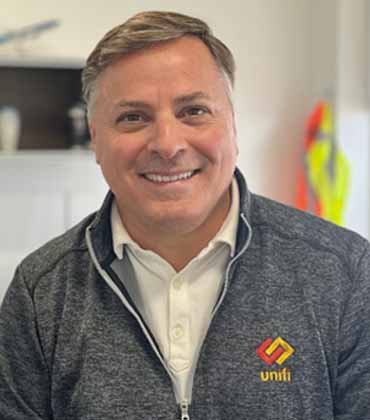
Jetsetting Journeys: A Career Soaring from JFK to Unifi's Unique Aviation Landscape
Luigi Taliercio, Vice President of Operations, Unifi
A&D Security and Safety
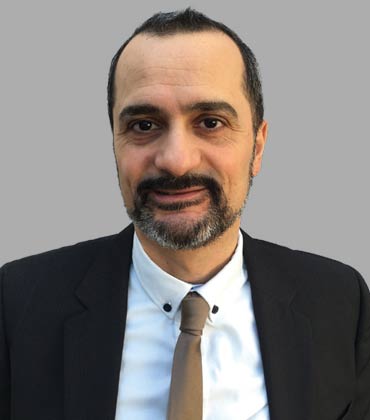
Shaping the Future of Space Business
Francesco Barba, Project Procurement Manager - Procurement Directorate, OHB System AG
IN MY OPINION
A&D Security and Safety
A Flexible Aviation Radio to Boost Connectivity, Avionics Optimisation and Civil-Military Interoperability
Jorge Pereira, Head of CNS Coordination Unit, EUROCONTROL
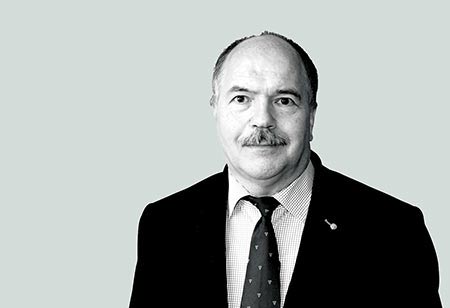
LAST WORD
Aviation
High Data Connections with Optical Communication
Siegbert Martin, CTO, Head of Development & Design, Tesat-Spacecom
IN FOCUS
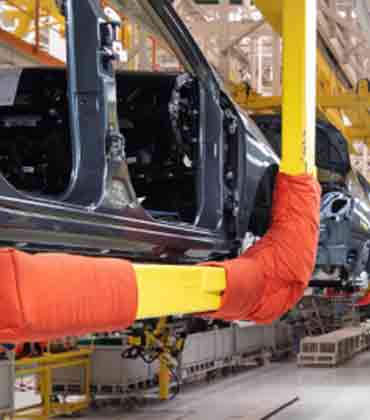
Advancing Europe's Manufacturing Capabilities with Aerospace Machining and Fabrication
Aerospace machining and fabrication solutions ensure structural integrity, enhance component reliability and improve production efficiency.

Future-Proofing Airports: Smart Solutions for Europe's Aviation Industry
Airport operations and baggage handling solutions improve efficiency, baggage accuracy, passenger experience and support airport growth
EDITORIAL
Advancing Aerospace Through Intelligence And Connectivity
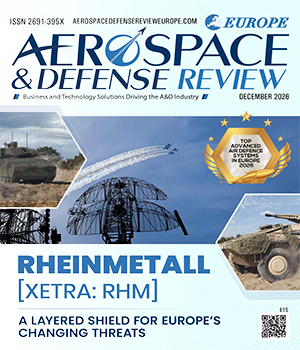
Our cover story features Rheinmetall (XETRA: RHM), recognised as the Top Advanced Air Defence Systems in Europe 2026. Its Skyranger family brings together sensors, command and control, guns, programmable ammunition and missile options on mobile platforms. Skynex extends this networked approach with integrated sensors, effectors and command systems. Procurement programmes across several European countries reflect growing demand for mobile close-range and counter-drone defence.
Out of Limits, named the Top Airport Operations and Baggage Handling Solutions in Europe 2026, helps airports and airlines make use of fragmented operational data. Its supplier-agnostic platform draws information from different baggage-handling systems, while Bags To Go and My Bag support delay prediction and transfer-baggage management. CAPTAIN, its AI-powered operational agent, lets teams explore airport information using natural language and identify potential disruptions.
Midland Aerospace, recognised as the Top Aerospace Machining and Fabrication Solutions in UK 2026, combines precision machining, fabrication and assembly with approved special processes and supply-chain coordination. Led by Managing Director Gary Roberts, the company supports production and aftermarket requirements, as well as urgent aircraft-on-ground work. Its response to an A380 spar-rib programme included securing specialist tooling and Airbus approval, demonstrating how it addresses gaps in established supply routes.
Our contributors look at the future of aviation connectivity. Jorge Pereira, Head of CNS Coordination Unit at EUROCONTROL, discusses distributed software-defined radio and its potential to improve flexibility and civil–military interoperability. Siegbert Martin, CTO and Head of Development & Design at Tesat-Spacecom, examines optical communication as a high-capacity option for links between aircraft, satellites and ground infrastructure.
Together, these stories show how adaptable technology and practical engineering support Europe’s defence readiness and aviation performance.
