THANK YOU FOR SUBSCRIBING



Aerospace and Defense Review Weekly Brief
Be first to read the latest tech news, Industry Leader's Insights, and CIO interviews of medium and large enterprises exclusively from Aerospace and Defense Review
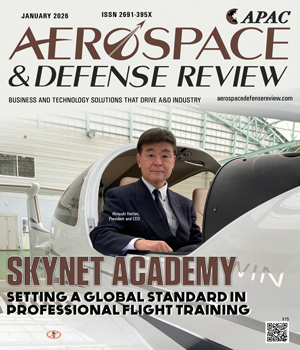
For more than six decades, Skynet Academy has built its name on one principle: every pilot it trains must be ready to fly, not just to log hours. Founded in October 1962 the Tokyo-based aviation company has grown from a modest training outfit into a fully integrated general aviation provider connecting Tokyo and Sendai. Its portfolio spans pilot training, charter operations, aerial photography, and aircraft maintenance. Each area reflects the same rigorous standards of safety, precision, and technical mastery that have defined the organization for generations. Now a proud member of the SBC Group, Skynet Academy continues to uphold its legacy through its Three Safety Principles, a philosophy where safety is not a protocol but a culture. Every decision, from flight planning to maintenance checks, reinforces that mindset. It is the kind of consistency that sustains credibility in a sector where trust is earned one flight at a time. At the helm is President and CEO Hiroyuki Hattori, a veteran aviation leader whose career spans the whole altitude range of commercial flight. Before founding Skynet Academy, Hattori created and led Skynet Asia Airways (now Solaseed Air: B737-800) and later served as President of IBEX Airlines, overseeing Bombardier CRJ700 operations for over a decade. Having earned both FAA ATP/CFI and JCAB certifications, he brings a rare dual-system understanding that informs every aspect of the academy’s design. Alongside COO Hirokazu Ogawa, Hattori leads a team dedicated to setting new benchmarks in flight readiness and operational excellence. When Hattori built Skynet Academy, he envisioned a training environment that would feel less like school and more like an airline. The result is a program that mirrors real-world operations, complete with the structure, accountability, and rigor of commercial aviation. Operating under JCAB Part 135 certification, the academy meets higher standards than Part 91 institutions and undergoes annual audits by JCAB to ensure compliance and excellence.
Aerospace Manufacturing Solutions Provider
In high-stakes industries like aerospace, defense, and alternative energy, precision and quality are non-negotiable standards. Here, perfection starts from the surface itself. Meeting such stringent requirements demands more than just expertise — it calls for innovation, collaboration and consistency. Over 65 years, Silvex has been instrumental in delivering such state-of-the-art surface solutions, leveraging its expertise in plating, anodizing and surface treatments across industries. “We don’t just aim to meet client expectations but surpass them while upholding the highest industry standards. Our ‘whatever it takes’ mindset drives consistent results and solidifies our position in the industry,” says Daniel Atkinson, vice president of Silvex. As a second-generation family business, the Silvex team brings together over a century of cumulative technical expertise. The company invests in its future by training the next generation, guaranteeing a competent workforce to carry the legacy. This wealth of experience, coupled with its collaborative approach, makes Silvex a trusted partner in the surface technology landscape.

Precision Machinery And Equipment Manufacturer in Apac

For the last seventy years, WAKITA HI-TECS has been a leading manufacturer of transport and storage containers for high-stakes defense equipment, involving large-scale machinery and hazardous materials. Driven by a commitment to quality, safety, and reliability, the company has served global giants, including Mitsubishi Heavy Industries and Kawasaki Heavy Industries. It has also supported key public sector institutions, such as Japan’s Ministry of Defense, not just as a supplier, but as a partner. The true engine behind WAKITA HI -TECS’ reputation is not just its products, but the people crafting them. From the moment a new recruit steps in, they embark on a structured immersion in craftsmanship, rotating through welding bays, machining centers, and quality-control stations. This hands-on training instills not just mastery in equipment and tolerances but a deeper, zero-defect mindset. Complementing this, the company runs a fully independent inspection system, structurally separate from the production team, which ensures no product leaves the factory unless it meets strict defense-grade criteria. This internal culture of excellence enables the company to work in sync with clients long before formal specifications are even finalized. Where many manufacturers wait for fully defined blueprints, WAKITA HI -TECS engineers dive in at the earliest conceptual stages. They leverage institutional knowledge and previous design insights to sketch rough drafts, simulate performance in-house, analyze materials, and provide viable alternatives. This level of collaboration allows the company to meet compressed timelines without compromising technical integrity. Built on Talent, Driven by Systems What differentiates WAKITA HI -TECS is not just precision machinery and craftsmanship-oriented training, but its commitment towards the holistic development of its employees. “We consider the development of excellent leadership talent to be important. It is our value that everyone involved with our company leads a wonderful life,” states Daiki Wakita, the president of WAKITA HI -TECS. This philosophy is implemented through mentorship programs, Kaizendriven workshops, and project leadership opportunities. Employees are expected to meet specifications and are encouraged to think critically, ask questions, and continually improve processes. In parallel, the company has institutionalized excellence through structure. Its dedicated inspection department, strict internal processes, and alignment with defense manufacturing standards ensure that even under deadline pressure, quality is never compromised. After-sales services, overhauls, and repair capabilities further reinforce this commitment to long-term performance and client satisfaction.
CXO INSIGHTS

Protecting and Analyzing Data from Unmanned Platforms at the Edge of the Battlefield
Dominic Perez, CISSP, Chief Technology Officer, Curtiss-Wright Corporation

Introducing Bombardier Defense
Steve Patrick, Vice President, Bombardier Defense

Modernizing the Aviation and Defense Sector
Natthawat Hongkarnjanakul, Space Innovation Development Expert, GISTDA
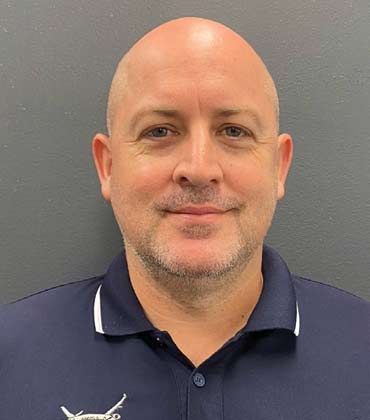
Navigating Aircraft Maintenance Quality Challenges: Insights from a Quality Manager
Ben Osborn, Head of Airworthiness Compliance, Northrop Grumman (NYSE: NOC)

Jetsetting Journeys: A Career Soaring from JFK to Unifi's Unique Aviation Landscape
Luigi Taliercio, Vice President of Operations, Unifi

Future-Proofing Airport Safety: Intersection of Innovation, Regulation and Leadership
Travis Krabbenhoft, Director of Airport Safety & SMS Manager, Denver International Airport

Strategic AOG Response: Elevating Airline Resilience in an Era of Disruption
Mark Finger, Manager - AOG Response, Delta Air Lines [NYSE: DAL]


IN FOCUS
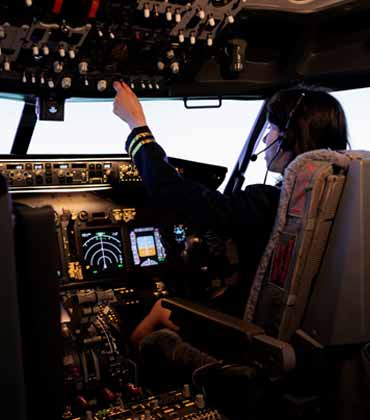
Flight Training Evolution: Trends Impacting Aviation in the Asia-Pacific Region
Virtual reality, regulatory compliance, and simulation-based training are reshaping the aircraft training landscape in APAC’s aviation sector.

Unlocking Potential: Aircraft Training in APAC
Aircraft training services in APAC cater to a growing demand for skilled professionals, addressing regional needs and technological advancements.
EDITORIAL
Training Readiness for Modern Aviation
Aircraft training across the APAC region is facing heightened expectations as operators address safety, readiness and workforce continuity amid regulatory pressure and operational complexity. This edition of Aerospace and Defense Review APAC explores how training organizations and industry leaders are aligning instruction more closely with real-world operational demands.
At the center of this issue is Skynet Academy named Aircraft Training Company of the Year in APAC. With over six decades of experience, the academy has built a training model that emphasizes operational readiness over flight-hour accumulation. Operating under JCAB Part 135 certification and subject to annual audits, Skynet Academy mirrors airline-level discipline in its curriculum. Its structured integration of simulators, a purpose-balanced training fleet and operations across Sendai and Tokyo creates consistent exposure to varied flight environments. The academy’s scholarship-led approach and strong graduate placement record further demonstrate its measurable impact on Japan’s domestic aviation ecosystem and its ability to deliver pilots trusted by airlines.
Beyond cover recognition, this issue highlights complementary contributions that demonstrate how training directly connects to operational performance. Ben Osborn, Head of Airworthiness Compliance at Northrop Grumman, outlines how digital maintenance systems, calibrated tooling and disciplined confidence testing improve safety outcomes. His insights highlight the importance of training environments that support quality assurance, especially as maintenance teams adapt to workforce transitions and evolving standards.
From an airline operations perspective, Mark Finger, Manager – AOG Response at Delta Air Lines, examines how structured preparation, predictive technologies and experience-driven judgment underpin effective aircraft-on-ground response. His contribution highlights the role of training in developing professionals who can combine data with decisive action under pressure.
Together, these perspectives affirm that aircraft training is foundational to safety, reliability and leadership across aviation. Readers are encouraged to explore this issue to gain deeper insight into how disciplined training continues to shape resilient and accountable aviation operations in APAC.

This content is copyright protected
However, if you would like to share the information in this article, you may use the link below:
https://www.aerospacedefenserevieweurope.com/edition/january-2026-56.html