
THANK YOU FOR SUBSCRIBING

Aerospace and Defense Review Weekly Brief
Be first to read the latest tech news, Industry Leader's Insights, and CIO interviews of medium and large enterprises exclusively from Aerospace and Defense Review
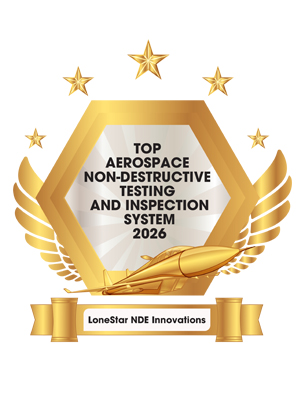
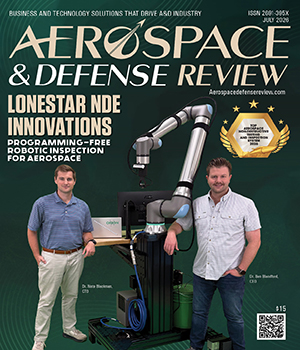
LoneStar NDE Innovations (LSNDE) is helping aerospace teams respond to a shrinking Non-Destructive Testing (NDT) workforce and inefficient robotic inspection systems. Traditional robotic inspection systems are often difficult and time-consuming to deploy and require significant safety infrastructure to keep operators out of harm’s way. In many cases, setup, programming and path planning can take weeks before scanning begins. To simplify the process, the company developed Orion, an “inspector in-mind” programming-free collaborative robot inspection system designed for operators to learn in a day, with path planning completed in minutes and it is safe for operators to work alongside. The LSNDE Orion system has already delivered measurable gains, cutting inspection times in half on large space launch structures and dramatically reducing a rotorcraft blade inspection process from four days to four hours. “We eliminate wasted time by removing CAD requirements and cumbersome scan path-planning dependencies. Many customers don’t have part drawings nor the time to teach a complicated robotic system a specific geometry and with our system path planning takes minutes instead of days to weeks,” says Ben Blandford, Ph.D., CEO.
Top COTS MIL-STD-1553 and ARINC Products Supplier 2026
The aerospace and defense industry is navigating a pivotal transition toward the Modular Open Systems Approach (MOSA), SOSA™ alignment, nimble mission systems and network-centric architectures. As platforms evolve to require greater integration and smaller footprints, system architects face a critical challenge: maintaining the integrity of established legacy I/O standards such as MIL-STD-1553 and ARINC-429 while seamlessly leveraging modern, high-speed networks. Alta Data Technologies has emerged as the definitive leader in this space. Recognized for seven consecutive years as a top industry supplier, Alta is widely trusted for its cutting-edge, novel hardware miniaturization, robust packet-offloading protocol engines and unwavering support for open systems architectures. Its solutions are field-proven and technically superior, with over 55,000 modules deployed across hundreds of global military platforms—including high-profile programs like the Future Long-Range Assault Aircraft (FLRAA / Cheyenne), C-130, AH-64 Apache, UH-60 Black Hawk, C-17, JSF, F-22 and F-16. Championing MOSA and SOSA Platforms with XMC Open Standards With Department of Defense mandates enforcing openarchitecture frameworks for interoperable military sensor systems, there is a massive surge in demand for high-density, multi-protocol integration on single-slot XMC cards. Alta’s XMC cards (offering 1-10 1553 channels or multi-protocol combinations of 1553, ARINC and serial) serve as the cornerstone of this strategic shift. The XMC-MAS optimizes slot usage and power efficiency in VPX systems by consolidating disparate I/O requirements into a single, VITA 42-compliant site. Available in conduction-cooled and industrial extended-temperature (-40°C to +85°C) variants, these rugged cards are designed to withstand the high vibration and thermal extremes typical of military LRUs.
Top Aerospace Facility Cleaning Service 2026

In aerospace and defense facilities, cleaning must be executed to perfection every time. Standardized models often fail in these settings, where restricted access, controlled conditions and strict confidentiality leave no room for error. Clean Method delivers consistent cleaning services by implementing standard processes correctly within strict operational constraints. It deploys well-equipped, site-aware teams trained to work with discretion in sensitive environments. While each site brings its own complexity, the core service remains the same, with differences driven by how the service is carried out on site. Rather than functioning as a reactive cleaning service that responds to emergencies, Clean Method emphasizes proactive risk mitigation. This approach is particularly beneficial for its clients, comprising leading aerospace and defense organizations and the U.S. government. In a space where external teams are expected to meet internal standards, Clean Method focuses on understanding each facility and meeting clients’ needs with consistency and care. For most of its clients, the idea of not being in control of a process is difficult. The company gains their trust through reliable procedures, making them comfortable to let its team work without constant supervision. By minimizing contamination, airborne particulates and health hazards, it ensures facilities continue functioning without disruption or downtime. “That's why our customers trust us time and again to perform cleaning services at their facilities,” says Todd C. Galaida, senior director of enterprise business development. “We reduce their worries and allow them to focus on their business.”
Top Flight Training Solutions 2026
Flight training programs today face a fundamental challenge: preparing pilots for modern aircraft while operating fleets that do not fully reflect real-world conditions. Many environments still rely on legacy systems, creating a gap between foundational learning and the technology pilots will encounter in their careers. Peregrine Howard addresses this by aligning training aircraft with real-world cockpit environments. Its approach centers on integrating technologically advanced fleets into pilot development. “You want to train like you are going to fly,” says Patrick Schindler, co-founder. Bridging Training Gaps through Fleet Modernization Traditional training methods often emphasize simpler instrumentation to build early skills. While these fundamentals remain important, most aircraft in active service today operate with glass cockpits and advanced avionics. This mismatch creates a disconnect between training and application. Peregrine Howard focuses on closing this gap by providing access to modern aircraft fleets that reflect current aviation standards. Training within these environments allows students to develop familiarity with advanced systems, cockpit workflows and decision-making processes from an earlier stage.

Top Aerospace and Defense Products Consulting Services 2026
Aerospace and defense companies often face a disconnect between technical capability and market readiness. Products may be well engineered, yet struggle to meet compliance expectations or align with procurement pathways, limiting their ability to move forward. Third Rock Consulting addresses this gap by focusing on alignment across engineering, compliance, and market positioning. Its role centers on ensuring that product development is not only technically sound but also viable within a regulated, procurement-driven environment. “We don’t just help companies build things. We help them build things that can be bought,” says Rocky Singh, principal and president. Bridging Fragmentation in Product Development A recurring challenge in aerospace and defense is fragmentation across functions. Engineering teams often progress independently, while compliance and business development enter later, creating misalignment that leads to rework or missed opportunities.
CXO INSIGHTS

NASA Selects Contractor to Provide Environmental Services

Supporting Sustainability in Aviation
Bonny Simi, President of Operations, Joby Aviation [NYSE: JOBY]

Jetsetting Journeys: A Career Soaring from JFK to Unifi's Unique Aviation Landscape
Luigi Taliercio, Vice President of Operations, Unifi

Modernizing Airports to Ensure Business Efficiency
Maurice Jenkins, Chief Innovation Officer, Miami International Airport

Strategies for Success and Safety in a Thriving Airline Industry
Alfonso Moreno-Santa, Director of Operations, PrimeFlight
Operational Excellence at the Line
Andrew Ibsen, Duty Maintenance Manager, British Airways
Maximizing Safety: How Machine Learning will Transform the Cockpit
Paul Smith, Director of Flight Test and Operations, Acubed, An Airbus Innovation Center [EPA: AIR]


IN FOCUS
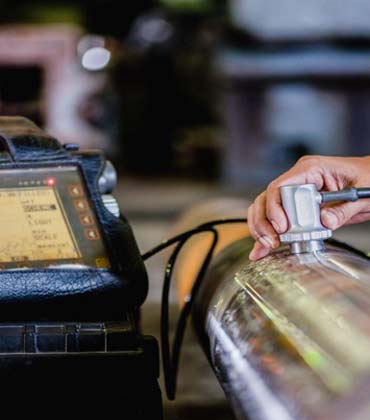
Safeguarding Aerospace Innovations with Non-Destructive Testing
Non-destructive testing systems in aerospace improve safety, efficiency, and cost management, supporting the industry's growth and reliability.
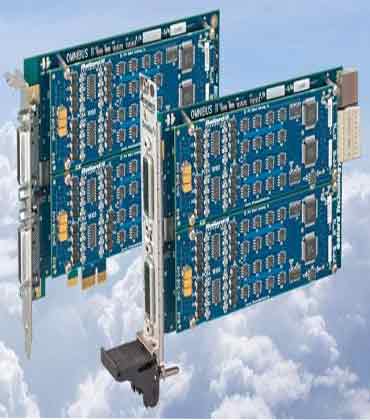
Streamlining Aerospace Systems: The Role of COTS in MIL-STD-1553 and ARINC Communication
COTS MIL-STD-1553 and ARINC suppliers deliver reliable communication solutions, enabling system integration, interoperability, and sustained performance across aerospace and defense platforms.
EDITORIAL
Enabling Reliability Across the Aerospace and Defense Ecosystem
As aerospace and defense organizations modernize, demand for automation, connectivity and operational efficiency continues to grow. This edition of Aerospace and Defense Review highlights companies improving inspection, avionics integration and facility operations while supporting reliability and mission readiness.
Our cover story, LoneStar NDE Innovations, is at the forefront, winning the award for the Top Aerospace Non-destructive Testing and Inspection System 2026. Led by Ben Blandford, Ph.D., the company is changing how inspections are done by using its Orion robot system, which does not require complex programming, making the process faster and easier. By removing the requirement for traditional CAD models and complex programming, the platform enables inspection path planning in minutes rather than weeks. The platform reduces large-structure inspection times by 50 percent and cuts rotorcraft blade inspections from four days to four hours, helping aerospace manufacturers, MRO providers and defense organizations adopt advanced NDT more efficiently.
Also featured is Alta Data Technologies, recognized as the Top COTS MIL-STD-1553 and ARINC Products Supplier 2026. Led by Richard Schuh, the company continues to advance avionics connectivity through rugged, high-density solutions designed to support MOSA and SOSA architectures. With thousands of deployments across military platforms, Alta helps organizations connect legacy avionics systems with modern network-centric technologies while maintaining mission-critical reliability.
Recognition is also extended to Clean Method, named the Top Aerospace Facility Cleaning Service 2026. Guided by Todd C. Galaida, the company has earned the trust of aerospace, defense and government organizations through its focus on discretion, compliance and operational awareness. Its approach helps maintain secure, fully operational facilities without disrupting sensitive activities.
This edition also features insights from Ron Brown, Avionics Engineering Manager at Kalitta Air, on AI-driven predictive maintenance and safety, and Duane Cornella, Sr. Manager Operations Control Centers at Panasonic Avionics, on communication and customer success.
Aerospace and Defense Review congratulates all honorees and contributors and invites readers to explore the innovations, strategies and industry perspectives shaping the future of aerospace and defense.
