
THANK YOU FOR SUBSCRIBING

Aerospace and Defense Review Weekly Brief
Be first to read the latest tech news, Industry Leader's Insights, and CIO interviews of medium and large enterprises exclusively from Aerospace and Defense Review

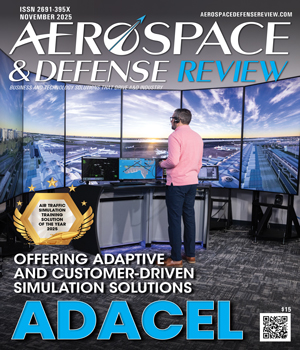
In the air traffic simulation training industry, where precision and reliability define success, technology alone is never enough. What truly sets a company apart is how it listens to and responds to the needs of its customers. Training systems must mirror the intensity of real-world operations, adapt to evolving airspace demands, and provide measurable improvements in safety and efficiency. This is only possible when customer experience is at the center of innovation. As a global leader in air traffic control simulation, Adacel has fully embraced this philosophy. By weaving customer experience into the fabric of its culture, the company has redefined how the industry views training and simulation. It has etched a legacy of excellence since 1987. With its customer-centric culture, Adacel drives every decision within the organization with that singular focus, from product development to employee training. Michael Saunders, Vice President of Strategy, Simulation & Technical Services explains that the company’s ambition goes beyond delivering technology. Its true goal is to be a trusted partner in its clients’ success. “Everything we design, build, and support is anchored in one principle: improving the customer experience,” says Saunders, underscoring this philosophy’s central role in shaping Adacel’s identity and future. This philosophy has permeated the company’s operations, from its leadership down to its engineers, who are tasked with creating solutions that address the real-world challenges air traffic controllers face. Providing Trainees with Realistic Scenarios The impact of this customer-first approach is evident in Adacel’s simulation solutions. The company understands that air traffic control is a highly specialized and regulated field, requiring training environments close to real-world conditions. Adacel offers a wide range of training platforms to meet these demands, from simple, single-position devices to fully immersive, high-fidelity simulations replicating the complexity of air traffic control towers and radar rooms. Adacel’s flagship simulation platform, MaxSim, is the culmination of decades of collaboration with the air traffic control community. It is designed to give trainees realistic scenarios that mirror the pressure, decision-making, and communication demands they will face on the job. Built to replicate the intensity and precision of real-world air traffic management, MaxSim is not just a piece of software. It is a fully scalable ecosystem that adapts to the needs of each customer.
A&D Sales & Marketing
Jet Ventures is a premier strategic aviation partner, guiding large corporate clients, family offices, and high-net-worth individuals through the intricacies of high-value aircraft sales and acquisitions. With a specialized focus on private jets, Jet Ventures delivers fully integrated, end-to-end transaction support. Their services provide expertise in aircraft sourcing, valuation, risk assessment, contract negotiation, inspection oversight, closing, and final delivery. With a meticulous, process-driven approach and a deep understanding of aviation assets, Jet Ventures ensures clients have clarity, control, and protection at every phase of the transaction. In the complex and often opaque world of private aviation, decisions carry substantial financial and operational consequences. Rapid market shifts, asset depreciation, and evolving regulatory changes can quickly turn a misstep such as an overlooked inspection finding, or a poorly negotiated contract clause, into a costly error. “We mitigate these risks through decades of experience, micromanagement, and meticulous attention to detail at every stage of the transaction,” says Mike Fazzolare, President and CEO. Comprehensive Acquisition Support: From Strategy to Aircraft Delivery Jet Ventures supports aircraft buyers from the earliest stages of the acquisition journey. It begins with the delivery of clear, data-driven market insight tailored to each client’s unique operational and ownership objectives. Drawing from proprietary data, real-time market intelligence, and relationships with global aircraft operators, MROs, and OEMs, Jet Ventures identifies aircraft that meet strict performance, cost, and lifecycle criteria. Jet Ventures offers access not only to publicly listed aircraft, but also to exclusive off-market opportunities rarely visible to the open market. These premium unadvertised aircraft that are not brought to market, are moved quickly through tight industry circles. As an industry veteran with a vast network of privileged relationships lasting decades, Jet Ventures specializes in this exclusive space. A large amount of Jet Ventures’ business represents transactions with exceptional unadvertised off-market aircraft. Once suitable aircraft are identified, the firm undertakes a comprehensive evaluation process. This includes comparative aircraft assessments, analysis of current market conditions and trends, residual value projections, anticipated maintenance schedules, and overall operational costs. Based on these insights, a tailored bidding strategy is developed for each aircraft under consideration. This strategic approach empowers buyers to not only choose the right aircraft but also secure it at the optimal price, fully informed of the total cost of ownership. Moving through the acquisition process, Jet Ventures takes a proactive, hands-on role in managing pre-purchase inspections, recognizing this as one of the most critical and risk-laden phases of an aircraft purchase. The firm oversees every detail of the inspection process, including the selection of facilities, coordination of logistics, and development of the inspection work scope specific to the aircraft model, age and usage history. Post-inspection, the Jet Ventures team conducts a rigorous review of the inspection findings in collaboration with technical experts, ensuring the aircraft’s condition of airworthiness, and that it meets all delivery conditions pursuant to the terms of the purchase contract..

Air Traffic Management Solutions

Specialization drives excellence. Companies that hone their expertise within a specific niche often lead the industry by continuously enhancing their skills and staying abreast of sector advancements. JetSwiss Aviation exemplifies this principle by dedicating its operations and expertise solely to Pilatus aircraft, elevating its operational experience to an unmatched level. Concentrating all its efforts and knowledge on key facets of Pilatus PC-12s and PC-24s’ sales, acquisitions, management and daily operational support, JetSwiss creates a complete ‘Pilatus house’ for its clients. This ecosystem encompasses everything from due diligence and test flights to market valuation insights and a keen awareness of potential risks. “Our hyper-focused business model and attention to detail are quite rare in the market. As we celebrate our 10th year, this approach has proven to be a successful business model that increasingly attracts clients year over year. They seek us out to overcome their complex challenges, uncover hidden insights and expand the boundaries of knowledge within our field,” says Don Peterson, founder of JetSwiss. Most of the challenges stem from the limited frame of reference and perspective that clients—whether buyers, sellers or aircraft operators—have regarding equipment issues, market values and maintenance concerns. This knowledge gap creates a significant void. JetSwiss adeptly fills this gap, leveraging its longstanding track record of dealings with aircraft manufacturers to provide reassurance and reduce the risks involved in aircraft transactions and operations as much as possible.
MRO

Revolutionizing the Aviation Industry
Paul Harding, Vice President Information Technology, Air Transport Services Group (ATSG)
A&D Logistics
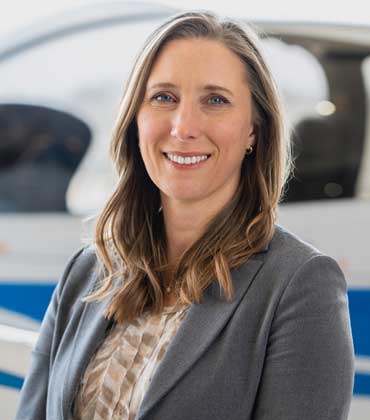
Insights into Streamlining Flight Operations
Carrie Haase, Chief Pilot, Aurora Flight Sciences
A&D Logistics

The Past, Present and Future of Airline Flight Training Departments
Lance Lau, Director Of Training, CommutAir dba United Express
A&D Training & Simulation

Driving Quality in Aerospace Thermal Systems
Tim Dutson, Director of Quality, Intergalactic
Aviation

Bridging the Digital Gap in Aviation Sustainability
Andrew Ibsen, Duty Maintenance Manager, British Airways

IN MY OPINION
MRO
Beyond The Blame Game: Strengthening Collaboration between Talent Acquisition and Hiring Managers
G. Tyler Tenbrink, Director, Talent Acquisition and Development, Piedmont Airlines [NASDAQ: AAL]

LAST WORD
MRO
Modernizing Airports to Ensure Business Efficiency
Maurice Jenkins, Chief Innovation Officer, Miami International Airport
IN FOCUS
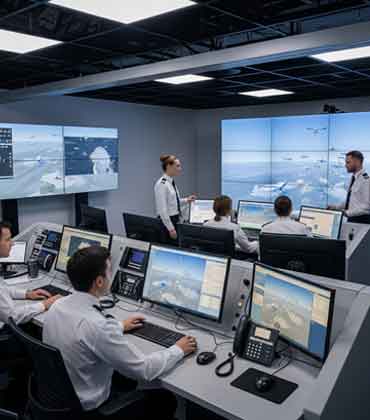
Simulated Skies: The Future of Air Traffic Training
Air traffic simulation training enhances safety, efficiency, and workforce readiness by utilizing immersive technologies and AI.

Maximizing Efficiency in Global Aircraft Transactions
Aircraft sales services streamline transactions with technical expertise, digital tools, and innovative financing, enhancing efficiency, transparency, and stakeholder value globally.
EDITORIAL
The Evolution of Intelligent Aviation Systems
The aviation industry has a reputation for moving cautiously, but 2025 is proving that even giants can pivot fast when the stakes are high enough.
Airlines are retiring their aging fleets in favor of fuel-efficient narrow-body aircraft and exploring hybrid-electric models that were once considered speculative just a few years ago. Ownership models are also shifting: usage-based leasing is replacing traditional purchases, providing operators with the flexibility to respond to volatile demand without being locked into depreciating assets. AI-powered predictive maintenance has transitioned from pilot programs to an operational necessity, delivering real-time diagnostics that prevent failures before they impact aircraft operations.
But perhaps the most underappreciated transformation is happening in training. As cockpits and control towers become increasingly data-driven, the way professionals prepare is evolving in parallel. Virtual and augmented reality have evolved from novelty to an established infrastructure. Modern simulators now adapt dynamically to individual performance, utilizing analytics to tailor scenarios and monitor cognitive load, thereby creating training that's not only realistic but also intelligent.
Cloud platforms are globalizing this capability, allowing distributed teams to train in synchronized environments that mirror the efficiency reshaping fleet management itself.
The numbers reflect industry-wide momentum: aircraft services are projected to grow at a rate of 5.8 percent annually through 2028, while air traffic simulation training is expected to expand at a rate of 7.2 percent. This is an industry rethinking its fundamentals, sustainability, operations, and human capability, all at once.
The magazine features a thought leadership piece by G. Tyler Tenbrink, Director of Talent Acquisition and Development at Piedmont Airlines and Maurice Jenkins, Chief Innovation Officer at Miami International Airport.
This edition also spotlights Adacel, which provides cutting-edge simulation solutions that ensure air traffic controllers are well-prepared for the demands of their profession.
We hope this edition helps aviation leaders understand how sustainability, AI and immersive technologies are transforming the management of fleets and the training of the next generation of pilots and controllers.
