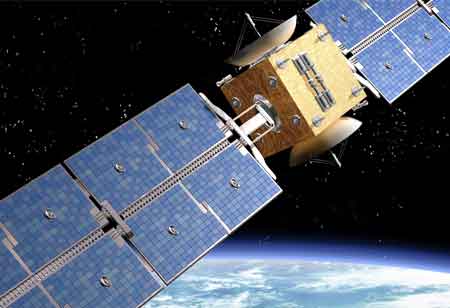


Satellite Solutions

Satellite solutions providers support aerospace, defense and commercial operations with technologies that strengthen communication, data access and mission readiness. Through satellite deployment, system integration, connectivity support and resilient infrastructure, they help organizations monitor assets, expand coverage and respond to evolving operational demands across space-enabled environments.

Speedcast: Managing Multi-Orbit Connectivity Across Remote Enterprise Environments
Speedcast
Speedcast: Managing Multi-Orbit Connectivity Across Remote Enterprise Environments
Jim Frownfelter, CEO
Remote energy sites, maritime fleets and isolated operations need reliable communications to stay coordinated, safe and connected. Speedcast supports these environments with a network model that combines satellite and terrestrial connectivity for locations where fiber is not practical or available.
It serves maritime, energy, government and enterprise customers operating across oceans, offshore assets and remote land sites. Its multi-access network brings together GEO, MEO and LEO satellites with terrestrial infrastructure, giving customers more than one communication path instead of depending on a single satellite link. Industries managing drilling assets, cargo fleets and offshore production systems use this model to maintain application access, crew communications and monitoring systems even when network conditions shift across regions.

Coordinating Connectivity Across Distributed Environments

Speedcast strengthened its position in remote communications through managed connectivity services tailored for sector-specific environments. Maritime operators use its infrastructure to support vessel tracking, crew welfare systems, business applications and onboard communications during global voyages. Energy companies rely on the network for offshore drilling platforms and production facilities where terrestrial alternatives are limited or unavailable.

Its network design incorporates more than satellite capacity. It combines satellite services, cybersecurity tools, voice and data applications, IoT integration and systems management into a unified delivery framework. Customers operating in remote regions can centralize communications oversight rather than managing disconnected vendors and regional providers separately. That structure has become increasingly relevant as industries expand digital systems into offshore and mobile environments.

As multi-orbit communications became more practical, Speedcast moved early to support hybrid satellite networks that combine GEO, MEO and LEO services. Its work with Starlink and investment in software-defined networking show its focus on stronger, more flexible connectivity that can manage traffic across changing network conditions.

Building Intelligence Into Network Management

The company’s SIGMA platform expanded that strategy by introducing centralized network management across remote environments. SIGMA enables customers to manage multiple WAN connections and edge devices through a single platform while supporting cloud applications and industrial virtualization requirements. Maritime and offshore users increasingly operate environments containing multiple satellite links, onboard applications and edge computing workloads. Managing those systems manually creates complexity as fleets scale.
Vaya Space: Redefining Hybrid Propulsion for Space and Defense Applications
Vaya Space
Vaya Space: Redefining Hybrid Propulsion for Space and Defense Applications
Kevin Lowdermilk, CEO
Liquid bipropellant engines have long been the standard for space launches, yet they come with significant challenges. These engines are complex, expensive, and require intricate plumbing and fueling infrastructure. Their fuels themselves are toxic and corrosive, raising safety and environmental concerns.

In contrast, hybrid propulsion offers an attractive alternative for space launch vehicles. By pairing solid fuel with a liquid oxidizer, hybrid engines deliver the performance and control of liquid bipropellant systems with the reliability and simplicity of solids. They feature fewer moving parts, reduced costs, and greater operational safety. While hybrid concepts date back decades, only recently have modern materials, additive manufacturing, and precision control enabled their full potential.

Vaya Space is leading the hybrid revolution. In a field long dominated by explosive fuels and complex systems, the Florida-based company is proving that safety and simplicity can drive just as much performance and power, if not more. Its patented hybrid propulsion technology combines solid thermoplastic fuel with a liquid oxidizer, offering the controllability of liquid engines without the volatility or toxicity that have long burdened traditional launch vehicles.

At the center of this innovation is what Vaya calls “elegant simplicity,” the belief that great engineering doesn’t require more parts, only smarter ones. That philosophy drives Dauntless, Vaya Space’s flagship hybrid launch vehicle. Designed from the ground up for safety, cost efficiency, and flexibility, the small satellite launcher can transport approximately one metric ton to Low Earth Orbit.

Today, Vaya’s propulsion systems are meeting the needs of commercial satellite operators seeking safe, flexible launch options. Dauntless delivers the performance of a liquid engine at a fraction of the cost and complexity. Its hybrid engine platform also underpins Vaya’s growing portfolio of orbital launch vehicles and in-space propulsion systems.

The same technology also serves as the foundation for Vaya’s defense propulsion development programs. Vaya is advancing hybrid propulsion research focused on next-generation missile and tactical systems.

“Our elegantly simple approach is anticipated to allow us to launch a Dauntless vehicle up to once a week,” said Kevin Lowdermilk, CEO of Vaya Space. “While others focus on reusability at the expense of complexity and cost, we prioritize safety, reliability, and cost-effectiveness, making Dauntless a practical solution for frequent, cost-effective access to orbit.”

The Dauntless Edge

Unlike traditional rockets, Dauntless is inherently inert and cannot explode under normal conditions. Where most vehicles include a destruct mechanism, or a “red button” to terminate flight, Vaya Space and the FAA have determined that the safest method of termination for Dauntless is to simply shut off the oxidizer flow, allowing the vehicle to fall safely into the ocean in one piece. Vaya believes that this inert nature of its launch vehicle will ultimately lead to the ability to launch rockets from inland sites, relieving congestion at coastal locations and providing expanded launch optionality.

Dauntless’s unique capabilities go even further, providing flexible and precise orbital access. Its ability to reach multiple inclinations on a rideshare basis gives satellite operators a cost-effective, predictable path to orbit. Two major factors are driving clients to the Dauntless launch vehicle: the need to build and maintain small satellite constellations and the ability to replenish satellites once they deorbit from LEO.

For example, low Earth orbit constellations require periodic replenishment as satellites deorbit over time. Rather than waiting to be a part of large, infrequent launches or relying on costly repositioning, constellation operators can deploy replacement satellites through Vaya’s regular, on-demand launch schedule. Companies don’t want to wait years or deal with the complexity of repositioning satellites using secondary propulsion. They need to reach the correct orbit quickly, and cost effectively.
NAVSYS Corporation: Offering Commercial PNT for a Resilient Future
NAVSYS Corporation
NAVSYS Corporation: Offering Commercial PNT for a Resilient Future
Dr. Alison Brown, President and CEO
In the rapidly evolving world of positioning, navigation, and timing (PNT), few companies stand as boldly at the crossroads of innovation and necessity as NAVSYS Corporation. Under the leadership of President and CEO Dr. Alison Brown, the company has established itself as a pioneer of novel technological frameworks and a critical voice challenging entrenched perceptions about the future of PNT—particularly for defense and critical infrastructure resilience.

“Founded on a bedrock of engineering expertise and system-level innovation, we have long worked at the interface between commercial technology and national security,” says Dr. Brown.

With growing interest from the U.S. Department of Defense (DoD) in commercial alternatives for resilient PNT, the company’s signature platform—PNT as a Service (PNTaaS)—may be the disruptive solution the sector has been awaiting.

Technically Superior, Financially and Logistically Pragmatic

The U.S. Space Force’s Commercial Space Strategy highlights PNT as a key area for commercial integration to improve resilience. Despite this, government funding has lagged, favoring only select companies like Xona and Iridium, while others—such as NAVSYS—remain underfunded despite offering aligned proposals. Initiatives like AFRL’s CAPR and the SpaceWERX AltPNT Challenge are helping bridge this gap. However, skepticism persists, with officials such as SSC’s Charlotte Gerhart claiming that true commercial PNT alternatives don’t yet exist. This view contrasts with the Defense Science Board’s recommendation for the strategic adoption of commercial PNT—a position now weakened in USSF plans.

The Expanding Role of Satellite Solutions in Enterprise Connectivity

Satellite solutions have entered a new growth cycle driven by enterprise connectivity demands, geopolitical priorities and rapid advances in low Earth orbit infrastructure. Once tied mainly to broadcasting and remote communications, the sector now supports broadband access, IoT connectivity, aviation, maritime operations, defence modernisation and cloud-enabled enterprise networks.

The global satellite communication market is projected to expand steadily through the next decade. Industry estimates place the market on track to surpass $200 billion globally by the early 2030s. Growth is tied to rising demand for resilient connectivity and increased investment in commercial satellite infrastructure.

Enterprise buyers are paying closer attention because terrestrial infrastructure alone no longer guarantees continuity. Extreme weather events, cybersecurity threats, remote workforce expansion and digital transformation initiatives have increased interest in redundant connectivity models. Satellite solutions are now viewed as an important layer within enterprise networking strategies.

Low Earth orbit, or LEO, satellite networks are reshaping the market. Traditional geostationary satellites offered broad coverage but often struggled with latency limitations. LEO constellations operate much closer to Earth, allowing lower latency, faster speeds and more responsive communications for enterprise applications.

The growth of LEO infrastructure has intensified competition across the sector. Telecom providers, hyperscalers, aerospace companies and governments are investing heavily in next-generation satellite ecosystems. Deloitte projected that LEO constellations could generate nearly $15 billion in annual revenue during 2026 while direct-to-device satellite capabilities continue to expand.

Satellite solutions now support a much wider range of enterprise use cases. Logistics companies use satellite-enabled IoT systems to monitor cargo across remote routes. Energy and mining firms rely on hybrid satellite networks for workforce communications and environmental monitoring. Airlines are deploying multi-orbit connectivity systems to improve passenger experience and strengthen data transmission capabilities.

The aviation market illustrates how quickly enterprise adoption is accelerating. Satellite operator SES recently reported major growth tied to in-flight connectivity deployments, with hundreds of aircraft already connected through multi-orbit systems.

Government priorities are also influencing the sector. National digital infrastructure programmes, defence modernisation efforts and concerns around communications sovereignty are driving investment in regional satellite ecosystems. Europe’s IRIS² initiative and rising public-private collaboration in satellite communications show how governments increasingly view space-based infrastructure as strategically important.

The UK and broader European market remain central to commercial innovation, particularly across enterprise broadband, direct-to-device communications and cloud integration. Major technology companies are integrating satellite infrastructure into broader digital ecosystems that combine edge computing, AI workloads and distributed enterprise networks.

Cloud integration has become one of the strongest competitive differentiators. Enterprises no longer evaluate satellite connectivity solely on bandwidth or coverage. Buyers increasingly assess how providers integrate with public cloud platforms, cybersecurity frameworks and existing wide area network environments.This shift is moving the market away from hardware-focused procurement models towards platform-based service ecosystems. Mature satellite solutions providers now compete on orchestration capabilities, API accessibility, network visibility and multi-orbit interoperability.

Direct-to-device communications represent another major transition point. Satellite-enabled messaging and emergency communications are already appearing in consumer smartphones. Enterprises are also exploring field workforce connectivity, asset tracking and disaster recovery applications. Industry forecasts suggest continued growth in direct-to-satellite services throughout the next decade.

Despite strong momentum, the sector still faces barriers. Infrastructure deployment costs remain substantial, particularly for constellation launches and ground network development. Regulatory complexity also varies across countries, especially around spectrum allocation and cross-border communications policies.

Space sustainability concerns are becoming more visible as satellite density increases. Orbital congestion, debris management and governance frameworks are moving higher on the agenda for regulators and commercial operators.

Enterprise buyers also face integration challenges. Satellite solutions often need to function alongside terrestrial fibre, 5G and private network environments. Organisations evaluating providers increasingly prioritise interoperability, service transparency and long-term scalability over broad coverage claims alone.

Vendor maturity is becoming easier to identify as the market evolves. Basic providers may still focus mainly on bandwidth delivery, but leading satellite solutions companies are positioning themselves as infrastructure partners capable of supporting enterprise resilience, edge computing and global mobility strategies.

The growth of satellite IoT is expanding the market opportunity further. Industries such as agriculture, transportation and utilities increasingly require persistent connectivity in locations where terrestrial coverage remains inconsistent. Analysts project strong growth across satellite IoT platforms as sensor-driven infrastructure continues to expand globally.

The next phase of the sector will likely centre on convergence. Satellite networks are gradually integrating with 5G standards, edge computing environments and AI-enabled network management systems. Research around non-terrestrial networks suggests satellite infrastructure will become increasingly embedded within mainstream telecommunications architecture rather than functioning as a separate ecosystem.

Satellite solutions are no longer limited to remote geography use cases. The category is becoming part of enterprise infrastructure planning across industries that depend on resilient communications, global mobility and distributed digital environments.

Organisations evaluating satellite solutions in 2026 are not simply investing in connectivity. They are investing in business continuity, geographic reach and long-term network resilience in a market where uninterrupted access to data increasingly shapes competitive advantage.

Restoring Excellence: Leather Repair Solutions in Aircraft Interiors

Aircraft interiors serve as more than just functional spaces; they represent comfort, luxury, and airline brand identity. Leather is widely used across seating, panels, and interior trims because of its durability, elegance, and passenger appeal. Frequent use, fluctuating temperatures, humidity, UV exposure, and the use of cleaning agents gradually deteriorate leather, leading to fading, cracking, and surface wear. Replacing leather outright is costly and time-consuming, often resulting in significant downtime for aircraft. It makes the restoration and repair of leather an essential service in aviation.

Factors and Technology Implementation in Leather Repair

Several factors drive the demand for aircraft leather restoration and repair. The most immediate is cost efficiency. Airlines face pressure to reduce operational expenses while maintaining high-quality cabin interiors. Restoration offers a cost-effective alternative to replacement, allowing airlines to extend the lifespan of seats and panels by years. With growing emphasis on reducing waste and improving resource utilization, restoration minimizes discarded materials and lowers environmental impact. Leather seats symbolize premium quality, and visible wear undermines brand reputation, making timely repair essential.

Leasing companies require interiors in pristine condition when returning aircraft, which makes restoration a vital service for compliance with return conditions. Advanced repair kits utilize specialized fillers, pigments, and coatings that replicate the original leather's textures and colors. UV-resistant coatings help protect against fading, while nanotechnology-based protective layers improve durability and resistance to stains. Digital tools are also gaining traction. Color-matching software enables technicians to replicate exact shades, ensuring consistency across large cabin interiors.

AI-powered inspection systems can analyze seat surfaces and detect micro-cracks or imperfections invisible to the naked eye, allowing proactive repair before visible damage occurs. Thermal and moisture-control technologies in repair compounds enhance bonding strength and long-term performance, which are critical in the fluctuating cabin environment. Robotics is slowly entering the field, assisting with large-scale sanding, cleaning, and coating processes for uniform quality and reduced repair time.

Applications and Market Dynamics

Trends in the restoration and repair of leather for aircraft interiors reflect broader shifts in aviation and passenger expectations. Airlines are adopting biodegradable cleaning agents, water-based pigments, and solvent-free finishes that reduce environmental and health hazards. Another trend is preventive maintenance programs. Instead of waiting for visible damage, airlines are partnering with MRO providers to establish periodic inspections and minor touch-ups, ensuring leather maintains a premium look throughout service life.

Mobile apps and cloud-based platforms now document repair history, inspection results, and restoration schedules, allowing airlines to track costs and compliance more effectively. Predictive analytics integrates wear data with flight hours, load factors, and cleaning routines to anticipate when specific seats will require attention, reducing unplanned downtime. Applications of leather repair services are broad across aircraft types and ownership models. In commercial aviation, restoration is applied to passenger seats, crew seating, headrests, and sidewall trims.

Cargo airlines also benefit from leather repair in crew areas, where worn seating may affect comfort on long-haul flights. Leasing companies particularly rely on leather restoration before returning aircraft to lessors, as interior condition significantly impacts residual value and compliance with lease contracts. Military and government aircraft also use these services to extend the usability of high-quality interiors while meeting budget constraints. Airlines increasingly partner with certified repair organizations to ensure compliance with aviation safety standards.

Impact and Need in the Market

Partnerships between chemical companies and MROs are already producing compliant solutions, making restoration safer and more reliable. Leather restoration is a meticulous process that requires skilled craftsmanship to replicate the original textures and patterns. The shortage of trained technicians often delays repairs or compromises the quality of work. The solution is workforce development through specialized training programs and certifications supported by MRO providers and aviation academies. AR tools are being deployed to guide technicians in real time, improving accuracy and reducing training time.

Cost justification presents another obstacle. Airlines may perceive restoration as an avoidable expense compared to full replacement, especially when turnaround times are tight. Demonstrating the long-term value of restoration in terms of lifecycle cost savings, reduced downtime, and improved passenger satisfaction helps overcome this barrier. Bundling leather restoration with broader cabin maintenance packages also provides a compelling value proposition. With a fluctuating supply of high-grade leather and chemicals, companies face delays in sourcing. Solutions include developing universal pigment systems, leveraging local suppliers, and maintaining strategic inventories to ensure uninterrupted service.

Restoration and repair of leather for aircraft interiors form a vital segment of aviation maintenance. Market growth is driven by cost efficiency, sustainability, and passenger experience, supported by technological advances in materials, digital tools, and predictive analytics. The impact extends beyond operational savings; it enhances passenger satisfaction, safeguards brand reputation, and aligns aviation with global sustainability goals. The need for these services is stronger than ever, ensuring leather restoration will remain integral to the future of aircraft maintenance.

Beyond Protection: The Future of Coating Technologies

The coating solutions industry enhances materials' durability, performance, and aesthetics across various sectors. The need for more innovative and effective coatings has surged as technology develops, leading to significant developments in materials science. From aerospace to electronics and construction, coatings are now designed to withstand some of the most demanding environments, offering solutions that prolong the lifespan of components and lower maintenance expenses. In parallel, a growing emphasis on sustainability and eco-friendly alternatives has driven the evolution of more environmentally conscious coatings. As the industry evolves, cutting-edge technologies such as nanocoatings, self-healing coatings, and multifunctional coatings lead to smarter, more efficient solutions.

Current Landscape of Coating Solutions

The coating solutions industry has seen remarkable growth, driven by an increasing need for high-performance materials across diverse sectors, including automotive, aerospace, construction, and electronics. In particular, the automotive and aerospace industries have driven much of this growth, with their ever-growing demand for coatings that can resist severe conditions and provide long-lasting protection. The shift towards sustainability and eco-friendly alternatives has also played a critical role in this development. Advanced coatings are now being designed to enhance the performance of materials and protect them against harsh environmental conditions. In particular, nanocoatings and self-healing coatings are becoming increasingly popular, offering exceptional durability, corrosion resistance, and extended service life for a wide range of applications.

The development of high-tech coatings, including thermal barrier and functional coatings, is revolutionizing how materials are treated, enhancing their longevity and performance while reducing maintenance costs. These innovations are significant in industries where downtime and failure of components can lead to significant economic losses. For example, in the aerospace sector, thermal barrier coatings are applied to turbine blades and engine components to help them resist extreme heat and wear, significantly extending the life cycle of these high-cost parts. In construction, functional coatings such as anti-graffiti or weather-resistant coatings are becoming integral in improving the appearance and lifespan of buildings exposed to harsh outdoor conditions.

Hurdles and their Innovative Solutions

One of the significant challenges facing the coating solutions industry is the need for coatings that can provide long-lasting protection in highly demanding environments, such as high temperatures and abrasive conditions. Traditional coatings often fail to meet the stringent requirements, leading to premature wear and frequent maintenance. The industry has turned to advanced ceramic coatings and thermal barrier coatings, which provide superior protection against heat, corrosion, and mechanical wear. These innovations extend the life of components and reduce operational downtime, thus offering substantial cost savings for industries like aerospace and manufacturing.

Another challenge within the sector is the increasing demand for environmentally friendly and highly effective coatings. Traditional coatings, especially those containing volatile organic compounds (VOCs), pose environmental risks and can harm human health and the ecosystem. As regulations on VOC emissions become stricter, the industry has responded by developing water-based coatings, powder coatings, and other low-VOC alternatives. These eco-friendly options maintain high performance without compromising environmental integrity, offering a cleaner and safer solution for industrial and commercial applications. The increased demand for sustainable practices has also led to the growth of bio-based coatings, which rely on renewable raw materials, reducing the carbon footprint of the production process.

Prospects for Growth and Technological Innovations

The future of cutting-edge coating solutions looks promising, with several advancements poised to benefit many stakeholders. As industries focus on increasing energy efficiency and reducing maintenance costs, coatings that provide enhanced thermal insulation and corrosion resistance will be in high demand. Innovations like multifunctional coatings, which combine multiple protective properties into a single layer, will allow manufacturers to streamline production processes and reduce the number of coatings required for a given application. This efficiency translates into cost reductions and simplified logistics, benefiting manufacturers and end users who rely on these technologies for long-term performance.

Nanotechnology also holds immense promise for the development of next-generation coatings. By integrating nanoparticles into coatings, manufacturers can significantly enhance the performance of materials, providing them with unique properties such as increased hardness, scratch resistance, and self-cleaning capabilities. These advancements are particularly advantageous in industries where surface integrity and cleanliness are critical, such as electronics, medical devices, and automotive. With the ability to create coatings at the molecular level, nanotechnology allows for a new wave of innovation, ensuring that coatings provide exceptional protection and functionality even in the most challenging environments.

Advancements in smart coatings that can change properties in response to environmental stimuli are opening up new opportunities across multiple sectors. These coatings can detect environmental changes, such as temperature, humidity, or chemical exposure, and adjust their properties accordingly. This adaptability makes them ideal for use in industries such as aerospace, where components are subject to extreme conditions, or in construction, where building materials must respond to varying weather patterns.

Diverse Talent, Fresh Perspectives Essential in the New Era of Aerospace
United Launch Alliance
Diverse Talent, Fresh Perspectives Essential in the New Era of Aerospace
Chris Deel, Vice President, Engineering and Advanced Programs

This is arguably the most exciting time in the aerospace industry since the Saturn program. We at United Launch Alliance are launching our Vulcan Centaur rocket this year and we’re also proud to be part of NASA’s Artemis lunar program. Throughout the industry, national security space is driving new technologies and the evolving global threat environment calls for new space missions which require complex upper stage capabilities. The James Webb Telescope promises groundbreaking discoveries to further educate humanity about the universe and our place in it. Corporations are developing habitats to replace the International Space Station, and we’ll likely see the beginning of a sustained cislunar economy and human presence outside of planet Earth within our lifetimes.

The opportunities that await us in the aerospace industry are vast and exciting, but we’ll need the curiosity and determination of new emerging leaders to push the American aerospace industry into this new era. The most significant challenge to accomplishing these goals and maximizing on these opportunities may be the availability of engineering talent.

In our industry, the “Great Resignation” is really the “Great Opportunity” for engineers. There is much more demand for talent than there is supply, and competition for that talent is fierce. Right now, key players in the aerospace industry are trading talent between each other as startups look to grow. The demand for talent is also driving us to refine our employee development strategy and other processes. I expect this to continue in the short term. In the longer term, if the rate of investment and new product development continues, the industry is going to need a significant influx in talent.

The obvious place to start looking for new engineering talent is underrepresented groups. While we have seen an increase in women engineers in the last 20 years, women still comprise only about 15 percent of engineering graduates.

Insights on Building a Successful Organzation
flyExclusive [NYSE: FLYX]
Insights on Building a Successful Organzation
Joseph Nelson, Senior Vice President flyExclusive Maintenance

Introduction

As Joe Nelson, the leader of FlyExclusive MRO, I have faced the complex challenge of building an MRO organization from the ground up. When starting out, my vision was clear - to provide comprehensive, integrated aircraft services under a single roof. And I'm proud to say that we've achieved it. Our journey has been filled with lessons learned and growth, but the result is a uniquely competitive offering in the MRO market.

The Integrated Approach: Building the Foundation

At FlyExclusive MRO, we've managed to create a unique service model that allows for seamless maintenance, painting, and interior refurbishment of aircraft at one location. This integrated approach, while not easy to implement, provides tremendous benefits. Not only does it bring a high degree of efficiency and convenience to our clients, but it also allows our teams to communicate and coordinate their efforts effectively.

The Value of Unification: Lessons in Cost-Effectiveness

One of the key things I've learned while developing FlyExclusive MRO is that unification isn't just beneficial for our workflows but it also provides significant cost savings for our clients. By eliminating multiple logistics, transportation, and administrative costs associated with coordinating separate providers, we've been able to offer our services at a competitive price point.

Expansion and Partnerships: Growing Beyond MRO Services

The attainment of our Part 145 Certification, as well as our dealership statuses with Garmin, GoGo, and SmartSky, were milestones that marked our growth beyond a standard MRO provider. These accomplishments allow us to offer advanced avionics and in-flight connectivity solutions, further enhancing the value we deliver to our customers.

"In building FlyExclusive MRO, I've learned that the journey of creating a successful organization involves overcoming numerous challenges through strategic thinking, teamwork, and a commitment to constant improvement."

Overcoming Workforce Development Challenges: The Power of Collaboration

Building our workforce in Eastern North Carolina was one of our biggest challenges. The region's unique circumstances made attracting and retaining talent difficult. However, through strategic recruitment, training programs, competitive benefits, and most importantly, collaboration with local technical colleges, we managed to turn this challenge into an opportunity. This partnership not only helps us tailor our training programs to the specific needs of the industry, but it also creates a valuable pipeline for future talent.

Conclusion

In building FlyExclusive MRO, I've learned that the journey of creating a successful organization involves overcoming numerous challenges through strategic thinking, teamwork, and a commitment to constant improvement. The lessons we've learned have enabled us to create a business model that provides unmatched convenience and efficiency, high-quality services, cost-effective solutions, and innovative technology offerings. While we continue to face and overcome new challenges, I am incredibly proud of what we've accomplished and excited about what the future holds for FlyExclusive MRO.

Wheels Up: Inside the Relentless World of AOG
Delta Air Lines
Wheels Up: Inside the Relentless World of AOG
Mark Finger, Manager – AOG Response

When an aircraft is grounded unexpectedly, the clock starts ticking—and every second counts. That’s the reality we live in at Delta’s AOG (Aircraft on Ground) Response Team, where getting planes safely back in the air is more than a mission—it’s a mindset.

I joined Delta Air Lines in 1988 after serving in the U.S. Air Force, and I’ve worked across various logistics and recovery roles before finding my way to AOG in 1998. Today, as Manager of AOG Response, I lead a team within our Operations and Customer Center (OCC) that works around the clock to eliminate obstacles and deliver critical parts to grounded aircraft—wherever they are in the world. It’s high-pressure, fast-paced, and constantly evolving. And I wouldn’t have it any other way.

Fast Thinking, Faster Action

In a post-pandemic world riddled with supply chain disruptions, the ability to act quickly has never been more important. But even more crucial is the willingness to collaborate across the industry. No airline can afford to operate in a silo. The ability to loan and borrow parts, or even rob from one aircraft to serve another, is essential in AOG. It’s not ideal—but sometimes it’s the only way to keep operations moving.

“No airline can afford to operate in a silo. The ability to loan and borrow parts, or even rob from one aircraft to serve another, is essential in AOG”

At Delta, we’re fortunate to have predictive maintenance technologies that help us anticipate issues before they happen. But technology alone isn’t the answer. It’s how you apply it, and who’s interpreting the data, that makes all the difference. Real-world experience still trumps everything when the stakes are high and decisions need to be made fast.

People Power: The Heart of AOG

Tools and tech are powerful— but nothing replaces passion. The truth is, AOG is not a job for everyone. You have to love this profession to thrive in it. You need people who are calm under pressure, ten steps ahead, and deeply committed to safety and service. These are the people who don’t just keep aircraft flying—they keep the industry moving.

At Delta, I’ve had the privilege of working with some of the best in the business. My role is to ensure they have what they need to succeed: clear direction, trusted relationships, and zero interference. I take that responsibility seriously because I know how important their work is—not just for the company, but for the millions of passengers who rely on us.

The Next Generation of AOG Leaders

For those stepping into this field—whether as new AOG managers or emerging airline operators—my advice is this: leave no stone unturned. Do the research, doublecheck your sources, and never underestimate the value of relationships. Building trust with other airlines, OEMs, and vendors will be one of your biggest assets.

A wise colleague once told me, “You must know a lot about most things. Know a little about everything. And if you don’t know something, at least know who to call.” That’s AOG in a nutshell. It’s a career where knowledge, connections, and instinct intersect. And when it all comes together, the result is more than just operational success— it’s aviation at its best.

Satellite Solutions Info

Q1
What Do Top Satellite Solutions Providers Do?
Top Satellite Solutions Providers design, integrate and support satellite-based services that help organizations connect, monitor, navigate and analyze activity across remote or distributed environments. Their work can include satellite communications, Earth observation, geospatial intelligence, IoT connectivity, payload integration, ground systems and data platforms. Strong providers translate complex space infrastructure into practical services for enterprises, governments, telecom operators, defense users, logistics networks, energy companies and environmental organizations that need reliable coverage beyond the limits of terrestrial networks.
Q2
Why Do Top Satellite Solutions Providers Matter Now?
Top Satellite Solutions Providers matter because satellite technology is becoming more accessible, data-rich and closely tied to everyday decision-making. Demand is rising for resilient connectivity, faster disaster response, climate monitoring, border awareness, maritime tracking and remote asset management. Low Earth orbit networks, smaller satellites and improved analytics are widening the use of satellite solutions beyond traditional aerospace users. For many organizations, satellite capability is no longer a distant technical layer; it is part of continuity planning, intelligence gathering and digital infrastructure.
Q3
How Are Leading Satellite Solution Providers Typically Evaluated?
Leading satellite solution providers are usually assessed by the reliability of their networks, depth of technical expertise, coverage capability, data quality, integration experience and ability to support mission-specific needs. Evaluation also considers security standards, regulatory awareness, uptime, latency, interoperability and customer support. For a Top 10 editorial list, the focus is not only on scale but also on how effectively a provider turns satellite technology into usable value for different sectors, from enterprise connectivity to Earth observation solutions and critical communications.
Q4
What Value Do Satellite Solutions Create for Organizations?
Satellite solutions help organizations operate where fiber, cellular or traditional infrastructure may be unavailable, damaged or too costly to deploy. They support real-time visibility across ships, aircraft, vehicles, remote facilities and environmental zones. Enterprises can improve continuity, governments can strengthen situational awareness and communities can gain connectivity in underserved areas. Top Satellite Solutions Providers also help convert satellite data into insight, supporting better planning, risk management and resource allocation across industries that depend on location, timing and reliable communications.
Q5
What Role Do Innovation and Technology Play in Satellite Solutions?
Innovation shapes the performance, cost and reach of modern satellite services. Advances in small satellites, reusable launch models, software-defined payloads, AI-assisted analytics and cloud-based geospatial platforms are changing how satellite technology providers deliver value. Automation can speed image processing, anomaly detection and network management, while stronger ground infrastructure improves usability. The best providers combine space systems, data engineering and service design so organizations can adopt satellite capabilities without needing deep in-house aerospace expertise.
Q6
What Should Decision-Makers Prioritize When Comparing Satellite Solutions Providers?
Decision-makers should look beyond coverage maps and compare how well each provider fits the intended mission, budget, security needs and operating environment. Important factors include reliability, service-level commitments, regulatory compliance, integration support, scalability, data ownership and long-term technical roadmap. It is also useful to assess whether a provider offers communications, analytics, infrastructure support or a full-service model. Top Satellite Solutions Providers stand out when they combine proven satellite capability with clear implementation guidance, responsive support and measurable value for the organization.