Aerospace Non-Destructive Testing and Inspection Systems

Aerospace non-destructive testing and inspection systems help manufacturers examine aircraft components without damaging critical structures. With a focus on defect detection, material integrity, inspection accuracy and safety assurance, they support stronger quality control and more reliable aerospace performance.

LoneStar NDE Innovations: Programming-Free Robotic Inspection for Aerospace
LoneStar NDE Innovations
Programming-Free Robotic Inspection for Aerospace
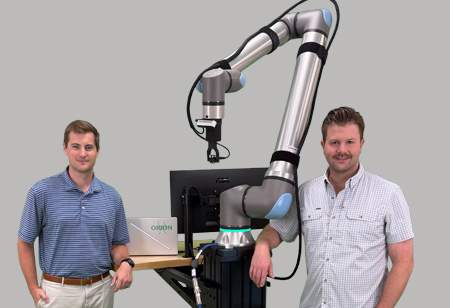
Dr. Nate Blackman, CTO, Dr. Ben Blandford, CEO
LoneStar NDE Innovations (LSNDE) is helping aerospace teams respond to a shrinking Non-Destructive Testing (NDT) workforce and inefficient robotic inspection systems. Traditional robotic inspection systems are often difficult and time-consuming to deploy and require significant safety infrastructure to keep operators out of harm’s way. In many cases, setup, programming and path planning can take weeks before scanning begins. To simplify the process, the company developed Orion, an “inspector in-mind” programming-free collaborative robot inspection system designed for operators to learn in a day, with path planning completed in minutes and it is safe for operators to work alongside.

Safeguarding Aerospace Innovations with Non-Destructive Testing

In the fast-evolving aerospace industry, safety and reliability are paramount. The integrity of every component, from the smallest bolt to the largest engine part, is critical to the performance and safety of aircraft. As a result, aerospace manufacturers and service providers rely heavily on non-destructive testing (NDT) and inspection systems. These technologies allow for the detection of hidden flaws and structural issues without causing any damage to the components being tested.

Advancing Aerospace Inspection Through Speed, Precision and Usability

Inspection integrity in aerospace and defense environments depends on more than defect detection; it determines production continuity, certification confidence and downstream liability exposure. Traditional non-destructive testing approaches continue to face pressure from workforce attrition, extended training cycles and inconsistent data capture. Skilled inspectors remain scarce, while manual methods introduce variability that complicates repeatability and slows throughput. Legacy automation has attempted to address these gaps, yet it often introduces its own constraints, including heavy infrastructure requirements, long setup times and dependence on complete design data that many maintenance or repair environments do not possess.

Maximizing Safety: How Machine Learning will Transform the Cockpit
An Airbus Innovation Center [EPA: AIR]
Maximizing Safety: How Machine Learning will Transform the Cockpit
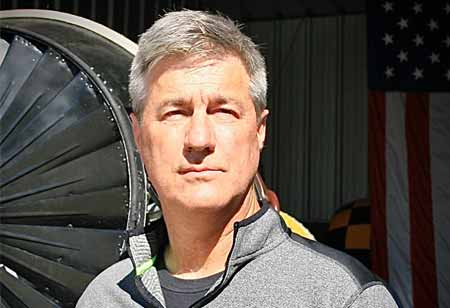
Paul Smith, Director of Flight Test and Operations

Commercial aviation, built upon years of meticulously engineered, rule-based systems, is entering a period of radical change. Implementation of AI and ML systems is advancing at an ever-increasing speed as they demonstrate advantages in capability, accuracy and efficiency, offering the sector its most significant opportunity since the jet engine: the chance to shift from minimizing errors to predicting and pre-empting them entirely. This is the safety imperative of the twenty-first century.

Aerospace Non-Destructive Testing and Inspection Systems Info

Q1
What Do Aerospace Non-Destructive Testing and Inspection Systems Do?
Aerospace non-destructive testing and inspection systems help organizations examine aircraft, spacecraft, engines, structures and components without damaging the parts being inspected. Top Aerospace Non-Destructive Testing and Inspection Systems support defect detection, material verification, maintenance decisions and production quality control across safety-critical environments where even small flaws can affect reliability, certification confidence and long-term asset performance. They are used to protect both structural integrity and operational continuity.
Q2
What Capabilities Are Included in Aerospace NDT Systems?
Aerospace NDT systems may include ultrasonic testing, eddy current testing, radiographic inspection, visual inspection tools, thermal methods, sensor platforms, robotic scanning, data capture software and reporting workflows. Top Aerospace Non-Destructive Testing and Inspection Systems combine inspection hardware, repeatable processes and usable data so teams can assess complex materials, bonded assemblies and precision components with greater confidence across production, repair and research settings. The strongest platforms also help standardize how findings are recorded and reviewed.
Q3
Why Is Demand Growing for Aerospace Inspection Solutions?
Demand is rising as aerospace programs rely on lighter materials, tighter quality expectations, aging fleets, high-value assets and more complex maintenance requirements. Top Aerospace Non-Destructive Testing and Inspection Systems are becoming more important as manufacturers, MRO facilities and defense organizations look for inspection methods that improve throughput, strengthen traceability, reduce avoidable downtime and support safer decisions without relying only on manual evaluation. Workforce constraints and pressure for faster turnaround further increase interest in more efficient aerospace inspection solutions.
Q4
How Are Leading Aerospace Inspection Systems Evaluated?
Leading aerospace inspection systems are evaluated by accuracy, repeatability, safety, ease of deployment, operator training needs, compatibility with aerospace materials and the clarity of inspection records. Top Aerospace Non-Destructive Testing and Inspection Systems also need to fit production, MRO, defense and research environments while supporting practical implementation, consistent documentation and dependable results under demanding operational conditions. Decision-makers often consider integration needs, service support and the ability to scale across different part types.
Q5
How Do Aerospace NDT Platforms Create Operational Value?
Aerospace NDT platforms create value by helping teams find defects earlier, reduce rework, support compliance readiness and avoid unnecessary part removal or destructive testing. Top Aerospace Non-Destructive Testing and Inspection Systems can improve decision-making by connecting inspection results with maintenance planning, quality assurance, engineering review and lifecycle documentation, making inspection a stronger contributor to cost control and risk reduction. Better inspection visibility can also help teams prioritize repairs and release assets with greater confidence.
Q6
What Role Do Innovation and Expertise Play in Aerospace Inspection?
Innovation matters when inspection tasks involve composites, bonded structures, irregular surfaces, large assemblies or limited access areas. Top Aerospace Non-Destructive Testing and Inspection Systems benefit from domain expertise, practical software design, automation, sensor integration and clear visualization tools that help inspectors and engineering teams turn complex readings into reliable decisions while improving consistency across different facilities, materials and inspection methods. Technical expertise is especially important because aerospace inspection must balance speed with disciplined validation.