THANK YOU FOR SUBSCRIBING


Aerospace and Defense Review Weekly Brief
Be first to read the latest tech news, Industry Leader's Insights, and CIO interviews of medium and large enterprises exclusively from Aerospace and Defense Review
Modern airspace is no longer just about mastering flight mechanics; it’s a test of cognitive readiness. Today’s pilots must navigate increasingly complex flight systems, make real-time decisions that adhere to protocols and contend with unpredictable weather conditions, all while staying ahead of the aircraft. Yet, many commercial training programs still believe that passing exams and logging hours guarantee competence in the cockpit. Genesis Flight College sees the flaw in that thinking. Based in Collingwood, Ontario, the college is reengineering pilot training, pushing beyond the standard licensing path to shape aviators equipped to take command at 30,000 feet. “Our aim is not to mass produce pilots,” says David Gascoine, president. “The way we have built our student-centered, leadership-first model adds resilience, self-awareness and decision-making instincts that hold under pressure.” To deliver on that promise, Genesis draws on two radically different yet complementary environments; elite graduate programs and NATO-aligned air force training systems. The hybrid approach blends academic personalization with military-grade discipline. While cadets are expected to meet the same end-point standards as any Commercial Pilot License (CPL) or integrated Airline Transport Pilot License (iATPL) program, the path to get there is shaped by how each individual thinks, reacts and evolves under pressure. That level of personalization begins long before cadets step into the cockpit. Developed in collaboration with advisors from the Royal Canadian Air Force, the U.S. Air Force, and senior airline captains, Genesis’ iATPL program reflects the same attributes top airlines hire for—mindset, resilience and coachability The admissions process incorporates COMPASS aptitude testing, behavioral profiling and high-stakes group simulations that assess situational awareness, stress response and team dynamics. Each candidate’s performance is mapped against the airline standard pointbased scoring framework, ensuring objectivity, consistency and fairness at every stage. But unlike conventional screening, the aim isn’t simply to weed people out. Instead, the data serves as the blueprint for a personalized training strategy to specifically address the individual strengths and weaknesses of those accepted to the program.
InFlight Catering Service in Canada 2025
Established 12 years ago by visionary founder Gary Weber, IFCS is the aviation sector’s leading provisioning service provider. It drives tangible benefits for airlines and catering partners by offering user-friendly solutions for managing flight provisioning processes. IFCS paves the way for immersive client partnerships with a mission to develop tailored flight provisioning systems for global airlines and caterers. The company gains deep insights into the complexities of aviation catering, ensuring customized solutions that meet industry needs. This understanding facilitated the development of Galley X, an end-to-end platform improving flight provisioning operations worldwide. The platform boasts over 24 modules supporting various operational processes. The galley planner and management software, a widely adopted module, enables precise planning in advance. It accommodates diverse aircraft types and galley configurations, ensuring operational clarity and consistency through detailed flight plans with exact item quantities. “Our platform’s intuitive interface is tailored to meet the evolving needs of the aviation industry. It optimizes modern requirements, crucial in an industry where efficiency is paramount,” says Callahan Hintsa, chief communications officer at IFCS. Through a user-friendly interface and advanced functionalities, Galley X simplifies intricate tasks, ensuring accuracy and efficiency at every step of Callahan Hintsa, Chief Communications Officer the provisioning process. By harnessing efficiencies in flight and on the ground, IFCS empowers airlines and caterers to achieve significant cost savings and elevate overall operational performance.

Military Modular Power Conversion Solution in Canada 2025
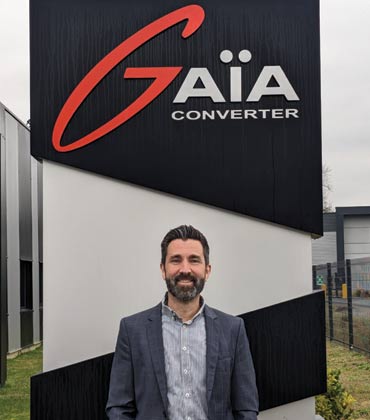
Leading aerospace manufacturers seeking the next avionics platform to produce advanced, efficient, and safe aircraft emphasize a reliable power solution. The quest is for a partner that guarantees products will not become obsolete for decades and provides the technical support for their mission-critical applications. With its DNA in avionics, GAIA Converter is leading the charge in providing OEMs worldwide with high-reliability modular power solutions and power architectures designed for mission-critical operations. It has established a strong reputation as a center of competence for power electronics in the industry. “We are singularly focused on power electronics,” says John Imaz, vice president of sales and marketing at GAIA Converter. “We ensure our clients always have the right power solution and as long as they need it.” GAIA Converter upholds the highest quality standards while providing power solutions from 4 to 500 watts. Through simplified functional building blocks, the team empowers power and design engineers to accelerate time to market. It develops and manufactures highly efficient COTS-isolated DC/DC converters with maximized performance and power densities. Designing and managing innovative, configurable solutions, including AC/DC converters and full product solutions, the team supports the life cycle of clients’ programs and offers full support every step of the way. The products offer high power density and have one of the best (MTBF) meantime before failure values.
CXO INSIGHTS

Keeping Aircraft Reliability Competitive Through Its Life Cycle
Ross Peterson, Director of Engineering and Reliability, Piedmont Airlines

Resolving the Rising Number of Cyberattacks in the Aviation Industry
Sylvain Lefoyer, Deputy Director of Aviation Security and Facilitation, ICAO

Sustainability And the Aviation Industry
David Deveau, Vice President of Corporate Safety and Sustainability, The Inland Group of Companies

Strategic Solutions for Aircraft Maintenance Challenges
Nolan Elrod, Manager of Maintenance Contracts, Republic Airways

Convenience - Driving Force Towards Autonomous Flight
Jeffrey Lai, M.Sc. Training Development Manager, Flair Airlines


IN FOCUS
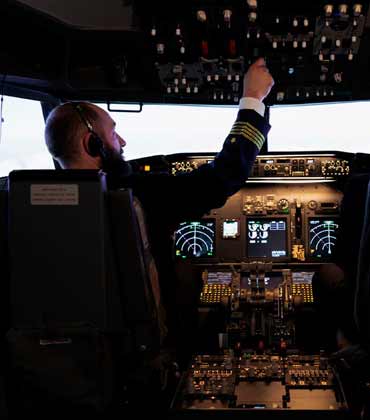
Emerging Dynamics of Commercial Pilot Training Services in Canada
Canada's commercial pilot training sector is evolving due to rising demand, a pilot shortage, technological advancements, and initiatives promoting diversity, aiming to produce skilled and adaptable pilots for global markets.
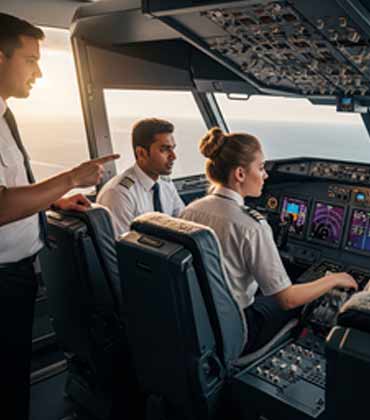
Transforming Pilot Training: Advanced Aviation Technologies in Canada
Technologies reduce the dependency on aircraft availability and physical instructors while increasing global access to repeatable and scalable training experiences.
EDITORIAL
Training the Flight Deck Leaders of Tomorrow
As aviation demands continue to rise, commercial flight training is undergoing a profound transformation. Today’s pilot education plays a vital role in preparing aviators for the complexities of modern airspace and emerging technologies.
Across Canada, flight training institutions are offering comprehensive, outcomes-driven programs that go well beyond flight hours and theory. These offerings integrate ICAO-compliant curricula, advanced simulation technologies, safety-first protocols and structured pathways to commercial aviation careers.
AI-powered learning systems, full-motion simulators and real-time performance analytics enable personalized training and consistent skill assessment. These tools also help students develop sharper decision-making abilities and prepare them to operate in increasingly sophisticated aircraft and airspace systems.
This edition of Aerospace and Defense Review Canada explores how Canadian pilot training providers are advancing aviation education into a more innovative, safety-driven and outcomes-based field.
Featured thought leaders include Travis Krabbenhoft, director of airport safety & SMS manager, at Denver International Airport, who emphasizes the importance of cross-disciplinary collaboration, and the value of mentorship and professional growth in building resilient future-focused airport systems. Stéphane Rousseau, vice president of information technology at Air Inuit, highlights the contrast between rapid technological advancement and the unchanging, often harsh realities of life in remote northern regions such as Nunavik, Quebec.
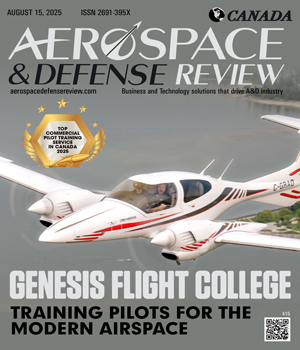
The magazine also spotlights leaders like Genesis Flight College that redefines pilot training through a hybrid model that blends militarygrade discipline with graduate-level personalization. Its iATPL program emphasizes mindset, resilience and coachability, equipping cadets to lead at altitude.
We hope this edition, featuring the Top Commercial Pilot Training Service in Canada 2025, provides an inside look at the programs, technology and instructional leadership fueling the next generation of professional pilots.

