
THANK YOU FOR SUBSCRIBING

Aerospace and Defense Review Weekly Brief
Be first to read the latest tech news, Industry Leader's Insights, and CIO interviews of medium and large enterprises exclusively from Aerospace and Defense Review
This article is part of Aerospace Defense Review Innovation Insights series featuring expert contributions nominated by our subscribers and reviewed by our editorial team.

The global aviation maintenance industry is entering what can increasingly be described as a structural supercycle — not simply a cyclical recovery from the pandemic, but a long-term convergence of demand, capacity constraints, labor shortages, and fleet expansion that is reshaping the MRO landscape worldwide.
For years, the aviation industry has operated in cycles. Demand rises, capacity adjusts, and supply eventually catches up. What makes the current moment different is that several structural forces are now moving in the same direction at the same time.
First, commercial aviation demand continues to grow, particularly in domestic and regional markets, where narrowbody aircraft remain the backbone of airline operations. The Airbus A320 family and Boeing 737 family continue to dominate fleet expansion strategies across North America and Latin America, with airlines placing significant long-term orders to meet future traffic demand.
However, those aircraft are not arriving fast enough.
OEM delivery delays have created one of the most important dynamics in today’s market: airlines are keeping existing fleets in service longer than originally planned. Aircraft that might have been retired or replaced are now remaining active, creating additional maintenance demand across the global fleet. This directly increases the need for heavy checks, structural repairs, component support, painting, and long-term lifecycle maintenance services.
This is one of the clearest signals that the MRO market is entering a supercycle.
At the same time, the industry faces a second structural problem: labor.

The United States, which remains one of the largest aviation markets in the world, is confronting a growing shortage of aircraft maintenance technicians. A significant portion of the current workforce is approaching retirement age, and the pipeline of new mechanics entering the industry is not growing fast enough to replace them.
This creates a compounding problem. The industry is not only losing experienced labor — it is also struggling to generate enough new certified technicians to close the gap. Over the next decade, this shortage is expected to place increasing pressure on maintenance capacity, labor costs, turnaround times, and production planning throughout the North American aviation ecosystem.
This matters because aircraft maintenance is not infinitely scalable.
Hangars, tooling, engineering support, supply chain coordination, inspectors, technicians, and production systems must all work together in highly synchronized industrial environments. If labor becomes constrained, maintenance capacity becomes constrained.
And this is where Mexico becomes strategically important.
Mexico is already seeing significant growth in narrowbody fleet activity, both through domestic airline expansion and through its role as a strategic North American aviation partner. Yet maintenance infrastructure remains relatively limited, particularly in heavy maintenance capacity.
This creates an imbalance: fleet growth is accelerating, but independent MRO capacity is not growing at the same speed.
-
Aircraft maintenance is entering a structural supercycle, driven by fleet growth, capacity constraints, and workforce shortages. The question is no longer whether demand is coming — it is who will be ready when it arrives. At MRO Iberoamérica, we are investing with conviction in world-class infrastructure, operational excellence, and Mexico’s future as a strategic aviation maintenance hub for North America.
As aircraft deliveries continue, and as airlines keep existing fleets flying longer due to OEM delays, the pressure on available maintenance slots is likely to intensify.
Northern Mexico is particularly well positioned in this environment.

Its geographic proximity to major U.S. airline hubs creates favorable ferry economics and operational flexibility. Industrial labor ecosystems, strong manufacturing culture, lower congestion, competitive operating costs, and cross-border logistical integration all make the region increasingly attractive for aviation maintenance investment.
The Saltillo-Monterrey corridor, in particular, offers a combination of industrial capability, infrastructure scalability, and strategic access that is increasingly relevant in the current aviation environment.
But location alone is not enough.
The future of aircraft maintenance will likely favor integrated MRO platforms that operate more like industrial production systems rather than isolated maintenance projects.
Airlines today are looking for predictability, throughput, shorter turnaround times, engineering responsiveness, supply chain coordination, and operational continuity.
This requires a different kind of MRO model — one that combines maintenance execution with planning, engineering, materials management, quality systems, and production-line operational discipline.
In many ways, the next phase of aviation maintenance will not be defined only by technical capability, but by industrial execution.
That is why we believe the conversation is no longer simply about maintenance demand.
It is about maintenance infrastructure.
It is about workforce development.
It is about strategic capacity.
And it is about which regions and organizations are prepared to scale in a market where demand may continue to outpace available capability.
Aircraft maintenance is entering a supercycle not because of one single factor, but because multiple structural forces are converging at once: fleet growth, delayed deliveries, labor shortages, aging aircraft, narrowbody dominance, and limited maintenance infrastructure.
For Mexico — and particularly Northern Mexico — this may represent one of the most important aviation industrial opportunities of the next decade.
The question is no longer whether demand is coming.
The question is who will be ready when it arrives.
MORE FROM Innovation Insights
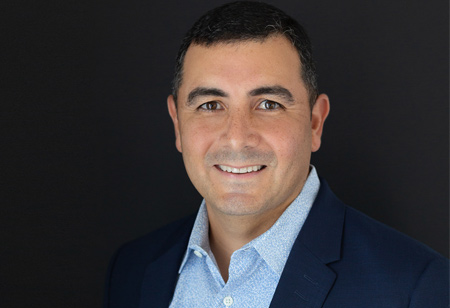
Jason Rios, Sr Vice President & General Manager
Aerospace Sentient Science Corporation
DigitalClone - Leveraging the Power of Digital Twin Technologies to Predict Life

Isabela Ion, Marketing Assistant
Markku Pirttijärvi, Chief Geophysicist
Radai
With the right team, even navigation through uncharted waters can be successful


EXPLORE OUR KNOWLEDGE NETWORK
The articles from these contributors are based on their personal expertise and viewpoints, and do not necessarily reflect the opinions of their employers or affiliated organizations.
