THANK YOU FOR SUBSCRIBING

Aerospace and Defense Review Weekly Brief
Be first to read the latest tech news, Industry Leader's Insights, and CIO interviews of medium and large enterprises exclusively from Aerospace and Defense Review


 Jerry Stecklein, President
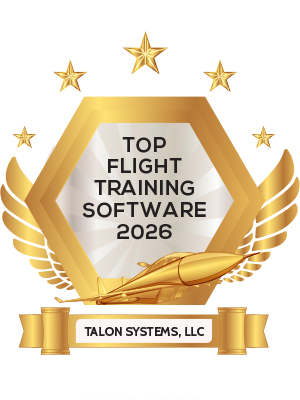
When Aerospace and Defense Review named TALON SYSTEMS, LLC the 2026 Flight Training Software of the Year, it recognized more than a technology platform. It recognized a company that has reshaped how flight training organizations think about structure, accountability, and performance. Under the leadership of President Jerry Stecklein, TALON has built an integrated ecosystem that aligns training, maintenance, inventory, and safety within a single operational framework.
At the center of that framework is TalonETA, a training management system designed around the curriculum rather than the aircraft or instructor. This distinction is more than technical. By making the curriculum the core scheduling element, Talon ensures that every scheduled lesson complies with approved syllabus standards, including prerequisites, instructor qualifications, currency requirements, minimum performance levels, and grading criteria.
“If a deviation is required, manager-level authorization is built into the workflow. The result is a disciplined training environment where accountability is visible and student progress is measurable,” says Stecklein.
Flight school owners gain real-time visibility into operations and performance data. Managers retain oversight of compliance and resource allocation. Instructors are guided through structured preparation, mandatory debriefing, and detailed line-item grading. Students receive clarity about expectations and whether they are ahead of or behind schedule. The system reinforces behaviors that are often discussed but inconsistently executed in traditional programs. In one early success story, a customer reported graduating its first class on schedule after implementing TalonETA—a milestone that had eluded the organization for years.
How does TalonRMS improve aircraft utilization and maintenance coordination in flight training environments?
Inventory and parts management are integrated into the same system of record. Maintenance teams can monitor stock levels, track serialized components, manage warranties, and receive recalibration alerts. Leadership gains a consolidated operational view rather than juggling multiple disconnected platforms. For universities and growing academies, this unified approach eliminates inefficiencies and support gaps that arise when training, maintenance, and safety systems operate in isolation.
TalonRMS extends this structure into fleet and maintenance operations. Rather than operating as a separate tracking tool, RMS feeds live aircraft status and availability directly into the scheduling and dispatch environment. Aircraft availability, inspection status, time-limited components, discrepancies, and projected return-to-service timelines update in real time. Dispatchers assign tail numbers only at the point of dispatch, based on actual airworthy status. The system prevents overflight of maintenance inspections, flags conflicts, and automatically refreshes component times after each flight. This just-in-time assignment model has helped flight schools increase utilization while reducing last-minute cancellations and operational friction.
-
If a deviation is required, manager-level authorization is built into the workflow. The result is a disciplined training environment where accountability is visible and student progress is measurable.
Inventory and parts management are integrated into the same system of record. Maintenance teams can monitor stock levels, track serialized components, manage warranties, and receive recalibration alerts. Leadership gains a consolidated operational view rather than juggling multiple disconnected platforms. For universities and growing academies, this unified approach eliminates inefficiencies and support gaps that arise when training, maintenance, and safety systems operate in isolation.
How does TalonSMART embed risk management and safety processes into daily flight operations?
Safety management is addressed through TalonSMART, a web-based platform that embeds risk management, hazard identification, risk assessment, reporting, and corrective action tracking into daily operations. Instead of relying on fragmented reports or informal communication, safety data becomes structured and analyzable. Hazards are defined, risks are scored for probability and severity, and mitigation strategies are documented. Mitigation factors are reviewed and updated when investigations or trend analysis identify a need. Automatic notifications, investigator assignments, and follow-on audits ensure that concerns do not disappear into inboxes. Trend analysis allows leadership to move from reactive response to proactive risk management.
How does TALON maintain continuous improvement through customer feedback and evolving technology adoption?
TALON’s development process reflects continuous customer engagement. Feature enhancements are evaluated on a regular cycle, and implementation includes detailed guidance on best practices, data security, and role-based access controls. From its first deployment at the United States Air Force Academy in 2003 to the recent release of an enhanced TalonMobile application and the continued implementation of new technologies, the company has evolved alongside advances in mobile technology and user expectations. Desktop, tablet, and smartphone access now support real-time scheduling, messaging, notifications, and operational oversight.
For Stecklein, long-term partnership is as important as engineering. “Always take care of the customer first,” he says, summarizing a philosophy that extends beyond product design to ongoing support and responsiveness. In a market crowded with scheduling tools and recordkeeping platforms, Talon Systems distinguishes itself by delivering an integrated management environment where training excellence, operational efficiency, and safety accountability function as one coherent system.
Selecting Flight Training Software That Drives Training Discipline
Flight training organizations face a complex management environment where scheduling, aircraft readiness, instructor availability and regulatory compliance must function together without friction. Training delays, aircraft maintenance conflicts and fragmented safety reporting systems often undermine program efficiency. Software intended to manage training operations must therefore support far more than simple recordkeeping. It must coordinate the moving parts of a flight school so that training progresses predictably and safely.
Effective flight training platforms are built around the structure of training itself. Programs that merely digitize logs or dispatch activities rarely influence training outcomes because they operate after the fact. A stronger approach embeds the syllabus directly into the scheduling process so every lesson reflects approved prerequisites, instructor qualifications and defined training objectives. Such systems ensure that each training activity occurs within the framework designed by the organization’s training leadership rather than leaving compliance to manual oversight. When scheduling, grading and lesson progression operate within one environment, managers gain confidence that training is delivered consistently across instructors, locations and cohorts.
Fleet readiness represents another decisive element in evaluating flight training software. Aircraft availability often becomes the bottleneck that disrupts training timelines. Maintenance events, inspections and unexpected discrepancies can quickly cascade into canceled lessons and lost utilization. Platforms that integrate maintenance records, inspection schedules and dispatch functions provide a much clearer operational picture. Maintenance teams can anticipate required downtime, dispatchers assign aircraft based on accurate airworthiness data and instructors avoid last-minute aircraft changes. Programs operating from a unified source of fleet information tend to maintain steadier aircraft utilization and reduce scheduling conflicts that interrupt training flow.
Safety management has also become inseparable from training oversight. Aviation organizations are expected to maintain structured Safety Management Systems that identify hazards, track incidents and measure the effectiveness of mitigation strategies. Software that treats safety as a separate reporting tool often struggles to influence daily operations. Systems that integrate hazard identification, risk scoring and incident reporting into the same environment used for training and scheduling help transform safety into a routine part of operational management. Leadership gains visibility into trends while instructors and staff have a clear process for reporting concerns and documenting corrective actions.
Decision-makers evaluating flight training platforms therefore benefit from examining how well a system embeds training discipline, aligns maintenance visibility with scheduling activity and incorporates safety oversight into everyday workflows. Platforms that unify these elements create a clearer operational environment where training progress, aircraft readiness and safety reporting reinforce one another instead of competing for attention.
TALON SYSTEMS, exemplifies this integrated approach. Its TalonETA platform places the lesson itself at the center of scheduling, enforcing syllabus requirements such as prerequisites, qualifications and grading expectations so training occurs exactly as designed. The TalonRMS maintenance and inventory environment continuously updates aircraft availability and feeds that information directly into scheduling, preventing conflicts with inspections or component limits while improving aircraft utilization. TalonSMART extends this structure into safety management by guiding users through hazard identification, risk assessment and corrective action tracking within the same operational environment. Flight schools gain visibility into training progress, fleet readiness and safety performance from one coordinated system, an approach that has helped organizations improve training consistency and graduate students on schedule.
...Read more
| Share this Article: |
Company
TALON SYSTEMS, LLC
Management
Jerry Stecklein, President
Description
TALON SYSTEMS, LLC delivers an integrated flight training ecosystem that unifies scheduling, maintenance, inventory, and safety into one accountable framework. Recognized as 2026 Flight Training Software of the Year, the company helps flight schools improve performance, increase utilization, and strengthen compliance.