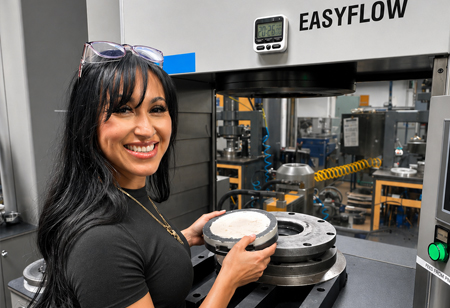
Aerospace abrasive flow machining service plays an essential role in refining complex components that support advanced propulsion, structural integrity, and high-performance aerospace systems. As modern designs incorporate intricate internal passages, lightweight materials, and additively manufactured geometries, the demand for precise internal finishing continues to rise. Abrasive flow machining delivers controlled, uniform surface refinement that enhances efficiency, reliability, and overall component durability, positioning it as a critical process within the evolving aerospace manufacturing landscape.
THANK YOU FOR SUBSCRIBING