Aircraft Structural Integrity Training and Advisory Solutions in APAC

Aircraft Structural Integrity Training and Advisory Solutions in APAC encompass specialized services that help aviation organizations maintain airworthiness, enhance safety, and meet evolving regulatory requirements. By leveraging advanced inspection methodologies, lifecycle management expertise, and workforce training, these solutions strengthen operational resilience and support sustainable growth across the regions expanding aerospace sector.

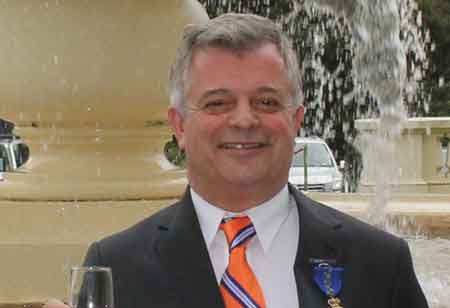
Loris Molent: Practical Aircraft Structural Integrity Training and Advisory
Loris Molent
Practical Aircraft Structural Integrity Training and Advisory
Loris Molent AM, Director
At 40,000 feet, aircraft safety depends on physics, engineered systems, and the expertise of the specialists who certify them airworthy. That expertise is often underestimated, and few have contributed more to strengthening it than Loris Molent, Member of the Order of Australia (AM).

APAC Aviation: Driving Reliability through Structural Integrity Programs

Aviation organizations across the Asia Pacific (APAC) region are strengthening investments in aircraft structural integrity training and advisory solutions to support operational reliability, regulatory compliance, and long-term fleet performance. As commercial aviation networks continue expanding across regional and international routes, airlines, maintenance providers, and aerospace engineering teams are prioritizing advanced structural assessment capabilities to maintain aircraft safety and operational efficiency.

Advancing Aircraft Structural Integrity through Applied Expertise

Aerospace organizations across APAC operate within an environment where structural reliability is inseparable from safety, readiness and lifecycle cost control. Aircraft fleets are aging, utilization patterns are shifting and the tolerance for uncertainty in fatigue behavior is diminishing. Executives responsible for engineering oversight are no longer evaluating support purely on technical credentials; they are assessing how effectively expertise translates into usable methods that inform decisions under real conditions.

Balancing Safety, Compliance, and Strategic Growth
Philippines AirAsia
Balancing Safety, Compliance, and Strategic Growth
Digno Bernardino, Head of Risk Management

My first job is in semiconductor manufacturing. I started as an Assembly Maintenance Technician, climbed the ladder until I became a Senior Process Engineer. As a process engineer, I have applied Total Quality Management tools and methodologies to continually improve the process/ throughput. Here I learned the importance and benefits of Failure Modes and Effects Analysis (FMEA) where the team looks at Risk Priority Number of each failure mode. I have brought this methodology in other industries where I worked, from manufacturing to financial industry, and eventually to aviation industry. In aviation, during my days as Head of Corporate Quality, I coupled this methodology (FMEA) with ISO9001 (risk-based quality management. Eventually I was appointed as the Head of Risk Management for AirAsia Philippines where I started adopting the Risk Management framework and process of ISO31000. As the Head of Risk Management, I facilitate the review of risk registers, business continuity plans, and compliance risks; reporting of enterprise risks to Top Management and Board Committee on Governance, Risk, and Compliance. Foster risk culture through Enterprise Risk Awareness sessions, and leads special projects assigned by the CEO.

Aircraft Structural Integrity Training and Advisory Solutions in APAC Info

Q1
What Do Top Aircraft Structural Integrity Training and Advisory Solutions in APAC Help Organizations Do?
Top Aircraft Structural Integrity Training and Advisory Solutions in APAC help aerospace and defense organizations understand, assess and manage structural risks throughout an aircraft’s operating life. Providers typically support engineering teams responsible for airworthiness, maintenance planning and fleet sustainment. Their work can strengthen technical judgment around fatigue, cracking, damage tolerance and structural condition, helping organizations make informed decisions about inspection priorities, repair needs and continued safe operation.
Q2
What Services Are Included in Aircraft Structural Integrity Training and Advisory Support?
Top Aircraft Structural Integrity Training and Advisory Solutions in APAC can include specialist training, engineering consultation, fatigue assessment, failure investigation support and guidance on inspection or service-life planning. Training may cover structural behavior, damage mechanisms and practical assessment methods, while advisory work can help teams interpret technical findings and determine appropriate engineering responses. The scope depends on aircraft type, operational demands, regulatory requirements and the organization’s internal engineering capability.
Q3
Why Is Demand Growing for Aircraft Structural Integrity Expertise Across APAC?
Demand for Top Aircraft Structural Integrity Training and Advisory Solutions in APAC is influenced by expanding aviation activity, diverse operating environments, aging fleets and the need to maintain technical capability as aircraft remain in service longer. Operators and defense organizations also face pressure to balance availability with safety and maintenance discipline. These conditions increase the importance of skilled personnel who can evaluate structural issues consistently and support sound airworthiness management.
Q4
How Are Top Aircraft Structural Integrity Training and Advisory Solutions in APAC Evaluated?
Top Aircraft Structural Integrity Training and Advisory Solutions in APAC are generally evaluated on technical depth, relevant aircraft experience, training quality and the ability to translate engineering principles into usable decisions. Organizations may also consider familiarity with fatigue assessment, investigation methods, regulatory expectations and complex fleet environments. Effective providers should communicate clearly, adapt support to operational needs and demonstrate methods that engineering teams can apply consistently rather than relying on theory alone.
Q5
How Do Structural Integrity Advisory Services Create Operational Value?
Top Aircraft Structural Integrity Training and Advisory Solutions in APAC create value by helping organizations identify structural risk earlier and make better-informed maintenance and inspection decisions. Strong advisory support can reduce uncertainty around cracking, repairs and service-life planning while helping engineering teams focus resources where they matter most. Better structural understanding can also support aircraft availability, risk control and lifecycle cost management without weakening the safety requirements that govern continued operation.
Q6
What Role Do Technology and Specialist Expertise Play in Aircraft Structural Integrity?
Top Aircraft Structural Integrity Training and Advisory Solutions in APAC increasingly combine specialist judgment with analytical tools, digital records, inspection data and modern assessment methods. Technology can improve consistency and help engineers organize evidence, but it does not replace experienced interpretation. Aircraft structural integrity services are strongest when tools are supported by sound engineering principles, practical knowledge and clear communication, enabling teams to turn complex structural information into defensible airworthiness management decisions.