
THANK YOU FOR SUBSCRIBING

Aerospace and Defense Review Weekly Brief
Be first to read the latest tech news, Industry Leader's Insights, and CIO interviews of medium and large enterprises exclusively from Aerospace and Defense Review
![QinetiQ [LON: QQ]: Advancing Operational Readiness through Integration](https://www.aerospacedefenserevieweurope.com/uploaded_images/1438-07bao.jpg "QinetiQ [LON: QQ]: Advancing Operational Readiness through Integration")
Modern defence is increasingly interconnected and operational success depends on how effectively technology, people and information work together across domains. This is where QinetiQ has established a distinctive role. Operating some of Europe's most critical defence test and evaluation environments, QinetiQ helps governments, armed forces and defence manufacturers assess emerging technologies, validate operational concepts and prepare front-line capabilities before they enter service. By integrating testing, training and mission support within a connected ecosystem, the company enables customers to strengthen readiness across land, sea, air, cyber and space domains. Its data-driven approach helps organisations reduce uncertainty, accelerate decision-making and respond more effectively to increasingly complex operational challenges. Testing for Tomorrow Defence capabilities can no longer be evaluated in isolation. Modern missions rely on the seamless interaction of platforms, software, sensors, networks and personnel. True mission effectiveness depends on understanding how these elements perform together under realistic conditions.
![QinetiQ [LON: QQ]: Advancing Operational Readiness Through Integration](https://www.aerospacedefenserevieweurope.com/newstransfer/upload/6-f0kkn-.jpg "QinetiQ [LON: QQ]: Advancing Operational Readiness Through Integration")
Fuzing Systems Manufacture of the Year in Europe 2026
Fuzing sits at the intersection of safety, timing and effect, yet it is often treated as a component rather than a complete engineering discipline. That distinction becomes more important with modern operations that demand greater precision and control over how a munition performs at the point of engagement. JUNGHANS Defence approaches this challenge with unusual depth. With full in-house capability across development, production, testing and core technologies, it builds fuzing solutions as integrated systems rather than assembled parts. Formed as a joint-venture between Diehl Defence (Germany) and Thales (France), it brings together more than a century of European fuzing heritage, consolidating expertise that traces back to the early 1900s into a single, integrated platform. Because the joint venture is structured to operate without favouring either shareholder, it functions not as an internal supplier to either parent, but as an independent fuze house serving a wide range of programs. Built on integrated in-house expertise across core fuzing disciplines, JUNGHANS Defence supports a wide range of applications. Its portfolio spans artillery, rockets, missiles, air-delivered munitions, mines, torpedoes and newer applications such as loitering munitions and one-way effectors, supported across multiple architectures, from traditional mechanical designs to advanced electronic systems. Across the entire portfolio, systems are developed in line with NATO STANAG and MIL-SPEC requirements, embedding interoperability and qualification rigor directly into the engineering process. JUNGHANS Defence’s expertise relies on three competence centres. Its German headquarters leads micro-mechanics and system integration, while its French centre in La Ferté-Saint-Aubin near Orléans focuses on electronics, high-frequency systems and hardened solutions. Its third.
Mission-Critical Aviation Services

Operating at the sharp end, FAI has earned its stripes as one of the most trusted names in mission-critical aviation. Headquartered at Nuremberg International Airport, the award-winning German aviation company has built a global reputation for delivering rapid, reliable, and quality services across medical air transport, executive charter, aircraft management, and comprehensive MRO solutions. At the helm is visionary founder and chairman, Siegfried Axtmann, who launched the company in 1987. Since then, FAI has transformed from a private helicopter repatriation club into a powerhouse of specialized aviation solutions with 2024 revenues topping €130 million. Central to FAI’s success is its ability to operate seamlessly across the most complex and sensitive aviation segments. Whether airlifting critically ill patients from remote, politically unstable regions or executing bespoke VIP charter flights at a moment’s notice, FAI deploys a mission-specific, state-of-the-art fleet ranging from long-range Bombardier Global Express jets to fully equipped air ambulance Learjets. Responding Rapidly to Global Emergencies FAI’s ability to respond with speed and precision is exemplary. “In air ambulance, clients don’t come to us when things are easy, they call us when every second counts,” says Axtmann. “We’re trusted to deliver when time is critical, and precision is paramount.” One particularly striking air ambulance mission involved an emergency medevac from a remote region in West Africa. Where other providers hesitated, FAI mobilized within hours and completed the bedside-to-bedside mission within a day, saving a life and deepening a long-standing partnership with an international NGO.
Space Traffic Coordination Platform
Low Earth Orbit has become a congested network of spacecraft and debris—a constantly shifting intersection of national, commercial and scientific ambitions. Each mission collects data, transmits signals and moves through shared orbital lanes that have no borders and no universally accepted way for operators to communicate directly. When information is incomplete or delayed, routine manoeuvres can escalate into conjunctions that end missions and increase debris events threatening every spacecraft in their path. For years, space operators have managed missions through data provided by major space-faring nations. The emergence of new space actors questioned the viability of these systems. Governments, private companies and research institutions track objects, sometimes independently, using different formats, procedures and communication channels. What has been missing is a unique and centralised shared layer that allows all operators to communicate in a simple, direct and trusted way. Spacetalk was created to solve that problem. The Swiss-based platform pioneers global space traffic coordination through neutral, transparent data exchange. Rather than analysing or directing missions, it provides the backbone that enables governments, private operators and research institutions to communicate directly in a secure environment. Every object in orbit is linked to a verified operational point of contact, allowing users to share orbital information, publish manoeuvre intentions and prevent collisions before they occur. A rigorous KYC process ensures full transparency among members regarding the identity of their counterparts. “By treating communication as shared infrastructure, we build trust in orbit,” says Dr Benjamin Guyot, CEO. “The result is an interoperable system designed to safeguard satellites, reduce debris and secure the long-term sustainability of outer space.” Users log into a Space Surveillance and Tracking Forum, where every line represents a space object and displays the operator, the date of publication, and the author. From that point, operators can share key details about trajectory, operational status or upcoming operations.
CXO INSIGHTS
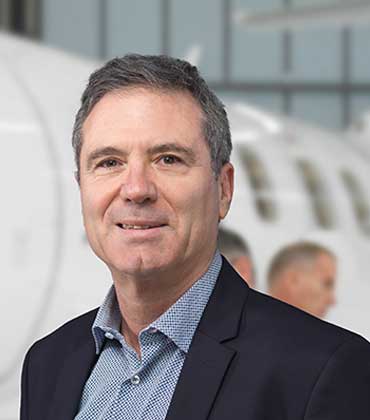
Future of Digitalised Aerospace Industry
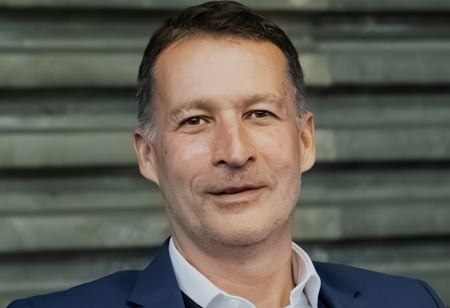
Bruno Cervia, Deputy CEO and VP, R&D, Pilatus Aircraft Ltd
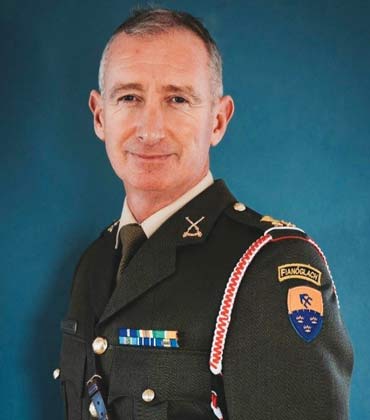
The Evolving Landscape of Irish Military Logistics
Colonel Gareth Prendergast, Head of Strategic Force Design, Irish Defence Forces
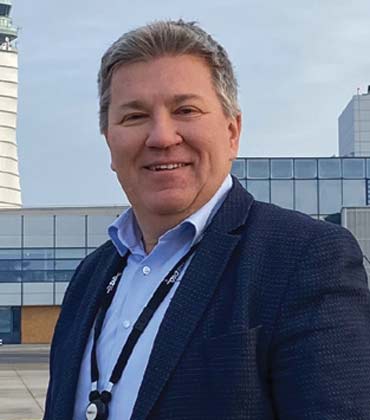
The Quiet Engine Behind Airport Efficiency
Johannes Smejkal, Senior Director Ground Handling Services, Flughafen Wien - Vienna Airport [VIE: FLU]
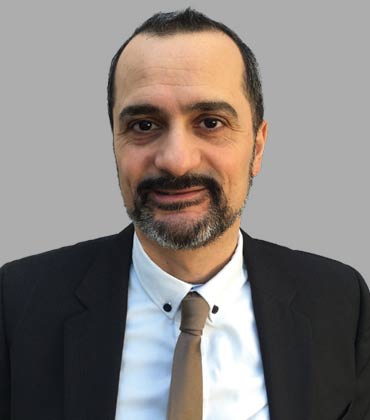
Shaping the Future of Space Business
Francesco Barba, Project Procurement Manager - Procurement Directorate, OHB System AG

Why Great Engineering Leadership Stays Technical
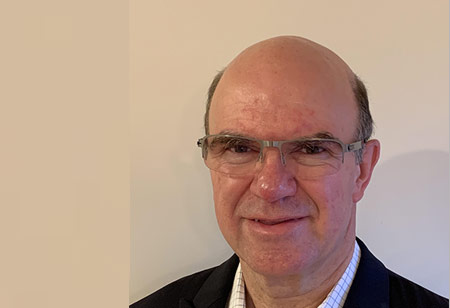
Jonathan Trow, Chief Engineer and Systems Engineering Manager, Fisica
IN FOCUS
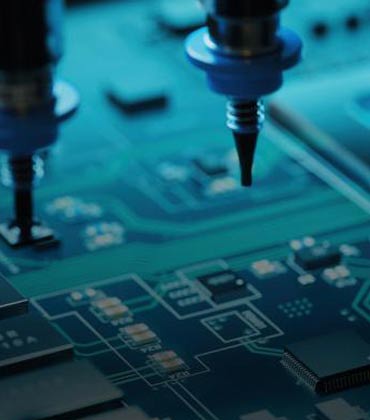
European Defence Engineering: Evolution of Fuzing Systems Manufacturing
Fuzing systems manufacture in Europe supports precision activation mechanisms, enhances operational reliability, strengthens safety standards, and advances integrated defence technology capabilities.
EDITORIAL
Building Interoperability and Defence Resilience
In Europe’s aerospace and defence industry, staying ahead now mainly means bringing together the latest technologies, quickly putting new skills into action and staying prepared for more complex missions. As geopolitical uncertainty, evolving threat landscapes and rapid technological advancement continue to reshape defence priorities, organisations are under growing pressure to deliver solutions that strengthen resilience, enhance interoperability and improve operational effectiveness. In this edition of Aerospace and Defense Review Europe, we recognise companies and industry leaders whose contributions are helping to shape the future of defence innovation and mission preparedness.
Our cover story features QinetiQ, recognised as the Top Mission Support & Operational Readiness Solutions Provider in Europe 2026. Through its integrated approach to testing, evaluation, training and mission support, QinetiQ enables governments, defence agencies and manufacturers to validate technologies strengthen decision-making and accelerate capability deployment across the land, maritime, air, cyber and space domains. The company combines advanced test environments, digital capabilities and operational expertise to enhance mission readiness, reduce programme risk and support more effective defence outcomes.
We also highlight JUNGHANS Defence, honoured as the Fuzing Systems Manufacturer of the Year in Europe 2026. Drawing on more than a century of European engineering heritage, the company has established itself as a leader in the development, manufacture and testing of advanced fuzing systems. Its fully integrated in-house expertise across mechanical, electronic and pyrotechnic technologies enables the delivery of highly reliable, safety- focused solutions designed to meet the evolving requirements of modern defence platforms.
This edition is further enriched by insights from Dr Marc W. Honikel of Rheinmetall, who explores how artificial intelligence and digital twins are transforming engineering, production and maintenance across the defence ecosystem and Dr Markus Heinimann of ATI, who examines titanium’s growing importance in armour modernisation, survivability and supply- chain resilience.
Together, these organisations and industry leaders show how working together is shaping the future of European defence. We invite you to explore this edition and learn about the new ideas, skills and successes that are helping Europe stay prepared and excel in its military efforts.
