
THANK YOU FOR SUBSCRIBING

Aerospace and Defense Review Weekly Brief
Be first to read the latest tech news, Industry Leader's Insights, and CIO interviews of medium and large enterprises exclusively from Aerospace and Defense Review
![SES [EPA: SESG]: Supporting Fleets through Intelligent Connectivity](https://www.aerospacedefenserevieweurope.com/uploaded_images/Untitled-1-Recovered-Recovered-ub18n.jpg "SES [EPA: SESG]: Supporting Fleets through Intelligent Connectivity")
Every day, thousands of vessels cross oceans carrying far more than cargo. Each journey relies on navigation systems exchanging live data with operations centres. Engineers monitor equipment from continents away, fleet managers respond to changing weather, congestion and fuel consumption and crews spend months at sea depending on stable internet access for work and personal connections. Reliable communications have become an essential element of modern shipping, influencing safety, efficiency and informed decision-making throughout every voyage. SES has helped drive this transformation through satellite communications designed for demanding offshore environments. Combining geostationary and medium Earth orbit capabilities within a unified architecture, the company keeps commercial fleets, offshore energy operators, cruise lines and government organisations connected wherever their missions lead. Its integrated approach delivers dependable performance that supports faster decisions, stronger operational oversight and greater confidence across global waters. >Redefining Maritime Communications Rising digital adoption has reshaped expectations throughout the maritime sector. Bridge systems, predictive maintenance, remote inspections, regulatory reporting, cybersecurity and business applications all compete for bandwidth during a single voyage. Passenger services and crew welfare introduce additional demands, creating an environment where communications platforms must support diverse workloads simultaneously. Conventional satellite services, developed primarily to provide coverage, often struggle to balance these requirements without compromising consistency or responsiveness. Addressing those challenges required a different approach rather than incremental improvements. SES developed a multi-orbit strategy that combines complementary satellite resources within one coordinated environment. Geostationary satellites provide extensive coverage, medium Earth orbit systems deliver lower latency and intelligent orchestration ensures each resource contributes according to changing operational conditions. Instead of selecting one capability at the expense of another, vessel operators benefit from a communications experience that adapts throughout the journey.
![SES [EPA: SESG]: Supporting Fleets through Intelligent Connectivity](https://www.aerospacedefenserevieweurope.com/newstransfer/upload/MRO_Services_and_Aerospace_Fuel_System_Europe-smd00-.jpg "SES [EPA: SESG]: Supporting Fleets through Intelligent Connectivity")
Aerospace Fuel System of the Year in Europe 2026
Aerospace fuel systems leave little room for detached engineering. A pump, valve or probe cannot be treated as a separate part once it enters the aircraft. It has to behave within a larger architecture shaped by weight, safety, qualification, maintenance and the program’s long service life. That is where Secondo Mona has built its authority. The family-owned Italian aerospace company is a tier-one supplier of fuel systems and sub-systems for business jets, commuter aircraft, trainers, fighters, helicopters and UAVs. Its strength, however, did not begin with system integration. It began with mechanical intimacy—knowing how individual parts work, fail, adapt and perform under real aircraft conditions. That discipline traces back to 1903, when Mr. Secondo Mona opened a small workshop in Somma Lombardo for the sale and repair of cycles and motorbikes. As aviation began to take shape around Cascina Malpensa, he met Gianni Caproni and other early flight pioneers, bringing his mechanical skill to an industry still learning to standardise itself. By the 1920s, the company had moved into the design and production of on-board equipment.
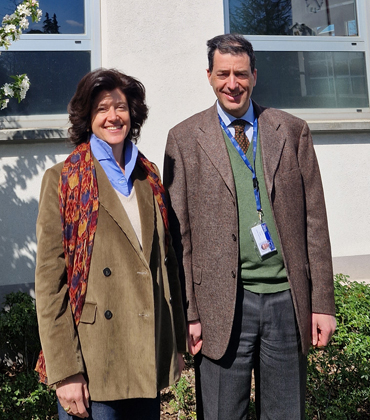
MRO Services of the Year in Europe 2026

Airlines do not measure maintenance in man-hours alone. They measure it in grounded aircraft, disrupted schedules, passenger confidence, and millions in operational exposure. When an aircraft unexpectedly requires structural repair, when a fleet transition must happen under aggressive timelines, or when an operator needs integrated support spanning heavy and line maintenance, engineering, and cabin modification, the margin for error disappears. That is where Atitech has built its reputation. Over the past three decades, Atitech has grown into one of the EMEA region’s leading independent MRO providers, supporting commercial, cargo, military, and private aviation operators across a wide range of maintenance and engineering requirements. The company has built its reputation on technical expertise and certified capability, supporting more than 100 customers worldwide, including ITA Airways, Air Serbia, Hi Fly, Euroatlantic, Corsair, Volotea and many other airlines and Lessors through large-scale infrastructure, specialized engineering resources, and extensive operational experience. “Our infrastructure, engineering resources, and regulatory approvals allow us to support operators through both routine maintenance programs and highly complex operational challenges without forcing customers to coordinate across multiple vendors,” says Gianni Lettieri President & CEO. Multi-Aircraft Capability Backed by Certified Infrastructure Atitech’s operating model is built around the ability to support a wide spectrum of aircraft within a single coordinated framework. The company maintains capabilities across Airbus platforms from the A220 to the A350, Boeing aircraft from the 737 Classic to the 787, regional fleets such as Embraer and ATR, and business aviation platforms including Gulfstream and Hawker, so far. This breadth allows the company to support commercial, cargo, regional, and private aviation segments through an integrated support model.
CXO INSIGHTS

Support of the newly acquired defensive systems within the domestic military and industrial environment
Liviu Bran, Head of Military MRO, and Oana Rahim Pour, Head of Bid & Marketing, Romaero SA Bucharest

Insights on Building a Successful Organzation
Joseph Nelson, Senior Vice President flyExclusive Maintenance, flyExclusive [NYSE: FLYX]

Modernising Aerospace and Defence Industries with CNC
Tim Komkowski, Head of Industrial Engineering, Digitalisation & Transformation, Thyssenkrupp Marine Systems

Unlocking the Future of Aircraft Maintenance with Technology
Andrew Ibsen, Duty Maintenance Manager, British Airways

Future-Proofing Airport Safety: Intersection of Innovation, Regulation and Leadership
Travis Krabbenhoft, Director of Airport Safety & SMS Manager, Denver International Airport

Wheels Up: Inside the Relentless World of AOG
Mark Finger, Manager – AOG Response, Delta Air Lines
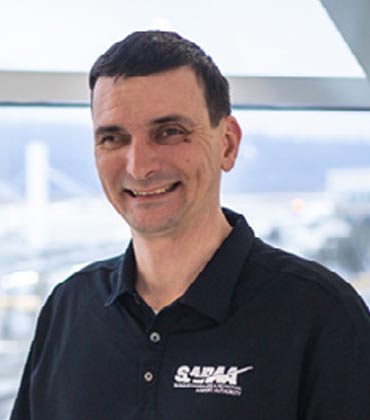
Preventive Maintenance as an Operational Strategy for Airport Operations
James R. Sides, Deputy Director of Maintenance, Harrisburg International Airport


IN FOCUS

Aerospace Fuel Systems in Europe: Driving Next-Generation Aircraft Performance
Aerospace fuel systems in Europe enhance efficiency, ensure safety, support sustainability, and integrate advanced technologies to optimise aircraft performance and reliability.

Elevating Europe's Aerospace Sector: The Future of MRO Services
Defence-focused MRO activities include engine overhaul, structural reinforcement, avionics modernisation, and complex aircraft upgrade programs.
EDITORIAL
Emerging Technologies Enhancing Airline Operations
The aerospace and defence industry is entering a new phase in which connectivity, maintenance excellence and engineering precision are becoming key drivers of operational success. As aircrafts become increasingly connected and missions grow more complex, organisations are investing in technologies that improve reliability, simplify operations and support long-term performance across the commercial, military and maritime sectors.
The cover feature for this edition is SES, recognised as the Top Maritime Satellite Communications Provider in Europe 2026. Operating one of the world's largest multi-orbit satellite fleets, SES delivers secure, high-speed connectivity across oceans and remote regions where terrestrial networks cannot reach. Its combination of GEO and MEO satellites enables reliable communications for maritime operators, the aviation sector, governments and enterprises, while also supporting global broadcasting. Through continued investment in advanced satellite technologies and flexible network solutions, SES is helping shape the future of connected mobility.
We are also pleased to recognise Atitech with the MRO Services of the Year 2026 award. Backed by certified facilities, engineering expertise and comprehensive maintenance capabilities, the company supports commercial, cargo, military and private aircraft with dependable MRO services that help operators maximise fleet availability. Joining this year's honourees is Secondo Mona, recipient of the Aerospace Fuel System of the Year in Europe 2026 award. Drawing on more than a century of engineering experience, the company continues to deliver integrated fuel systems that combine technical precision, flexibility and long-term programme support.
This edition also features valuable perspectives from Barry Lott, Director of Aircraft Records and Maintenance Reliability at Southwest Airlines, who discusses how emerging technologies are transforming airline technical operations, and Ross Peterson, Director of Engineering and Reliability at Piedmont Airlines, who explains why continuous reliability management remains essential throughout an aircraft's service life.
We congratulate this year's award winners and contributors for driving innovation, strengthening operational excellence and helping shape the future of aerospace and defence across Europe.
