
THANK YOU FOR SUBSCRIBING

Aerospace and Defense Review Weekly Brief
Be first to read the latest tech news, Industry Leader's Insights, and CIO interviews of medium and large enterprises exclusively from Aerospace and Defense Review
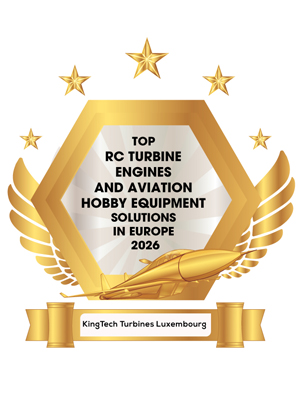
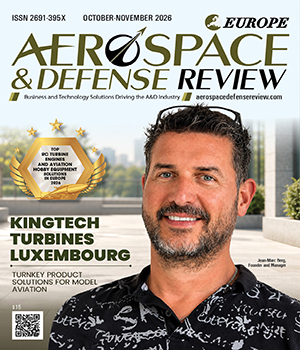
For RC model aviation enthusiasts, sourcing the turbine is the easy part. Pairing it with the right fuel system, tank, fittings and aircraft frame—often from different suppliers—is where builds turn into a coordination exercise. Parts from different vendors don’t always work together. KingTech Turbines Luxembourg eliminates that friction as a single source for premium turbine engines, aviation components and continued technical support. It serves as the European distribution arm of Taiwan-based KingTech Turbines while manufacturing and assembling an in-house line of fuel systems at its Redange-sur-Attert facility in Luxembourg. The company caters to model-aviation builders across Europe, the UK and a growing list of other countries, with the demand for its fuel-system components expanding into the unmanned aerial vehicle (UAV) space as well. Founder Jean-Marc Berg started the business as a one-man operation. In 2008, he brought two KingTech RC turbine engines to his first model-making trade show and set up a small booth. Those turbines made up the entire product range at the time. Some visitors even doubted the business would go anywhere. “That’ll never amount to anything,” a few said. Berg remained resolute and confident of KingTech’s turbine quality, which soon led to a growing customer base.
MRO
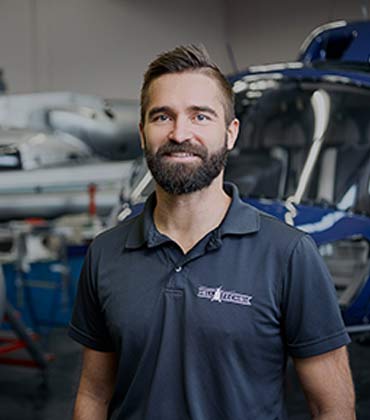
While explaining to Aerospace and Defense Review Europe what makes HELITECHNIC Leutner KG a trusted helicopter maintenance and technical assistance partner, Markus Leutner, founder and managing director, was already on his way to a site to prove it. He was travelling to southern Europe, where an EC135 had been grounded by an engine failure. The operator had reported the AOG a week earlier. Within two days, transportation for a replacement engine had been arranged. Once the engine arrived, Leutner and the team were en route to complete the replacement and return the helicopter to service. It reflected how HELITECHNIC operates when aircraft availability is at stake; respond directly, bring the required technical experience to the aircraft and prevent avoidable downtime from extending an already costly interruption. Two weeks earlier, Leutner had been inside another hangar helping an MRO remove and reinstall the main rotor mast on a BK117D3. It was the organisation’s first helicopter of that type. The engineers understood the maintenance procedure, but they had not yet developed experience with how that work unfolded on the aircraft. Leutner worked alongside the MRO team, bringing knowledge gained over years in the field. Both assignments reveal the business behind HELITECHNIC. The company is not simply another source of maintenance manpower. It gives operators and MROs access to specialised experience at the moment when its absence could keep an aircraft grounded, complicate a major inspection or place an important technical decision at risk.
Aviation

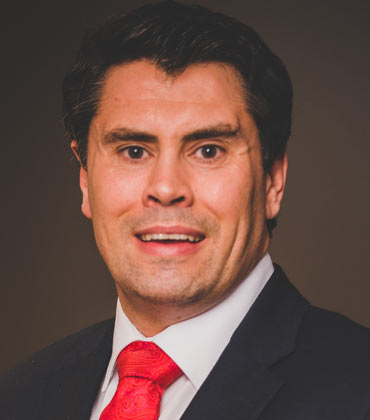
At CAMO Aviation, aircraft management goes beyond regulatory compliance, focusing on identifying gaps before they develop into larger problems. Through proactive, tailored support built around long-term partnerships, it helps owners maintain safe, reliable and usable aircraft while protecting their readiness for future transactions and long-term value. Its services span continuing airworthiness management, regulatory compliance, maintenance oversight and technical consulting for individual aircraft and fleets across commercial aviation, business aviation and specialised operations. CAMO Aviation also supports aircraft owners through acquisition, technical due diligence, entry-into-service inspections, lease transitions, audits and other stages of the aircraft lifecycle. “We allow owners to focus on their operations while we safeguard the integrity and value of their aircraft throughout its lifecycle,” says Jean-Marc JHIGAI, founder.
Aviation
Software verification in aerospace extends beyond testing individual scenarios, particularly when safety depends on understanding behaviour across possible inputs and execution conditions that conventional testing cannot fully cover. Runtime errors, data races, stack overflows, timing bottlenecks and memory-safety issues can remain outside the reach of finite test cases, making full data and path coverage crucial for safety-critical software. AbsInt develops static analysis and formal verification tools, helping aerospace organisations examine software behaviour. The analysis provides mathematically sound results for all possible inputs and execution scenarios, supporting software verification and certification. Rigorous analysis can fit the engineering environment already in use. “Our goal goes beyond finding bugs,” says Dr. Christian Ferdinand, CEO. “We aim to formally prove their absence, giving aerospace teams the confidence to build, verify and certify software.” The technology is used by organisations including Airbus, ATR, OHB, ESA, Thales Alenia Space and NASA. Turning Analysis into Certification Evidence AbsInt takes its name from abstract interpretation, the formal method underlying its core analysis technology. The method uses safe yet minimal overapproximation to analyse complex software systematically while preserving mathematical soundness when determining whether software behaviour can be considered safe.

A&D Training & Simulation

Flexible Aviation Connectivity through Software Defined Radio Unit Convergence with Integrated Modular Avionics (IMA)
Jorge Afonso Pereira, Head of Civil-Military Communications, Navigation, Surveillance (CNS) and Security Unit, EUROCONTROL
Defense Tech
Combatting UAS - Utilising Resources Effectively in an Asymmetric Defence Environment
Alex Rose-Parfitt, Engineering Director, Raytheon UK [NYSE: RTX]
Aircraft Engine Solutions

Shaping Cyber Resilience across Aviation's Digital Frontier
Ayo Adebayo, Head of Information & Cyber Security, SunExpress
A&D AI
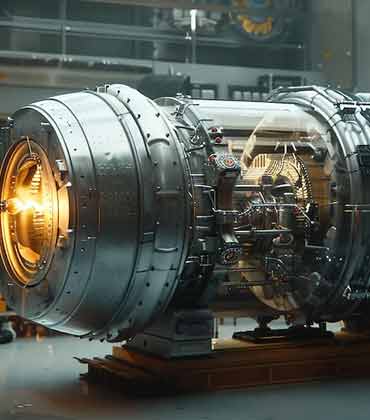
Aerospace Manufacturing Solutions Driving Advanced Industrial Transformation
Aviation

Enhancing Customer Satisfaction in Aviation: The Power of Effective Communication
Duane Cornella, Sr. Manager Operations Control Centers, Panasonic Avionics
Aviation

Artificial Intelligence AI in Aerospace
Ron Brown, Avionics Engineering Manager, Kalitta Air
A&D Manufacturing
Why GNSS Receiver Choice Can Make or Break Mission Success
Ciaran Murphy, C.Eng, MBA, Senior Product Manager, PNT Portfolio, QinetiQ
IN MY OPINION
A&D Logistics
Engineering Service Provision for ESA: A Pillar of European Space Success
Massimiliano Guillaro, Head of Engineering Support Services in Netherlands, Telespazio Belgium

LAST WORD
MRO
The Age of the Digitally Enhanced Human Workforce
David Challinor, Head of Robotic Technologies, Ecosystems, Airbus
IN FOCUS
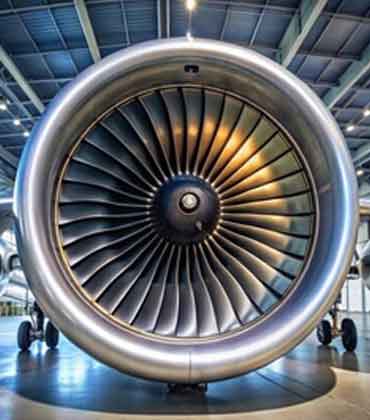
Europe Driving Innovation in RC Turbine Engines and Aviation Hobby Equipment
RC turbine engines and aviation hobby equipment solutions contribute to improved engine efficiency and reliability, enhanced flight precision, and stronger safety through advanced control systems.

Safety and Reliability: The Role of Helicopter Maintenance in Europe's Aviation Sector
Helicopter maintenance services are evolving through rising demand, regulatory pressure, digital monitoring, AI adoption, and expanding global aviation operations growth.
EDITORIAL
Engineering the Future of Aerospace
Aerospace and defence are being reshaped by a common imperative to advance capability without compromising reliability, safety or operational control. This edition of Aerospace and Defense Review Europe examines how engineering expertise, digital technologies and specialised support are addressing that challenge across the sector.
Our cover story recognises KingTech Turbines Luxembourg as the Top RC Turbine Engines and Aviation Hobby Equipment Solutions in Europe 2026. Its recognition reflects the importance of precision engineering and dependable technical solutions in advancing the aviation hobby segment, where performance and reliability remain fundamental to the user experience.
Our featured companies highlight other dimensions of aerospace excellence. HELITECHNIC Leutner KG, recognised as Top Helicopter Maintenance and Technical Assistance Service in Europe 2026, brings specialised field experience to helicopter maintenance, technical assistance, inspections and AOG support, helping operators reduce costly downtime. AbsInt, awarded Top Aviation Safety Critical Static Analysis Software in Europe 2026, advances aerospace software assurance through mathematically sound static analysis and formal verification that support rigorous certification requirements. CAMO Aviation, recognised as Top Aircraft Management Service in Europe 2026, takes a proactive approach to continuing airworthiness, combining technical oversight with independent guidance to protect aircraft reliability and long-term value.
This edition also benefits from two important leadership perspectives. Massimiliano Guillaro, Head of Engineering Support Services in the Netherlands at Telespazio Belgium, examines the critical role specialised engineering providers play in supporting European space missions. David Challinor, Head of Manufacturing Engineering - SA Wing at Airbus, explores how Industry 4.0 technologies can enhance the capabilities of skilled workers and improve legacy aerospace manufacturing processes.
All these stories demonstrate that progress in aerospace relies on strong technical expertise, careful execution and the ability to adapt established systems to new requirements. We invite you to explore this edition and join the conversation about the future of European aerospace and defence.
